


The sacred covering symbolizing Hajj and Umrah in the Center’s exhibition
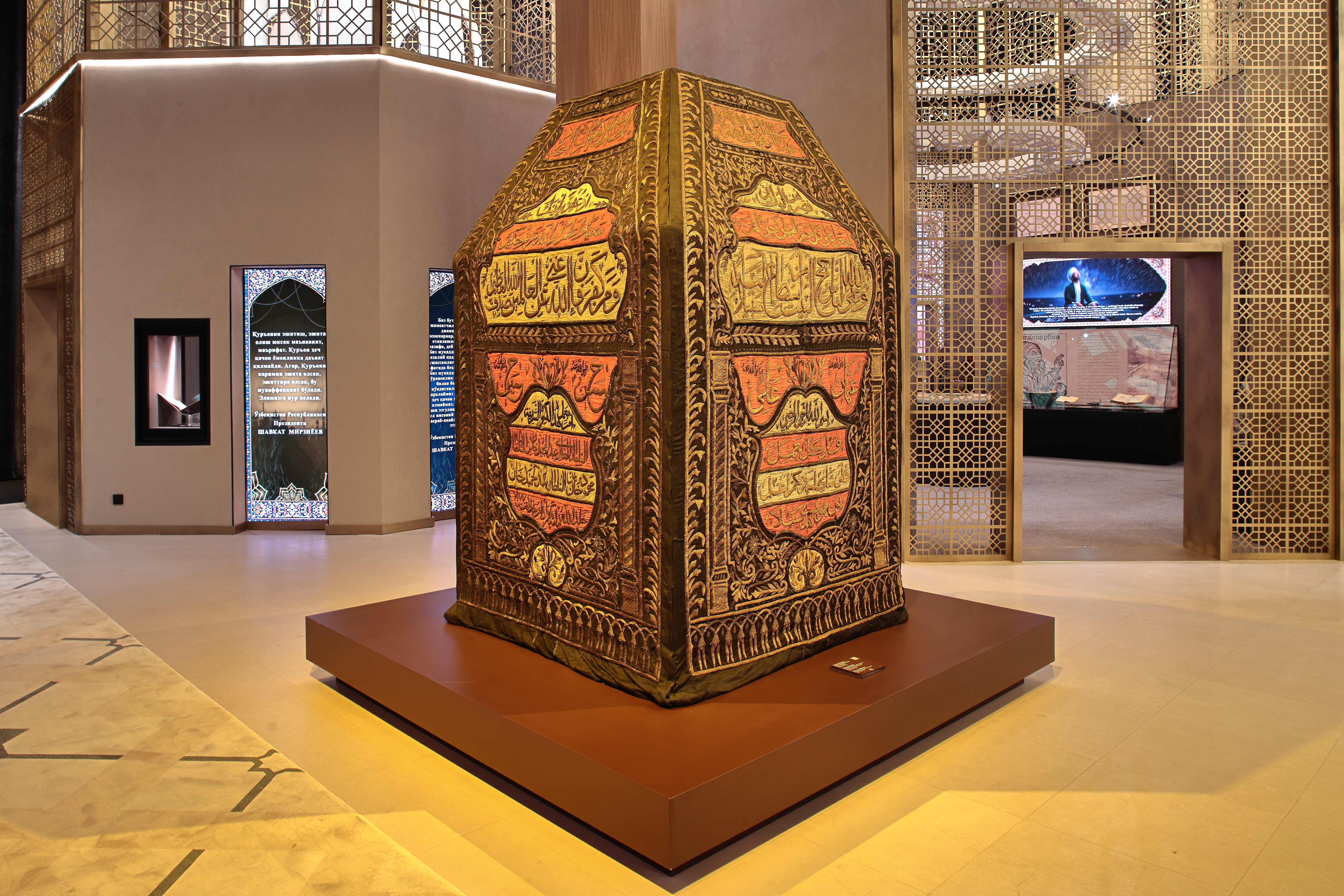
The covering of Maqam Ibrahim, a sacred object preserved with reverence for centuries beside the Holy Kaaba and holding exceptional sanctity in Islamic history, is now on display in Tashkent at the exhibition of the Islamic Civilization Center in Uzbekistan. Produced during the Ottoman period and dating to 1859, this sacred covering draws public attention not only as a rare historical artifact but also as a symbol expressing the spiritual continuity of Islamic civilization.
Built on the initiative of President Shavkat Mirziyoyev, the Islamic Civilization Center in Uzbekistan is a major cultural and educational project that attracts public interest for its profound content, refined form, and solid scholarly foundation. The Center aims to present the centuries-old spiritual, scientific, and cultural heritage of Islamic civilization through modern museum solutions.
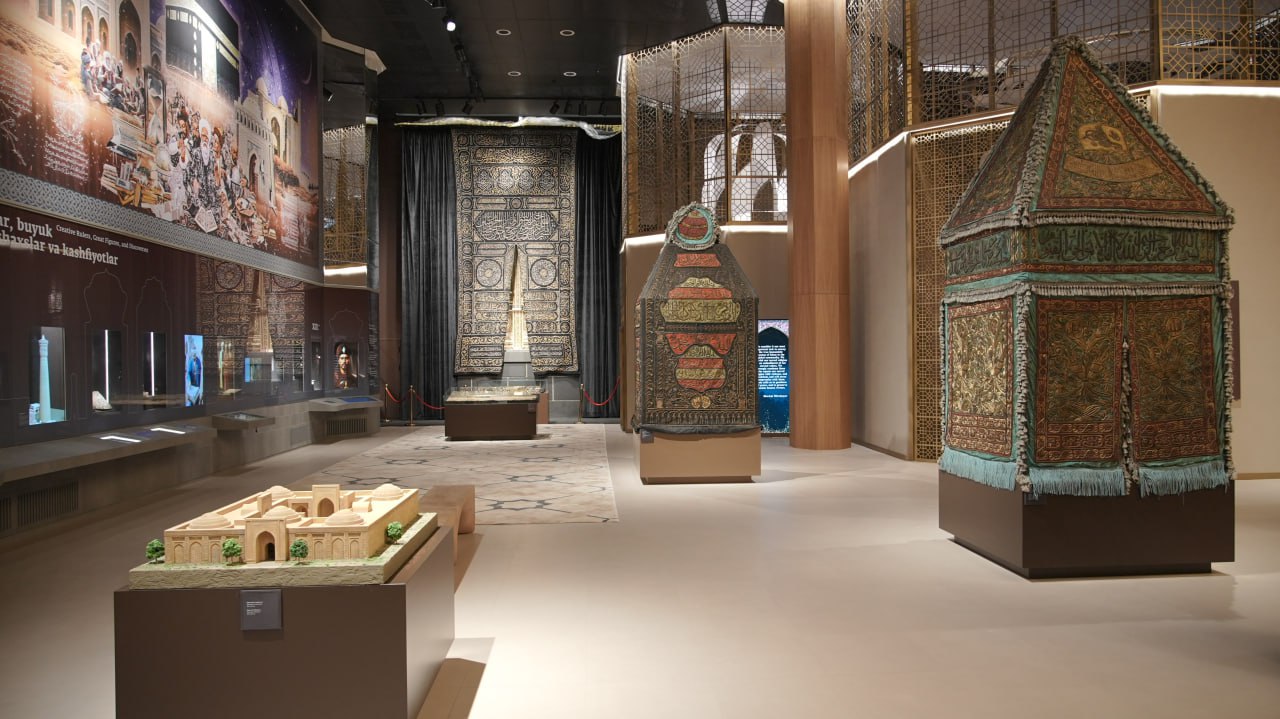
The Center’s exhibition features rare artifacts of incomparable significance to the Islamic world. Among them, a particularly noteworthy monument is the Ottoman-era covering of Maqam Ibrahim. This sacred covering was brought from the Museum of Islamic Art located in Jeddah, Saudi Arabia.
According to Islamic sources, Maqam Ibrahim is the sacred stone on which Prophet Ibrahim (peace be upon him) stood during the construction of the Kaaba. It is narrated that as the walls of the Kaaba rose, Ibrahim (peace be upon him) continued the construction while standing on this stone, which rose and descended by the power of Allah. As a result, the footprints of Ibrahim (peace be upon him) were imprinted on the stone.
Maqam Ibrahim is located within the Masjid al-Haram precinct, close to the Kaaba, and is marked by a distinct sign. It is narrated that after completing the construction of the House of Allah, Ibrahim (peace be upon him) prayed precisely at this spot.
“Take the spot where Abraham stood as your place of prayer.” (Surah al-Baqarah, verse 125) Based on this verse, after performing tawaf of the Kaaba, the Messenger of Allah (peace and blessings be upon him) established the practice of performing two rak‘ahs of prayer behind Maqam Ibrahim. To this day, this practice continues as an integral religious tradition of the Islamic ummah during Hajj and Umrah.
According to historical sources, Maqam Ibrahim was initially located very close to the Kaaba. During the time of the Messenger of Allah (peace and blessings be upon him), after the revelation of the verse, the Maqam was moved to its present location. Although it was displaced by a strong flood during the caliphate of Umar ibn al-Khattab (may Allah be pleased with him), it was reinstalled in its designated place in the 17th year of Hijrah. Hadiths particularly emphasize the virtue of Maqam Ibrahim.
It is narrated that the Messenger of Allah (peace and blessings be upon him) said:
“The Corner (the Black Stone) and the Maqam are two rubies from Paradise. Had Allah not extinguished their light, they would have illuminated everything between the East and the West.”
In this sense, the covering of Maqam Ibrahim prepared by the Ottomans in 1859 and displayed in the exhibition of the Islamic Civilization Center holds special significance as a high-value artifact symbolizing the continuous legacy of cultural heritage.
Abdurasul Yakhshiboyev, research fellow of the Center:
Around the Maqam Ibrahim covering at the Center, golden rings bear the words Allah and Muhammad, Ayat al-Kursi, verses conveying glad tidings to the believers, and on its four sides are inscribed the names of the four Rightly Guided Caliphs — Abu Bakr, Umar, Uthman, Ali — as well as Hasan and Husayn.
Most read
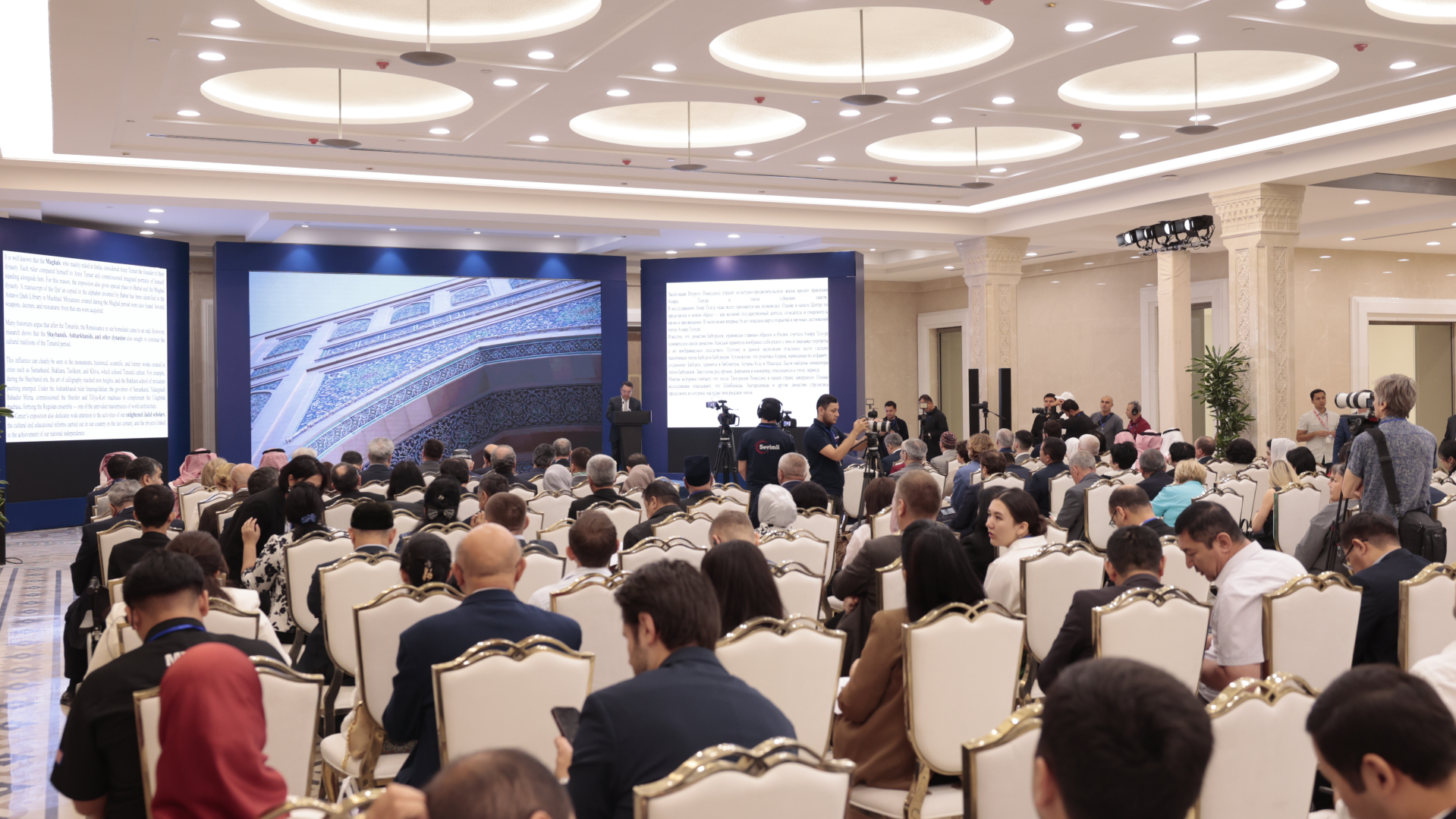
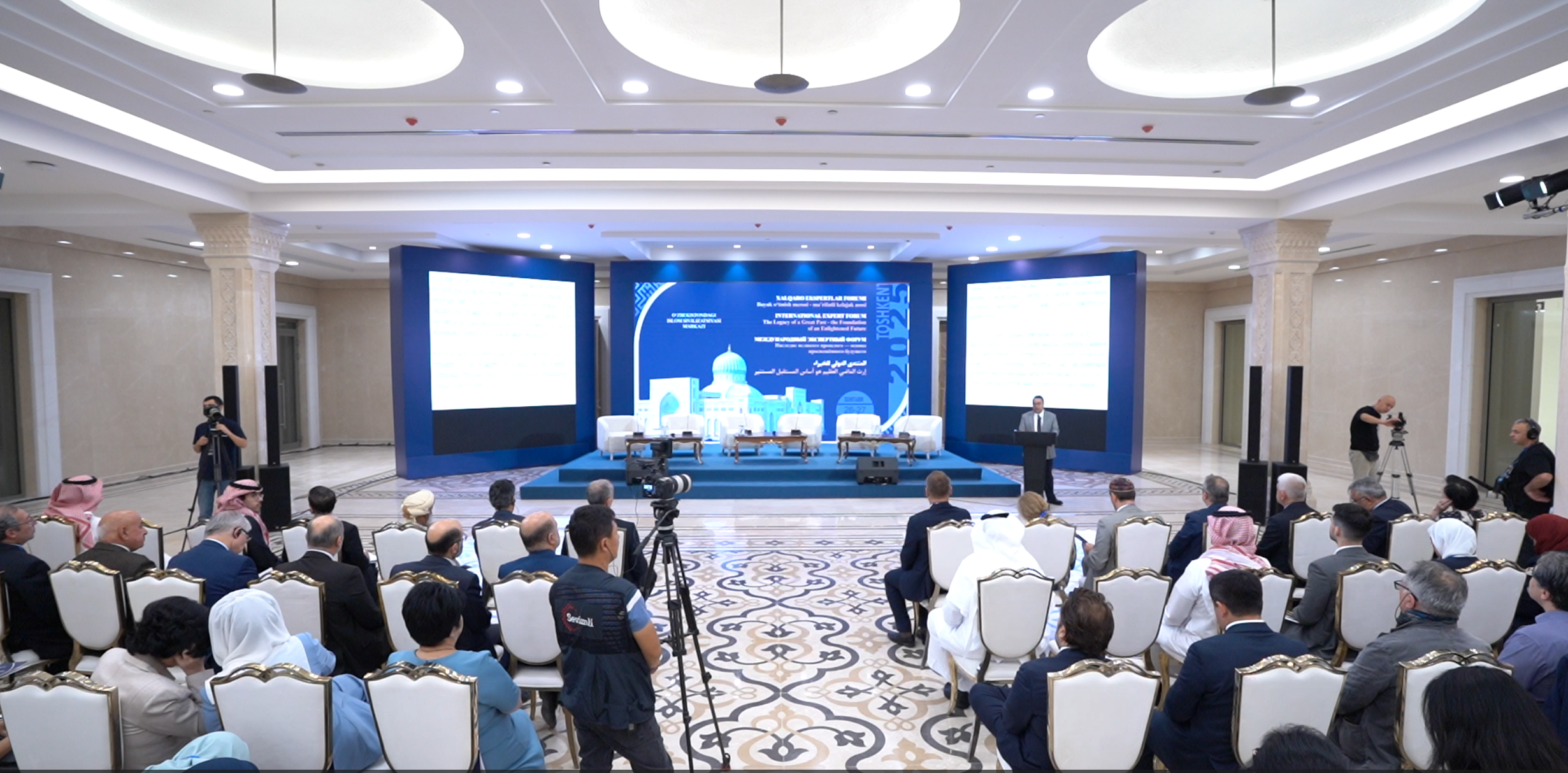
Over 100 experts from more than 20 countries of the world are in Tashkent!
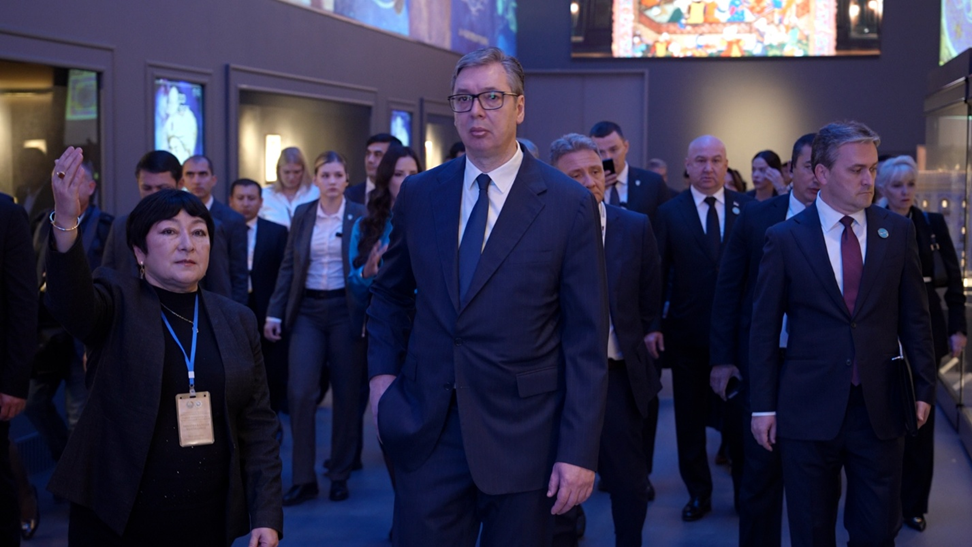
President of Serbia Aleksandar Vučić visited the Islamic Civilization Center in Uzbekistan
The Center for Islamic Civilization – a global platform leading towards enlightenment
