


At the President’s initiative, Bactrian artifacts were brought from Great Britain to the Center

Long before the advent of Islam, there existed in Central Asia a civilization that built cities, connected trade routes, and created a highly developed tradition of jewelry craftsmanship. The legacy of Ancient Bactria displayed in the exposition of the Islamic Civilization Center in Uzbekistan revives these unforgettable pages of history.
One of the most ancient and highly developed cultural centers formed in Central Asia prior to Islam was the civilization of Ancient Bactria. Today, this rich historical heritage is presented in the “Pre-Islamic Period” section of the exposition at the Islamic Civilization Center in Uzbekistan, established under the authorship of President Shavkat Mirziyoyev. Through the exposition, the high cultural, social, and spiritual traditions that existed in the region before Islamic civilization are revealed.
The history of Bactria-Margiana took shape around rivers that originated in the Pamir-Badakhshan mountains and, through the Amu Darya basin, brought life to vast territories. In archaeology, this cultural area is known as the “Bactria-Margiana Archaeological Complex (BMAC),” or the “Oxus Civilization,” and dates back to the 3rd–2nd millennia BCE. It encompassed northern Afghanistan, southern regions of present-day Tajikistan, and southern Uzbekistan.
Along the Amu Darya and its major tributaries such as the Panj and Vakhsh, settled communities with an agricultural way of life emerged early on, practicing irrigated farming. As a result of these processes, the first villages appeared, later developing into cities. Primitive dwellings were replaced by multi-storey buildings, and an urban culture took shape.
As noted by Doctor of Historical Sciences, Professor Gaybulla Boboyorov, the foundation of the Bactrian civilization lay precisely in this urban culture, within which a highly developed social and cultural environment emerged in dozens of cities:
“This included traditions of governance and statehood, systems of administration and state correspondence conducted through writing, the earliest laws and beliefs regulating society, as well as craftsmanship, horticulture, international trade, and applied and visual arts.”
Through ancient trade routes especially the Great Silk Road Bactria became a crossroads of cultural, economic, and spiritual connections between East and West.
The exposition presented at the Islamic Civilization Center clearly demonstrates that even before Islam, Bactria possessed a highly developed tradition of craftsmanship, jewelry-making, and symbolic thought. Through the artifacts, visitors gain broad insight into the worldview, beliefs, and social structure of the Bactrian peoples.

Gold bracelets
The gold bracelets displayed in the exposition were among the principal symbols of social status and wealth in Bactrian society. Crafted from pure gold and adorned with semi-precious stones such as agate, turquoise, and lapis lazuli, these ornaments were interpreted not only as items of adornment, but also as symbols of power, authority, and prosperity.
Beads and necklaces
Beads and necklaces demonstrate the high level of Bactrian jewelry art. The harmonious combination of gold tube-shaped beads with lapis lazuli, agate, and turquoise reflects not only refined aesthetic taste, but also deep symbolic meaning. In antiquity, such objects held spiritual protective and ritual significance.
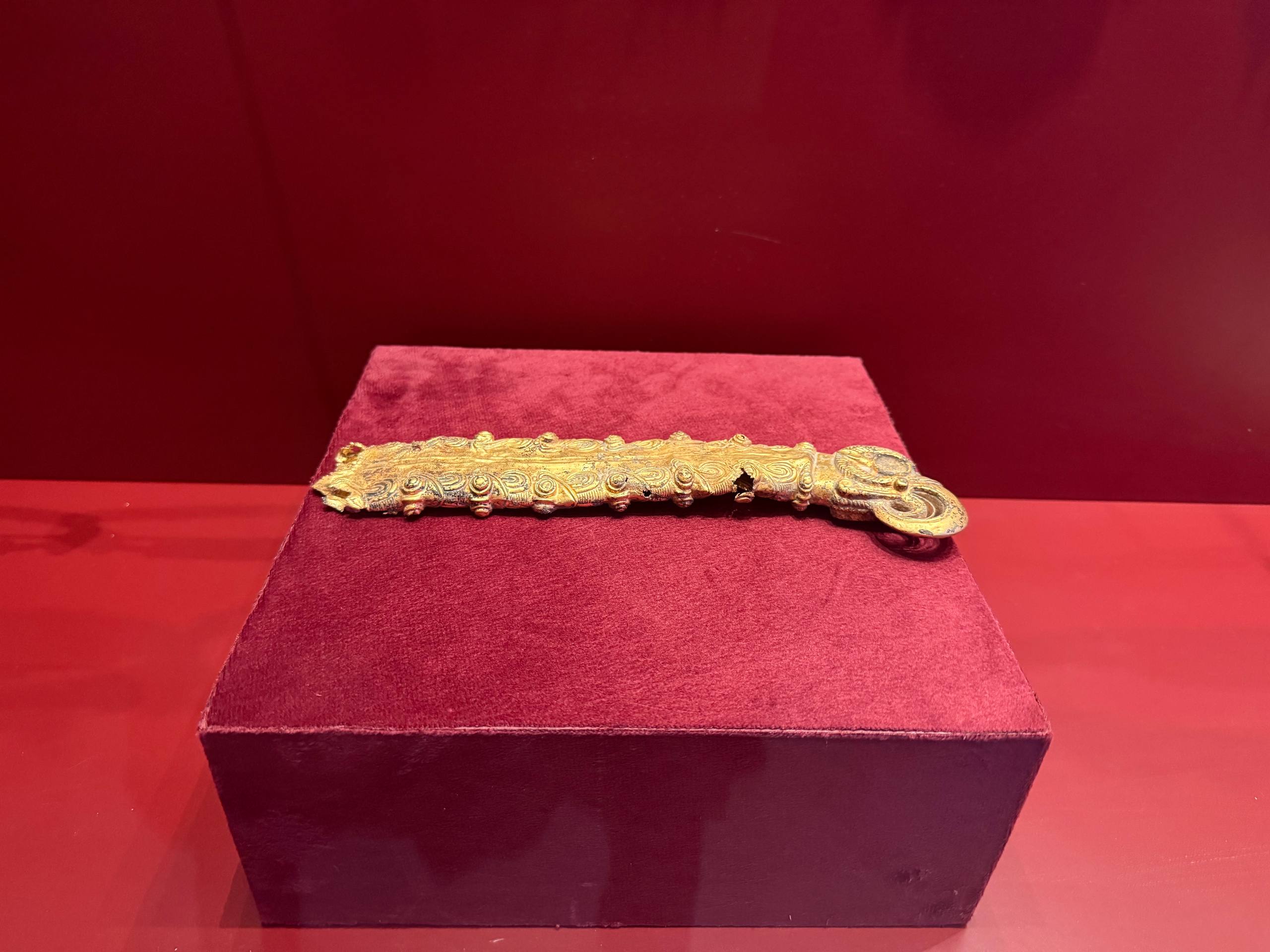
Gold dagger sheath
One of the rarest exhibits is a gold dagger sheath dating to the 4th century BCE. It reflects historical processes associated with the Achaemenid period and the campaigns of Alexander the Great. The animal and mythical images on the surface of the sheath illustrate the synthesis of Saka, Sogdian, and Bactrian artistic traditions.
These unique artifacts, which convincingly confirm that a highly developed cultural, artistic, and spiritual environment existed in Central Asia even before Islam, were brought from Great Britain at the initiative of President Shavkat Mirziyoyev.
Durdona Rasulova
P.S. The article may be republished with a link to the official website of the Center
Most read
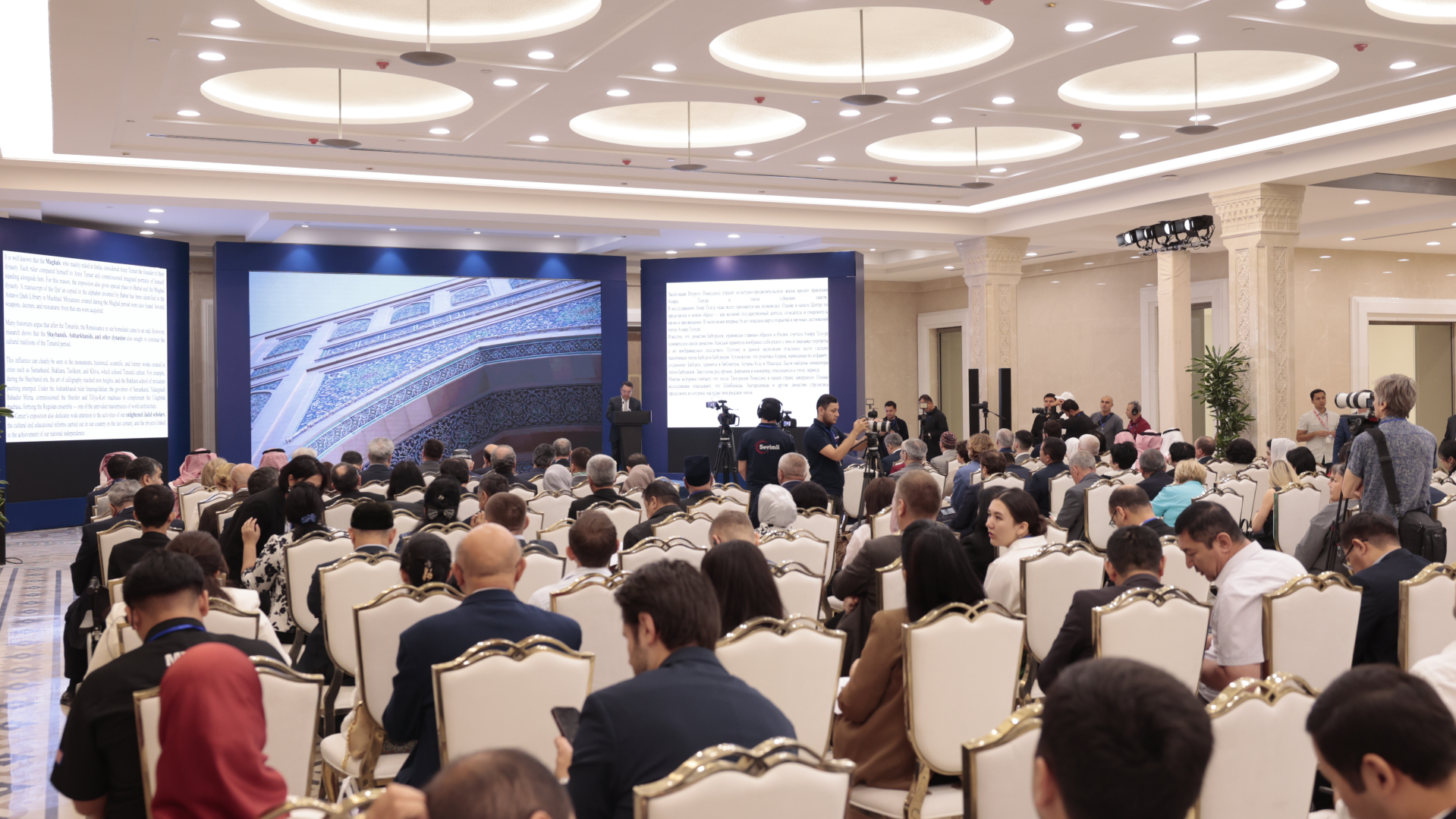
Over 100 experts from more than 20 countries of the world are in Tashkent!
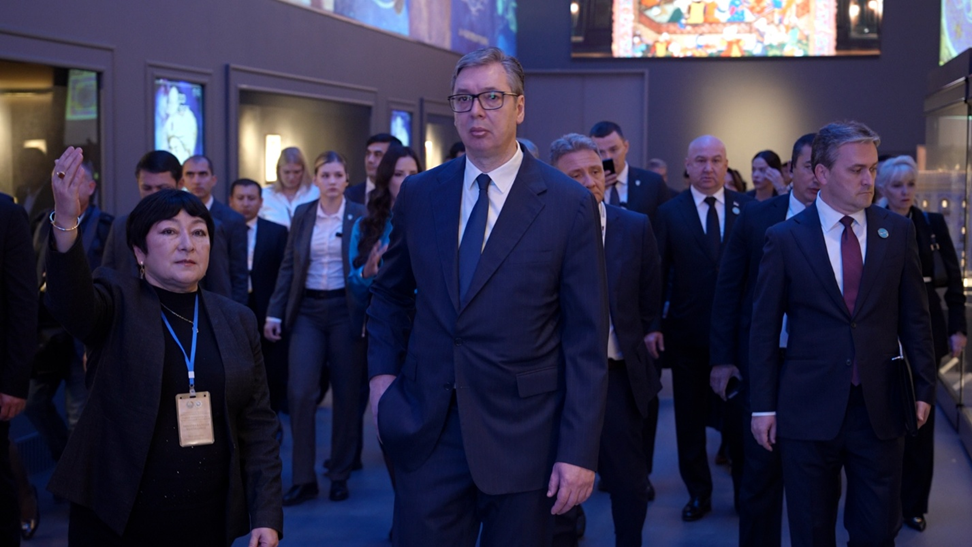
President of Serbia Aleksandar Vučić visited the Islamic Civilization Center in Uzbekistan
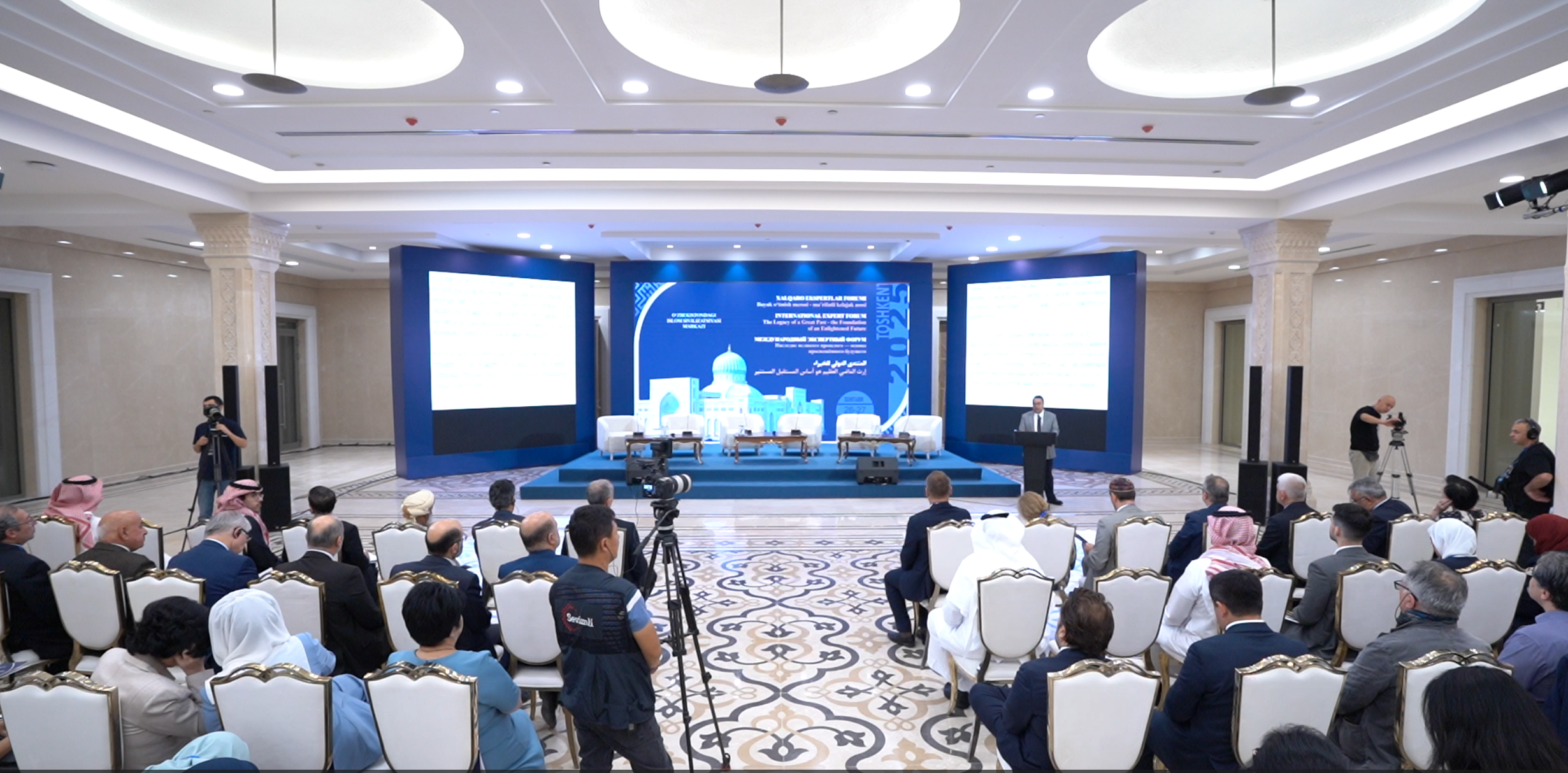
The Center for Islamic Civilization – a global platform leading towards enlightenment
