


A Civilization Built on Water: Khorezm’s Ancient Engineering Marvel
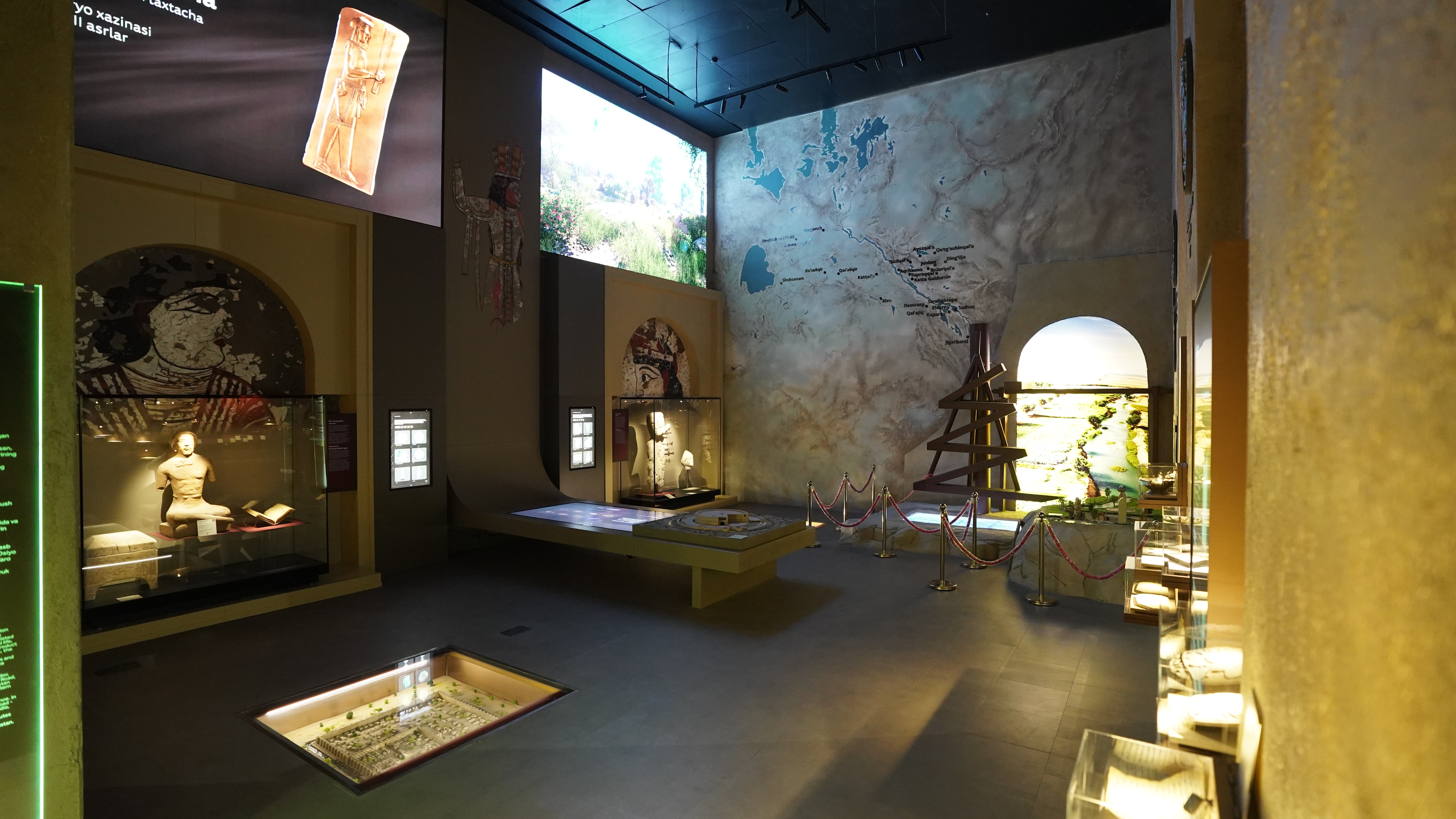
Khorezm is an ancient civilization where life was built around water. As early as the BCE, a sophisticated water management system was created in this region, serving the development of agriculture and horticulture. Ancient waterwheels, canals, and water-lifting devices are vivid examples of the high level of engineering thought of the people of Khorezm.
The history of Khorezm is closely intertwined with gardening and irrigation culture, and the region occupies a special place as one of the oldest and most developed agrarian civilizations in Central Asia. Archaeological research shows that as early as the first millennium BCE, complex systems of water management and irrigation had already taken shape in Khorezm, becoming one of the key factors in agricultural development.
The ancient inhabitants of Khorezm constructed wells, ditches, canals, and special engineering structures to make effective use of the waters of the Amu Darya. These systems were important not only for increasing agricultural productivity but also for ensuring food security for the population.
Since ancient times, systems of waterwheels, norias, ditches, and canals were built to direct the waters of the Amu Darya from higher elevations to lower areas. Designed with careful consideration of natural relief and water flow characteristics, these structures made rational use of water possible. The engineering monuments that have survived to this day demonstrate the high level of skill and dedication in Khorezmian agriculture.

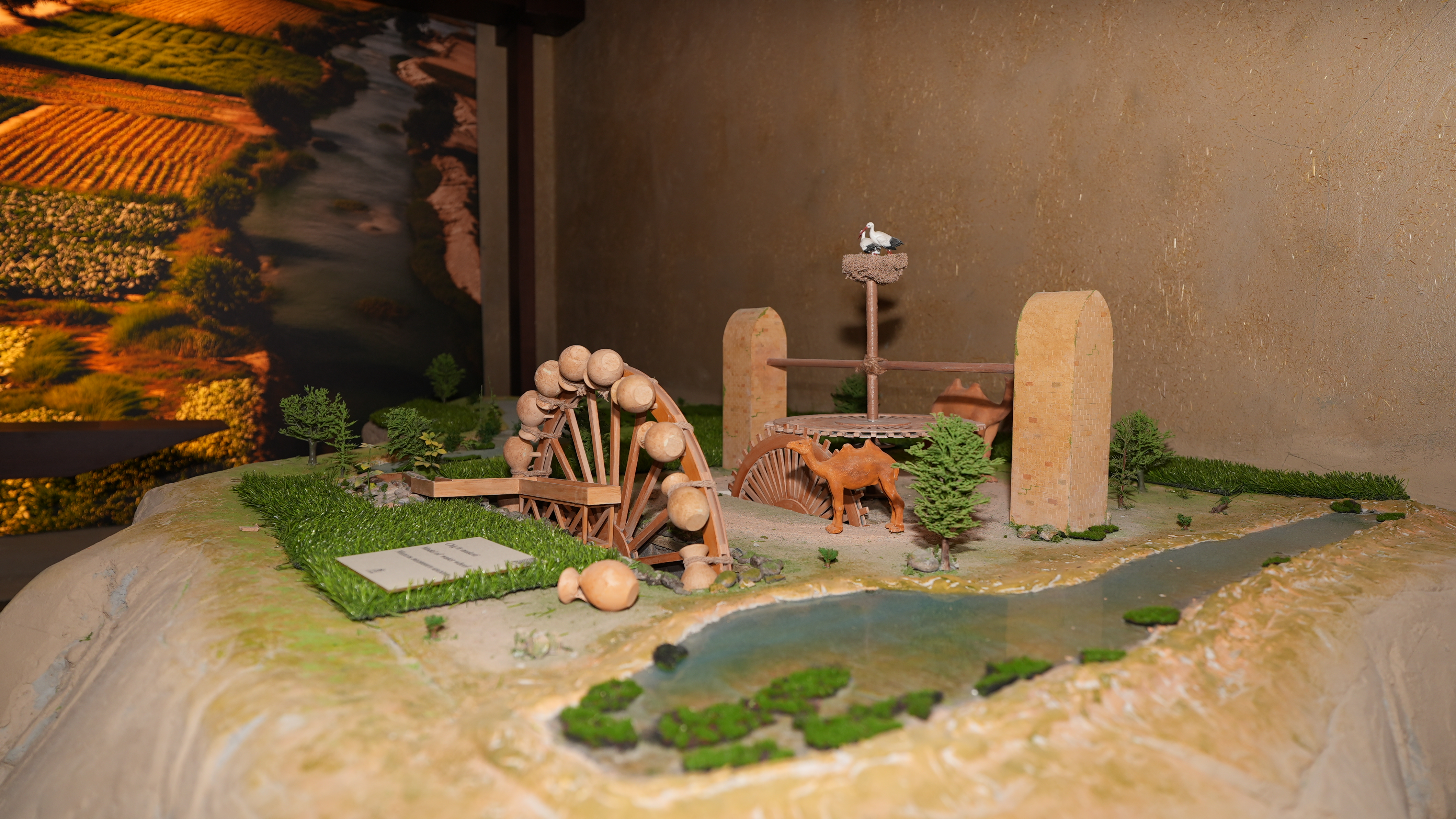
Waterwheel — an ancient mechanical water-lifting device
The waterwheel holds a special place in the water supply system of Khorezm. This mechanical device was designed to lift water from lower to higher levels and was mainly powered by human or animal force (horses, donkeys, camels).
The rotating wheel and pulley system of the waterwheel lifted water upward through a chain of buckets or jars. Axle and wheel mechanisms generated rotational motion, increasing the efficiency of irrigation systems. Through this device, water was delivered to fields via canals and wells.
According to Abdusahid Urozkeldiev, Director of the Research Institute of Irrigation and Water Issues, large-scale studies have been conducted in cooperation with historians to examine ancient irrigation systems in the Khorezm region.
“By collecting information on early irrigation methods and the procedures for drawing water from the Amu Darya, we created a model of the waterwheel together with our scholars. Through this model, it is possible to demonstrate the ancient irrigation culture of Khorezm to the younger generation. Such research not only enriches historical knowledge but also helps to convey the importance of the water management sector in the life of the country. Most importantly, this work further strengthens young people’s respect for their own history,” he says.
Waterwheels were used not only in Khorezm, but also widely in Bukhara, the Fergana Valley, and other oases. These devices played an important role in increasing productivity by facilitating water distribution in agricultural fields. They are considered a vivid example of ancient engineering thought and effective water management.
Irrigated agriculture and the water lever
Efficient use of water in Khorezm also led to the creation of simple yet effective devices such as hand levers or water levers. These structures were mainly used on small land plots and in gardens.
The water lever functioned by lifting water upward using a hand-operated wheel or a counterbalanced scoop. Its working principle was based on balance and rotational motion, allowing water to be delivered efficiently through human labor.
The ancient Khorezm civilization achieved remarkable engineering and cultural accomplishments in water management and agriculture. The system formed through waterwheels and water levers is regarded as a valuable heritage that holds great significance in the history of agricultural culture in Central Asia.
Durdona Rasulova
P.S. The article may be republished with a reference and link to the Center’s official website
Most read
Over 100 experts from more than 20 countries of the world are in Tashkent!

President of Serbia Aleksandar Vučić visited the Islamic Civilization Center in Uzbekistan
The Center for Islamic Civilization – a global platform leading towards enlightenment
