


The earliest manuscript of the Naqshbandiyya teaching
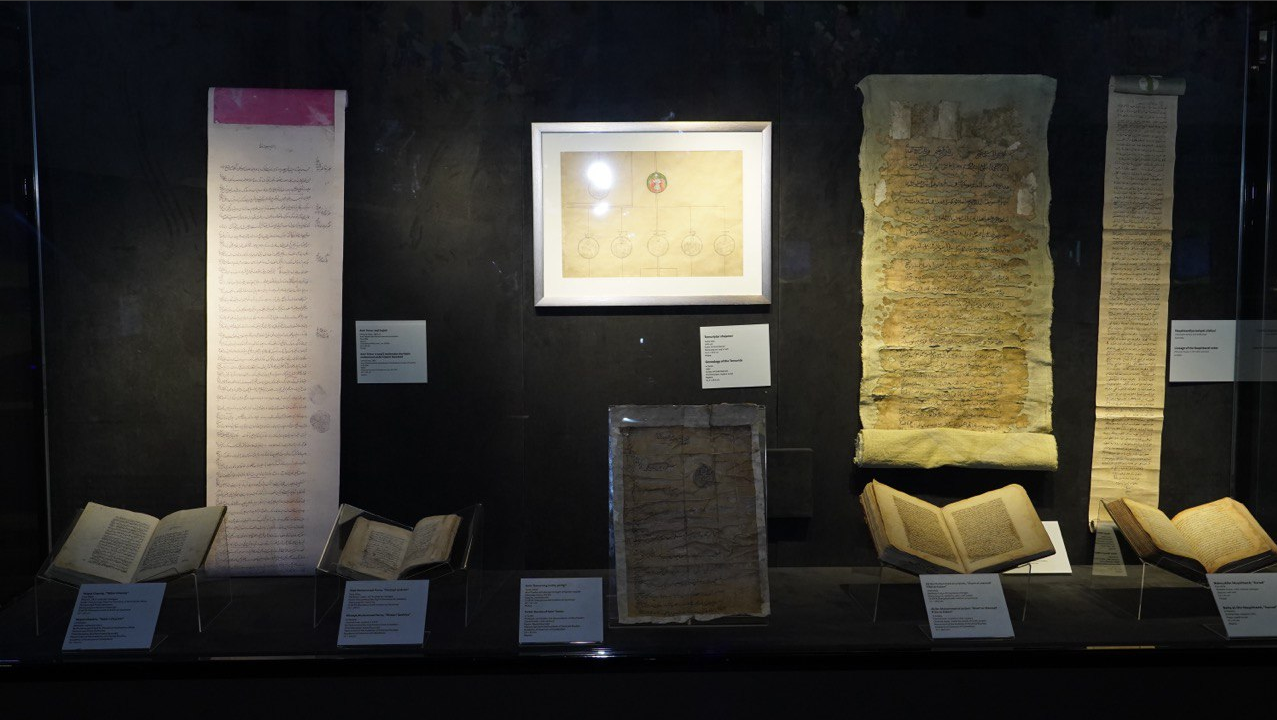
Every manuscript that has come down to us from the depths of centuries is not merely paper and ink, but a reflection of the intellect, heart, and spiritual world of an entire era. Created in the 15th century, Risalay-i Qudsiyya is one of such rare works, vividly revealing the early theoretical form of the Naqshbandiyya teaching and the harmony of thought, silence, and action in Sufism. Today, as this manuscript is exhibited at the Islamic Civilization Center in Uzbekistan, it invites not only scholars but everyone interested in spiritual heritage on an enlightening journey across centuries.
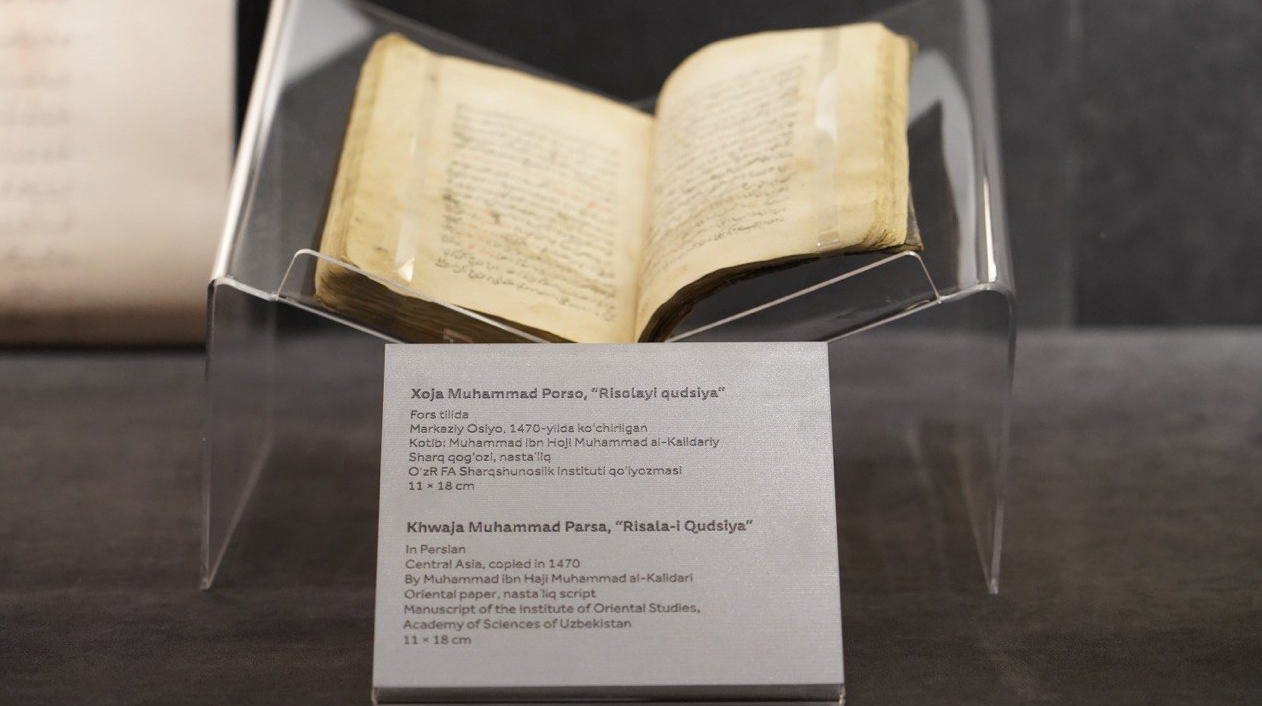
The manuscript Risalay-i Qudsiyya is an important written source that reflects Sufi thought in Central Asia in the 15th century. The work was written in Persian by Khoja Muhammad Parsa, and the existing copy is dated to 1470.
The period in which the work was created is associated with the reign of Amir Temur, a time when both religious and secular sciences developed actively. A historical rise occurred in the Islamic world, and Sufi sheikhs and accomplished scholars emerged.
It was in such an environment that Muhammad Parsa carried out his scholarly activity in Bukhara. He studied hadith, fiqh, and Sufism under Ibn Mahmud Hafiziddin Bukhari. Sources describe Parsa as “inclined toward knowledge, God-fearing, pious, and pure.”
Khoja Muhammad Parsa deeply mastered religious sciences under Bahauddin Naqshband and, after the death of his teacher, continued the ideas of the order as the second caliph.
Based on the principle “the heart with the Beloved, the hand at work,” he promoted the idea of being inwardly engaged in the remembrance of God while actively participating in social life. Sources describe him as a true dervish (solitude within society), a sheikh of spiritual authority and miracles. Parsa’s activity was not limited to the religious sphere: he interacted with shaykh al-islams, sadr officials, and judges, and played an important role in social life as well.
Masudkhan Ismoilov, associate professor at the International Islamic Academy of Uzbekistan, notes:
The work Risalay-i Qudsiyya by Muhammad Parsa emerged precisely as a product of this experience and scholarly environment. In the work, the sacred sayings of Khoja Bahauddin Naqshband are explained. Muhammad Parsa records these sayings as blessed words heard directly from Naqshband himself and provides their interpretation.
It shows that in the Naqshbandiyya teaching, thought, silence, and action are regarded as interconnected concepts. In the text, the sacred sayings are interpreted as words conveyed to Muhammad, peace be upon him, through divine inspiration. This approach demonstrates that the work has not only a Sufi character but also a clear theoretical and source-based foundation.
Through this treatise, Khoja Muhammad Parsa presents himself not merely as a sheikh, but as a thinker who systematized and interpreted the sayings heard from his teacher. The work provides deep information about the life of Bahauddin Naqshband, his services, and the foundations of the Naqshbandiyya order.
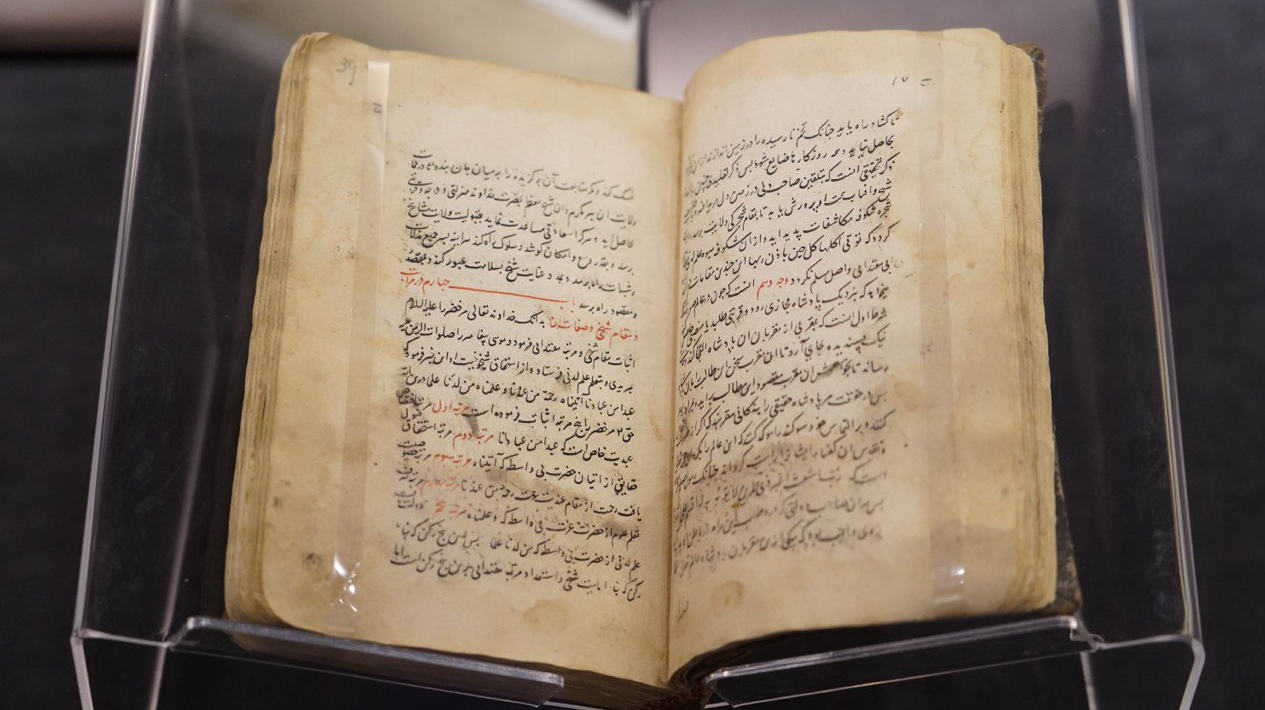
For this reason, Risalay-i Qudsiyya is an important source for studying the history of 15th-century Sufism, revealing the initial theoretical form of the Naqshbandiyya order through precise texts.
This manuscript, copied by Muhammad ibn Haji Muhammad al-Kalidari on Eastern paper in nasta‘liq script, is currently presented at the Islamic Civilization Center in Uzbekistan.
Most read
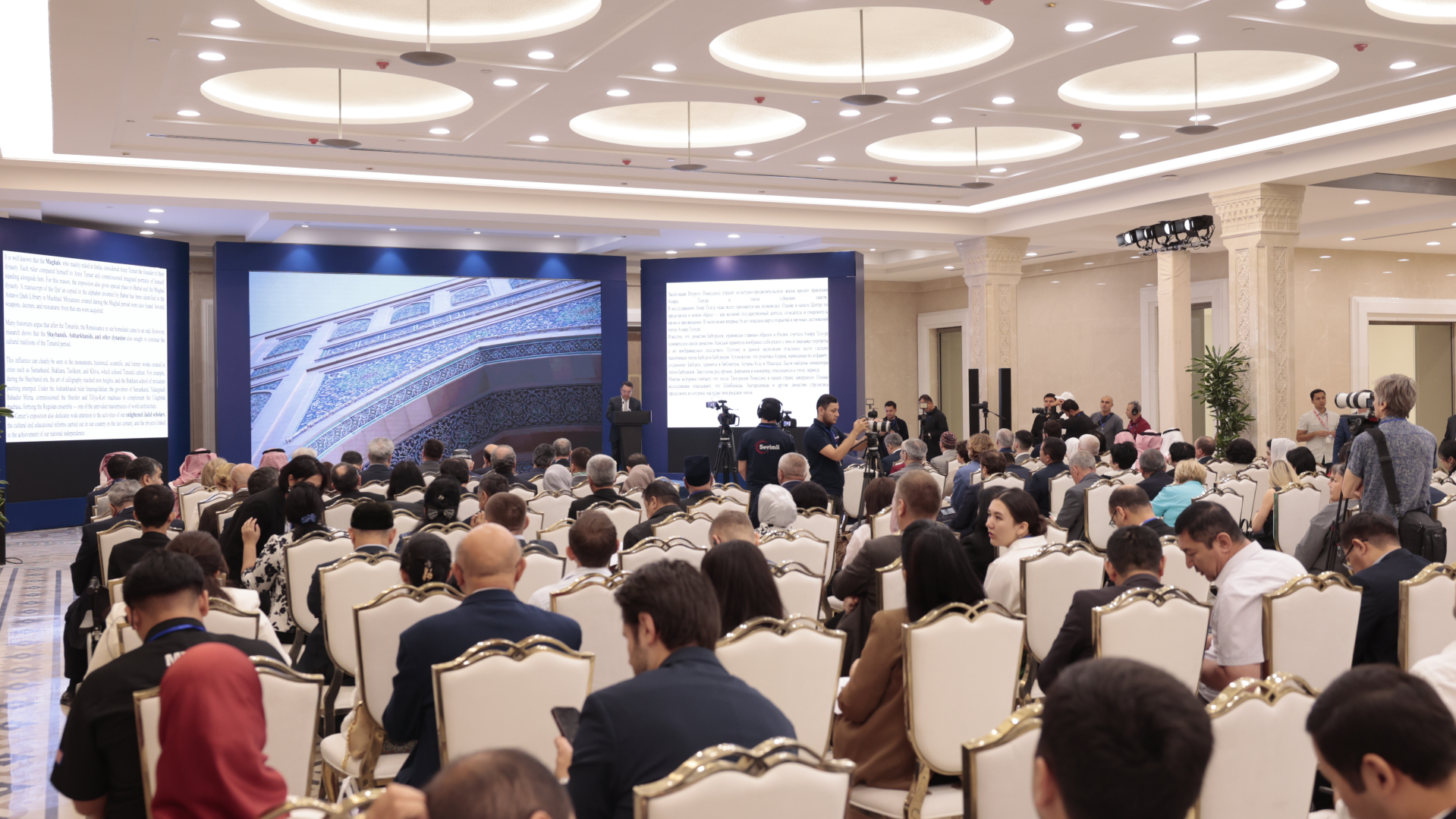
Over 100 experts from more than 20 countries of the world are in Tashkent!

President of Serbia Aleksandar Vučić visited the Islamic Civilization Center in Uzbekistan
The Center for Islamic Civilization – a global platform leading towards enlightenment
