


For the first time, the original manuscripts of four rare works can be seen together in one place
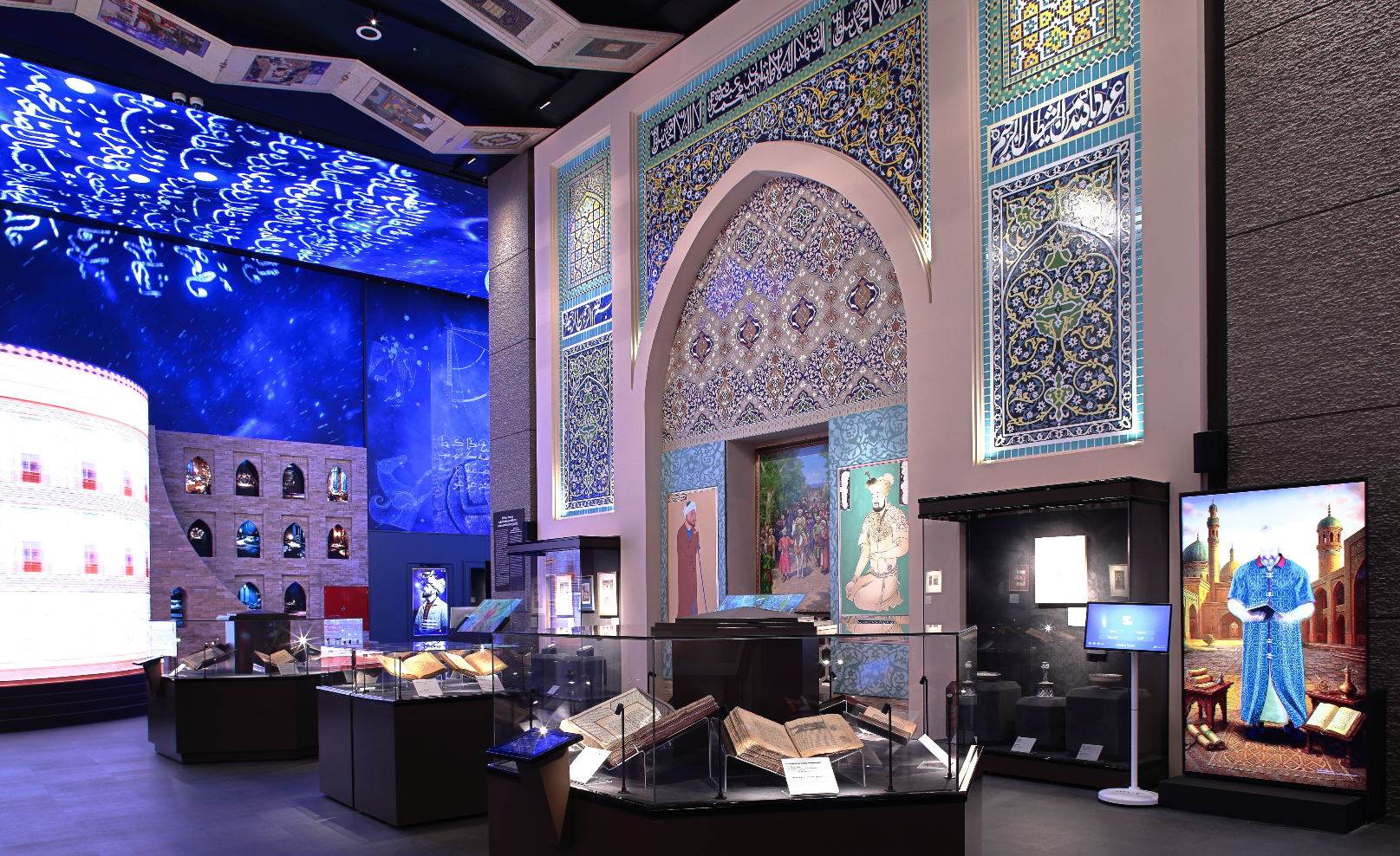
The “Khamsas” featured in the exhibition of the Islamic Civilization Center in Uzbekistan
For the first time, the original copies of four rare masterpieces of Eastern literature have been brought together in a single space at the exhibition of the Islamic Civilization Center in Uzbekistan.
Khamsa-writing is one of the highest and most complex epic traditions in the literature of Eastern peoples. It is based on the tradition of creating a “Khamsa” consisting of five independent yet ideologically interconnected epics. This great literary school was founded in the 12th century by the Azerbaijani poet Nizami Ganjavi.
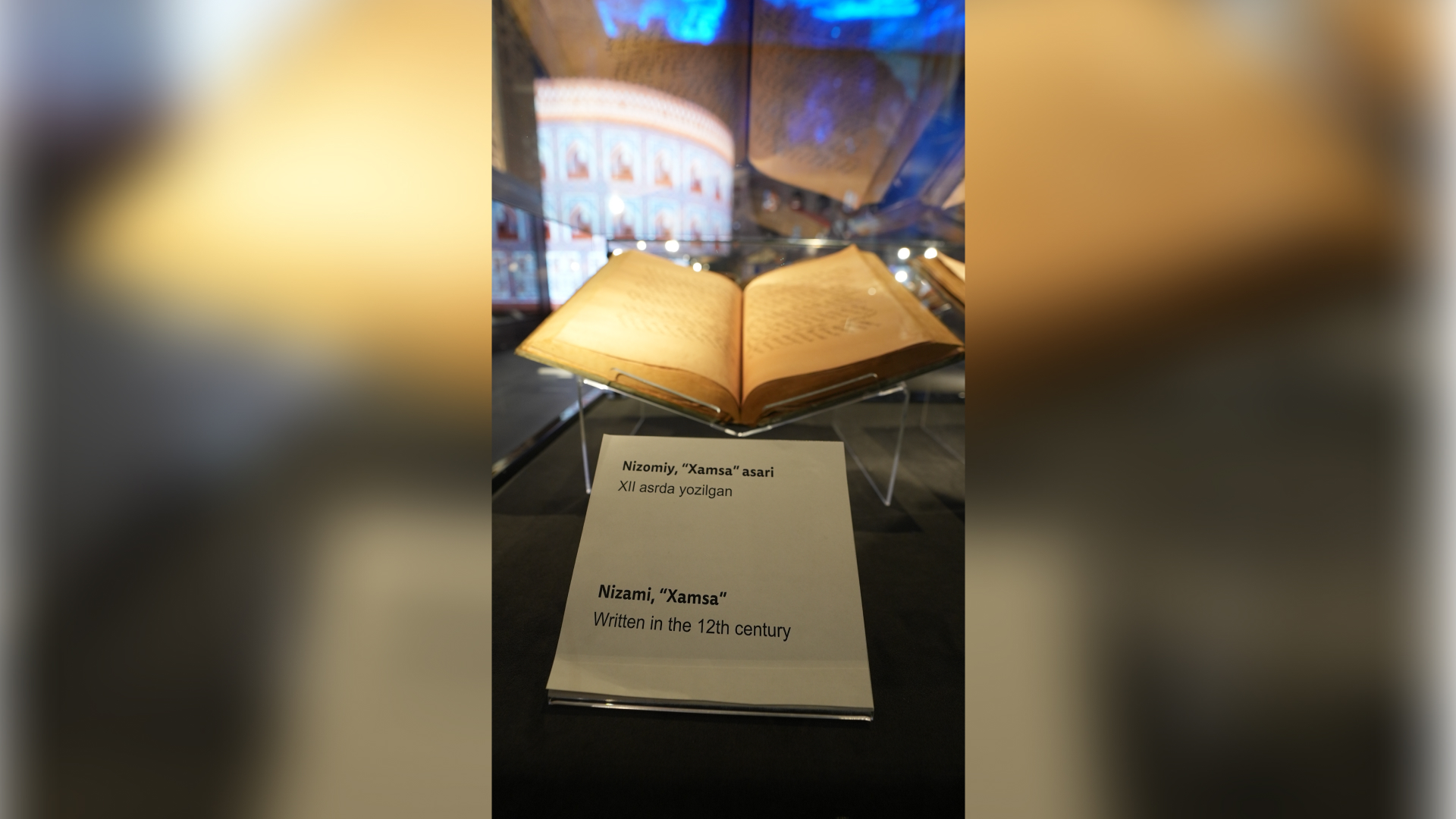
Nizami’s “Khamsa,” known as the “Panj Ganj” (Five Treasures), is a true school of mastery
Nizami’s “Khamsa,” titled “Panj Ganj” (Five Treasures), consists of the epics “Makhzan al-Asrar,” “Khosraw and Shirin,” “Layli and Majnun,” “Haft Paykar,” and “Iskandarnama.” In later centuries, creators composed their own “Khamsas” while preserving precisely the themes, plot structures, system of characters, and even the order of these works.
This made the creation of a “Khamsa” a great trial for any poet a true school of mastery.
According to tradition, the first epic of a “Khamsa” advances philosophical and ethical issues. The second and third epics explore the relationship between the individual and society through love. The fourth epic is adventurous in spirit and brings to the fore the idea of a just ruler.
The fifth and final epic synthesizes all the ideas, expressing the creator’s worldview and moral conclusions.
In the history of Eastern literature, more than 50 “Khamsas” of varying artistic value have been created. Some authors gained great fame even without writing a complete “Khamsa,” composing only a response to a single epic.
Fuzuli’s “Layli and Majnun” is considered one of such masterpieces. In general, the theme of “Layli and Majnun” stands out as the most frequently reworked plot in the Khamsa tradition.
While Nizami wrote his “Khamsa” in Persian, in subsequent centuries this tradition continued in Turkic, Urdu, Pashto, Kurdish, Armenian, and other languages. Over time, socio-political conditions changed, but the spiritual core of the “Khamsa” was preserved.
In Transcaucasia, Central Asia, Afghanistan, India, and Pakistan, this tradition was passed down from generation to generation.
“In Turkic literature, the figure who elevated the Khamsa tradition to its highest level was Alisher Navoi. In the Turkic language, he created a complete ‘Khamsa’ consisting of ‘Hayrat ul-Abror,’ ‘Farhad and Shirin,’ ‘Layli and Majnun,’ ‘Sab‘ai Sayyor,’ and ‘Saddi Iskandari.’ Navoi not only continued the traditions of Nizami Ganjavi, Amir Khusraw Dehlavi, and Abdurahman Jami, but also infused them with humanism and a national spirit,” said Rustam Jabborov, Scientific Secretary of the Center.
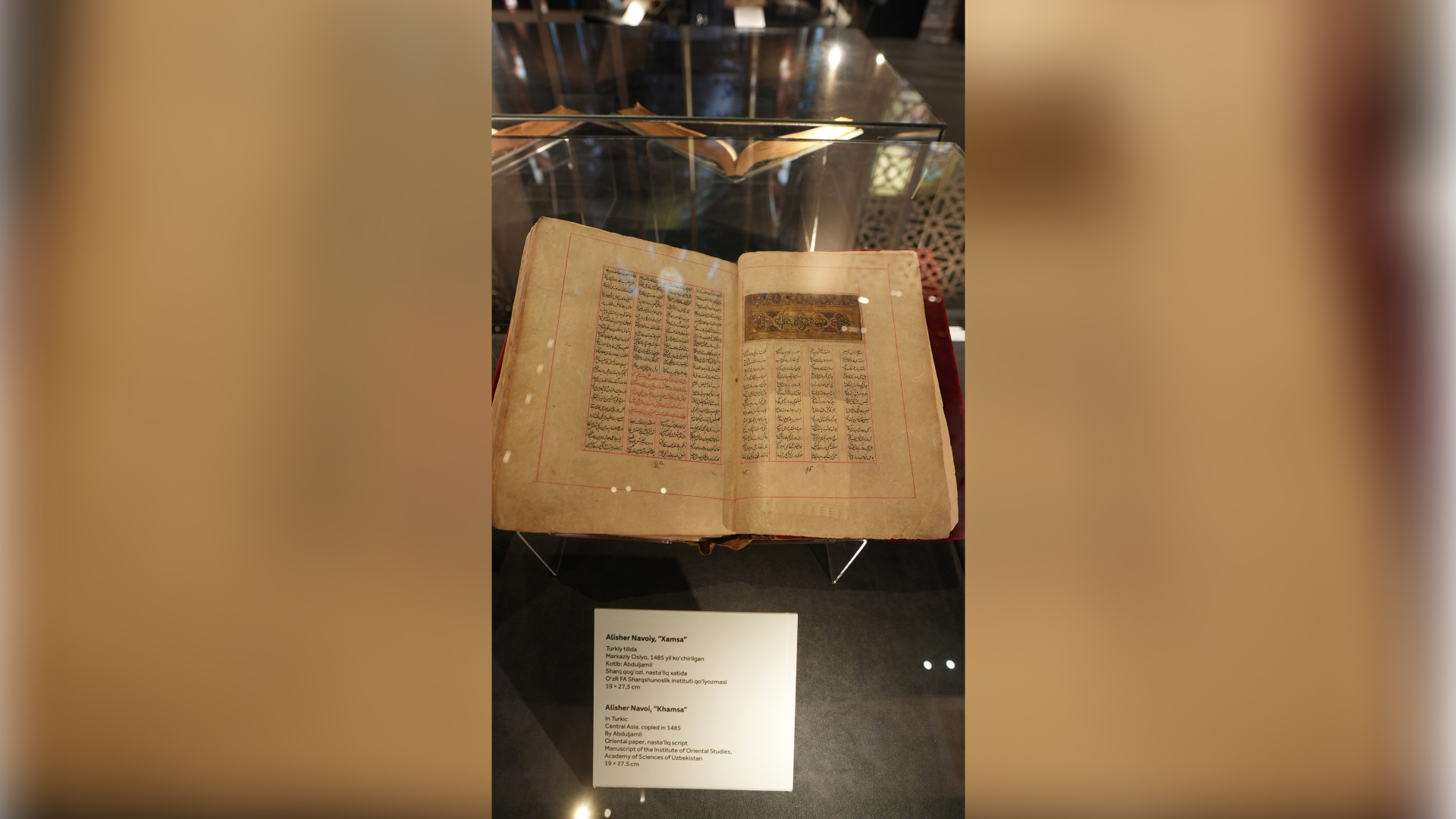
A work that vividly demonstrates the richness, elegance, and potential of the Uzbek literary language
Navoi’s “Khamsa” vividly demonstrated the richness, elegance, and expressive capacity of the Uzbek literary language. As a result, many poets such as Fuzuli, Lami, Nizari, and Khoja created their own epics under its influence.
The “Khamsas” exhibited at the Islamic Civilization Center are not merely manuscripts. They are not only historical evidence, but also invaluable sources for studying the Uzbek literary language and spiritual thought. They connect today’s generation with the past and point the way toward a spiritually enriched future.
Durdona Rasulova
P.S.: The article may be republished with a link to the Center’s official website.
Most read
Over 100 experts from more than 20 countries of the world are in Tashkent!
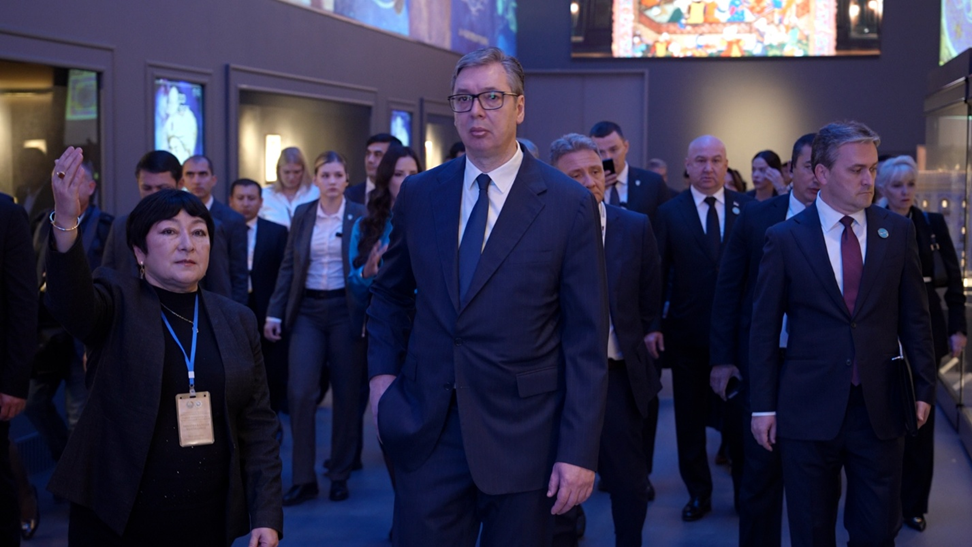
President of Serbia Aleksandar Vučić visited the Islamic Civilization Center in Uzbekistan
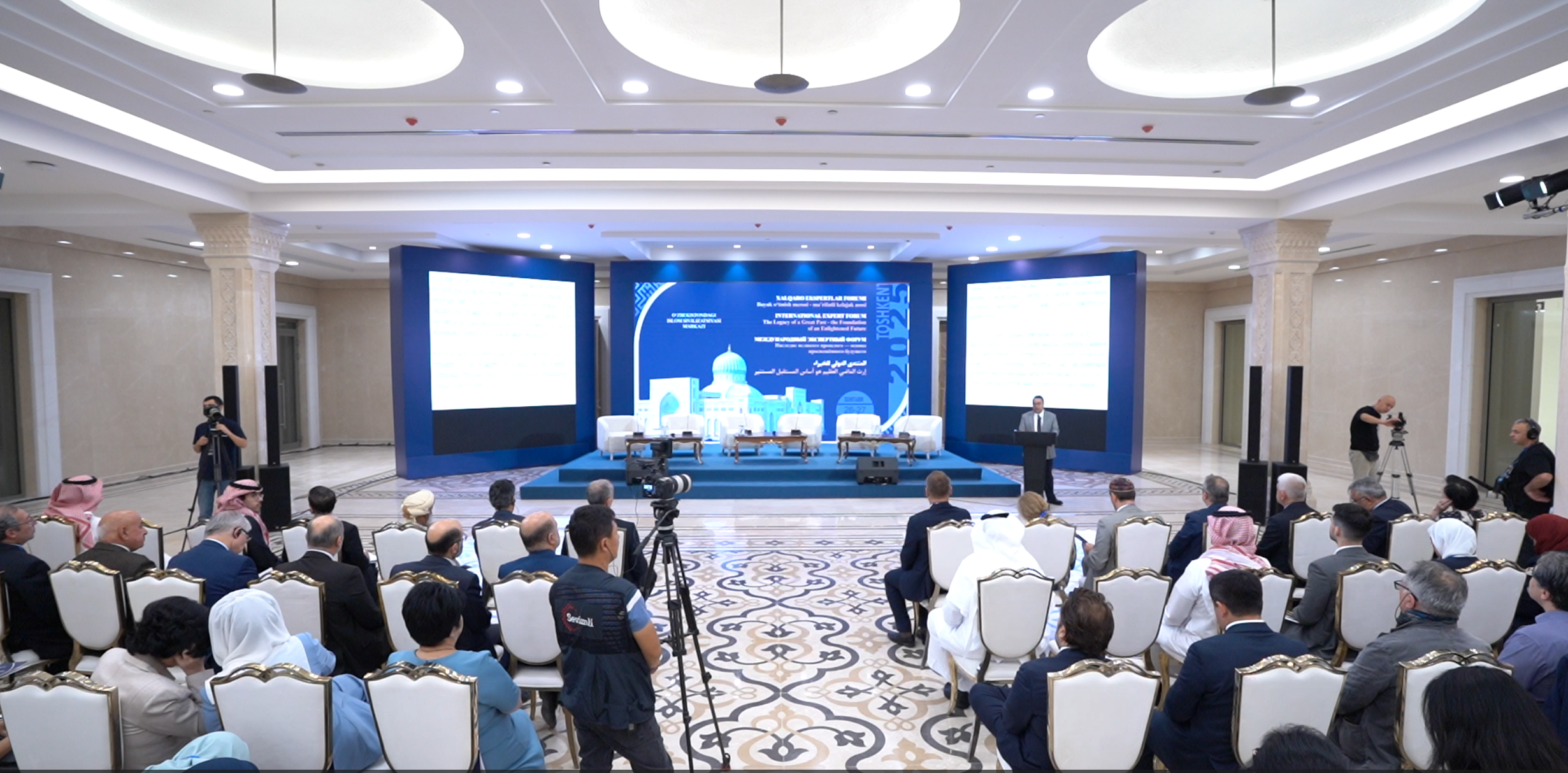
The Center for Islamic Civilization – a global platform leading towards enlightenment
