


The display of the most complex intellectual game created by the great commander is causing amazement

Amir Temur Chess at the Islamic Civilization Center
A rare product of intellectual thought the replica of a chessboard and pieces dating to the era of Amir Temur is on display at the museum of the Islamic Civilization Center in Uzbekistan. According to one of the creators of this exhibit, Sardor Mahmudov, this chess set symbolically expresses Amir Temur’s view that the state and society are determined not by the pieces themselves, but by the relationships between them.
Chess, one of the most refined and complex intellectual games ever created by humankind, has for millennia held an important place in the lives of various civilizations due to its deep philosophy, strategic essence, and high intellectual value. Historical sources indicate that the earliest form of chess, known as chaturanga, emerged five thousand years ago in India and represented the four main components of a military structure. This alone demonstrates that chess was not a random game, but was closely connected with military thinking, strategy, and state governance. Over time, chaturanga entered the Arab world through Iran and became widely known as shatranj. During the period of the Arab Caliphate, chess was systematized in written form, its rules were codified, and as a result of this process, valuable historical sources on chess have survived to the present day.
Chess stands apart from other intellectual games in that both its past and its present have retained exceptional relevance. In the era of Amir Temur, chess was not merely a game or a means of passing time, but was also regarded as a symbol created to comprehend the structure of the world, to explain the essence of power and responsibility, and to discipline the mind.
The chessboard and pieces formed during the time of Amir Temur represent a compact yet profound symbol of real life, embodying the balance between the state, society, and the individual.
In particular, the chess set specially crafted for Amir Temur stood out for its symbolic structure. The most important feature of Amir Temur’s chess is its three-row (three-tiered) conceptual design. This structure was not merely a technical arrangement, but was based on the triadic philosophy characteristic of Eastern thought. Each side of the chessboard represented three fundamental layers, interpreted as a system that complemented and balanced one another.
The upper layer was understood as the center of governance and decision-making; the middle layer as the space of movement and defense; and the lower layer as a symbol of support and continuity. The chess pieces placed on the upper tier symbolized power, responsibility, and order. The king was not merely the most important piece, but was regarded as the spiritual center of the entire system. His limited movement signified the boundaries, caution, and responsibility of authority. The powerful pieces surrounding the king represented centralized governance, close counsel, and a system of protection. This layer symbolically reflected the idea, central to Timurid state thinking, that “if the center is strong, the structure will remain stable.”
In Europe, information about the complex type of chess created by Amir Temur was first introduced in 1860 by the English linguist Duncan Forbes in his book History of Chess.
Sardor Mahmudov, one of the authors of the replica of Amir Temur’s chess displayed at the Center’s museum, notes:
“The difference between the chess created by the great commander and modern chess lies in the fact that ‘Temur chess’ has an oval-shaped board with squares of the same color, consisting of ten rows, eleven columns, and 112 squares (whereas modern chess has 64 squares arranged in eight rows and columns). Two additional squares were also added to the board: one in the ninth row on the left, and the other in the second row on the right. These two additional squares were intended to serve as supporting ‘fortresses’ during the game and occupied a very important place in this type of chess.”

The most significant feature of Amir Temur’s chess is its three-row (three-tiered) conceptual structure.
It is noted that the middle layer was the most active and dynamic part of the chessboard, symbolizing movement, strategy, and balance. The pieces placed in this row were capable of moving in various directions, expressing ideas of military and political maneuvering, adaptability to circumstances, and advance planning in Timurid thought. It was precisely this layer that transformed chess into an exercise of intellect: here, not brute force, but correct positioning, timing, and thought prevailed. Amir Temur valued chess precisely for this reason—it taught not rapid decision-making, but the ability to foresee consequences. The lower layer, meanwhile, was the calmest yet most symbolically significant part of the chessboard. The pieces in this row symbolized support, stability, and continuity. Although they moved slowly, their potential to eventually rise to higher status gave them special meaning. This concept resonated with the Timurid-era idea that a person could rise through service, loyalty, and patience. In chess, the lower layer was interpreted as the force that ultimately determines the future.
“The shape and material of the chess pieces made during Amir Temur’s era also carried symbolic meaning. They were not random decorations, but were created on the basis of clear signs expressing order, function, and status. Each piece knew its limits, did not exceed its role, and served the overall system. This reflects the philosophy of the Timurid state embodied in chess: power must be aligned with order, freedom with responsibility, and movement with purpose. Thus, although the Timurid chessboard was a small field, it embodied an entire model of the world. Through its three-tiered structure, the source of authority, the movement of power, and the foundation of stability were symbolically expressed. For Amir Temur, what mattered was not the pieces themselves, but their relationships because it is precisely within these relationships that the fate of the state, society, and the individual is reflected,” says Sardor Mahmudov.

Through its three-tiered structure, the source of authority, the movement of power, and the foundation of stability are symbolically expressed
The replica of Amir Temur’s chess, displayed in the Second Renaissance period section of the museum of the Islamic Civilization Center in Uzbekistan, leaves a distinct impression of awe on every visitor.
Laylo Abdukakhkharova
P.S.: The article may be republished with a link to the Center’s official website.
Most read
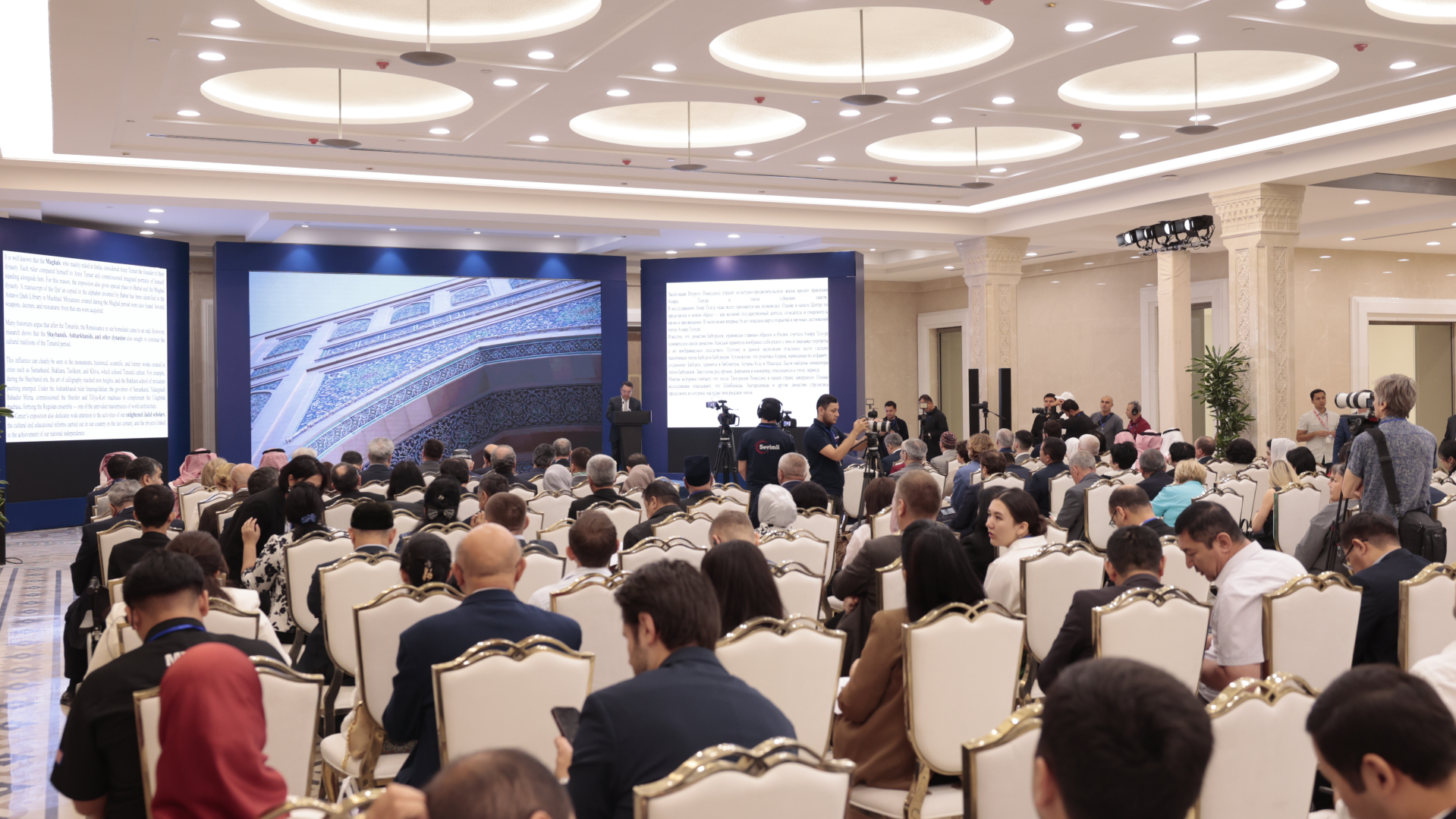
Over 100 experts from more than 20 countries of the world are in Tashkent!
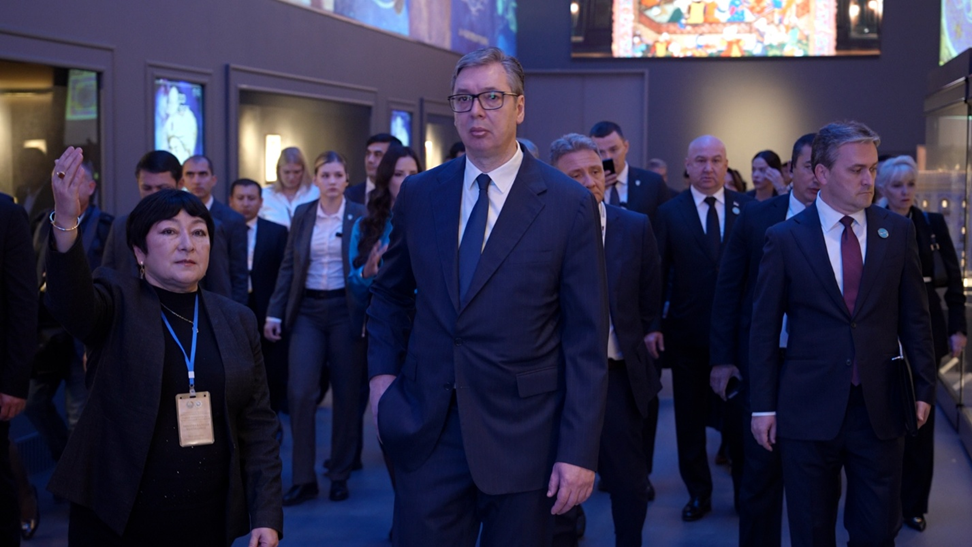
President of Serbia Aleksandar Vučić visited the Islamic Civilization Center in Uzbekistan
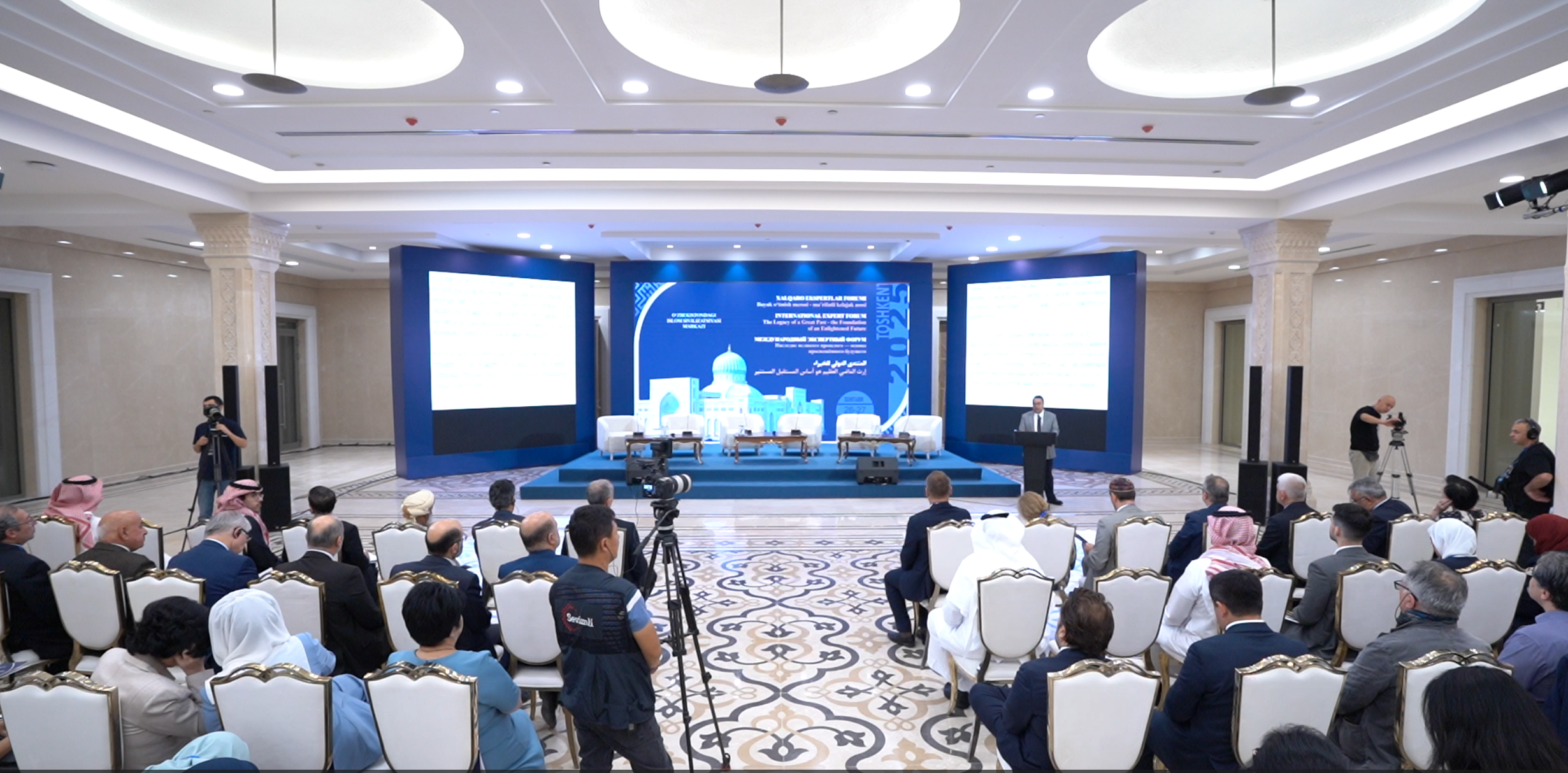
The Center for Islamic Civilization – a global platform leading towards enlightenment
