


Key moments from 550 years of history are captured on the “Wall of Civilizations and Discoveries”

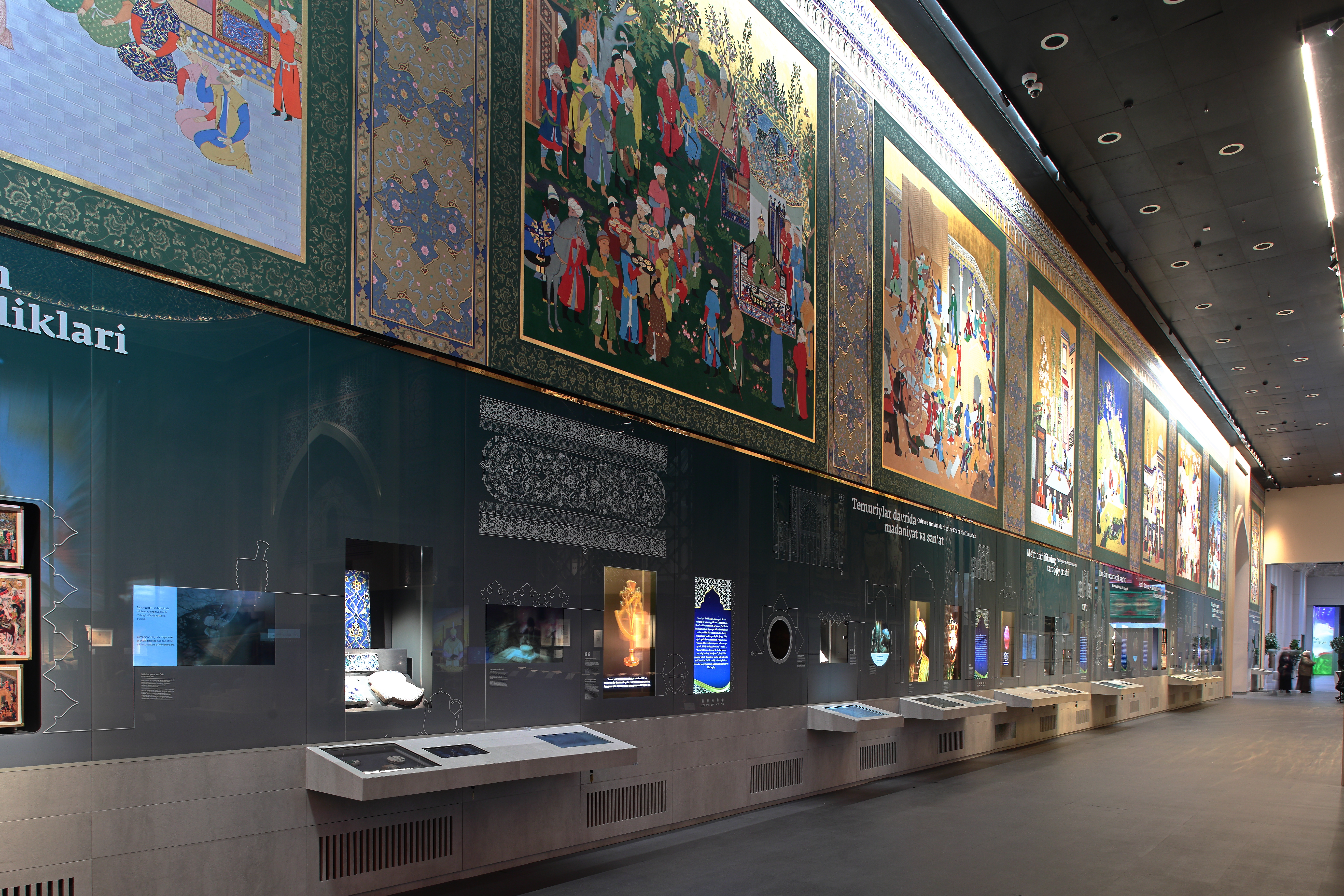
At the “Wall of Civilizations and Discoveries” in the Museum of the Islamic Civilization Center in Uzbekistan, within the section dedicated to the “Second Renaissance Period,” 550 years of history from the great conqueror Amir Temur to the Baburids are brought vividly to life through miniatures and visual imagery.
This section covers the period from Amir Temur’s rise to power to the formation of the Uzbek khanates, transforming historical events into living scenes through depictions of historical figures, architecture, science, and works of art.
Rustam Jabborov, Scientific Secretary of the Center:
In the “Second Renaissance Period” exhibition of the Islamic Civilization Center in Uzbekistan, special emphasis is placed on miniature art within the “Wall of Civilizations and Discoveries.” This section presents works by many artists such as Kamoliddin Behzod, Mahmud Muzahhib, and Muhammad Murad Samarkandi. At the same time, particular attention is also given to works of contemporary artists. Through these miniatures, visitors can gain a clear impression of the atmosphere of the “Second Renaissance Period,” including the education system, social life, and cultural achievements. Moreover, these miniature works vividly demonstrate the level of artistic and cultural development during the eras of Amir Temur, the Timurids, the Shaybanids, the Ashtarkhanids, and other dynasties.
Amir Temur: The Inspirer of Mawarannahr
The central figure of the “Wall of Civilizations and Discoveries” in the museum’s “Second Renaissance Period” section is the great conqueror Amir Temur. Through miniatures from Sharaf al-Din Ali Yazdi’s Zafarnama, the vibrant landscapes of Samarkand, the construction of the Bibi-Khanym Mosque, and Timurid architectural complexes are not only depicted but also allow the viewer to feel the historical events. Through these works of visual art, visitors can envision Amir Temur’s personal and political image as an enlightened ruler.
Through representations of architects, builders, and artists active in Mawarannahr during Amir Temur’s era, it is clearly and visually shown that cities and mosques were not merely constructed, but became major centers of cultural renaissance.
Mirzo Ulugh Beg and world science
Another central part of the exhibition focuses on Mirzo Ulugh Beg’s contribution to world science. One of the most enlightened rulers of the Timurid dynasty, Ulugh Beg presided over an era rich in discoveries. His library and scholarly legacy were brought to Istanbul, to the Ottoman court, by Ali Qushchi. In 1638, the English scholar John Greaves took the Zij-i Kuragani to Oxford and translated it. Today, a copy containing notes of the Zij-i Kuragani is preserved in the Bodleian Library in the United Kingdom, and an astrolabe from Ulugh Beg’s era is kept at the History of Science Museum in Oxford.
It is highly likely that the Greenwich Observatory, established in London in 1671, was built on the basis of this very manuscript. Today, Greenwich time defines world time.
Ulugh Beg’s personal jade bowl and miniatures, as well as illustrations from Nizami’s Khamsa and al-Sufi’s Kitab Suwar al-Kawakib al-Thabita, further enliven his personal and scholarly image. These miniatures allow the viewer to perceive the historical figure not merely as a fact, but as a living person at the center of events.
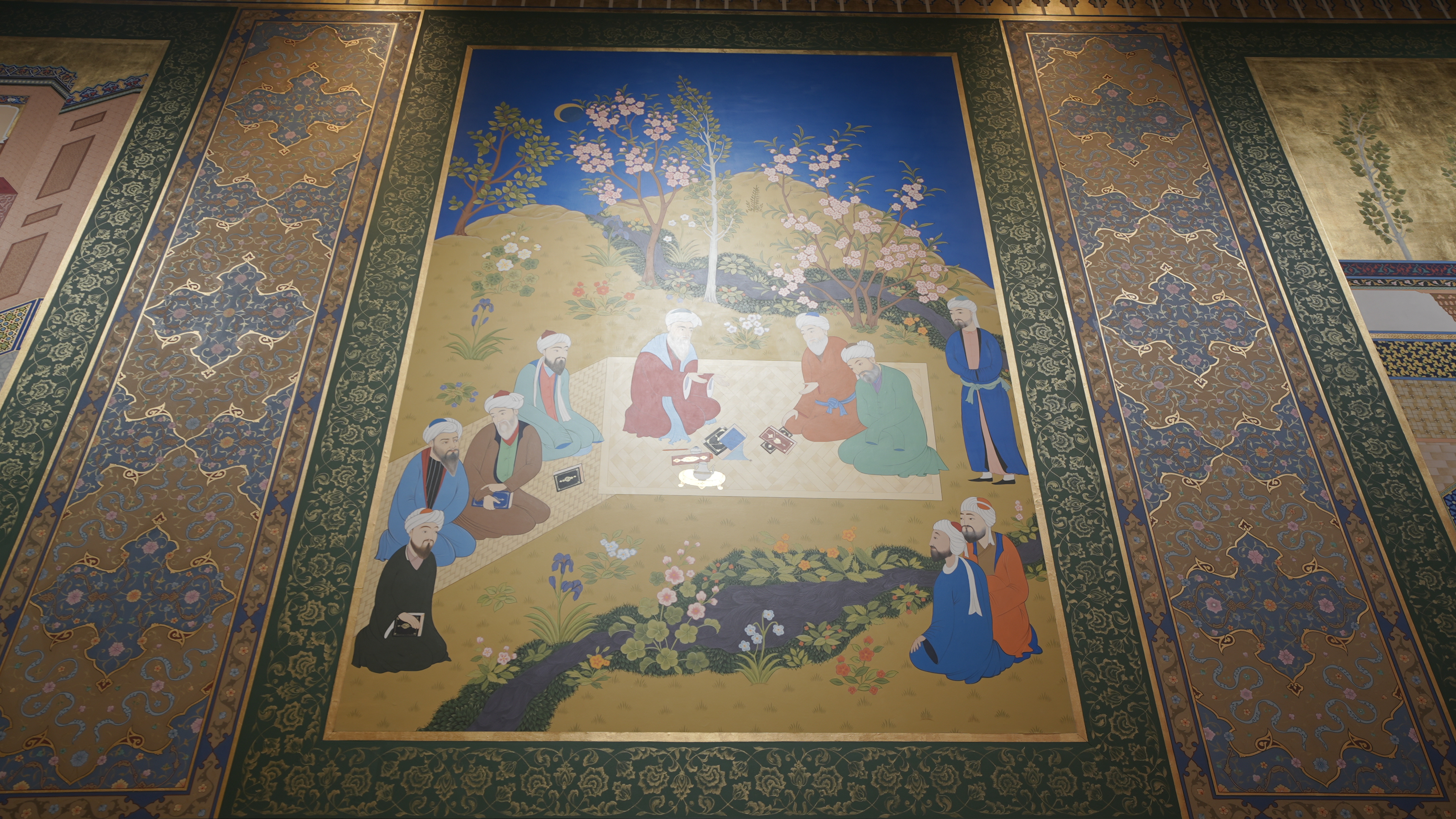
Alisher Navoi in dialogue with his spiritual mentors
Husayn Bayqara and the cultural environment of Herat
Within the Timurid Renaissance, special emphasis is also placed on the contributions of Husayn Bayqara and Alisher Navoi. Through depictions of Herat, miniatures by Kamoliddin Behzod, and personal portraits of Navoi and Jami, the cultural life of the period is not only shown but transformed into a vivid scene before the viewer’s eyes. Husayn Bayqara is presented as a patron of science and culture, integrated into this historical tableau, with each miniature and bas-relief imparting a sense of vitality and dynamism.
Babur and the Baburid legacy
Another important section of the exhibition is dedicated to Babur and the Baburid legacy. Through six volumes of Babur’s collected works published by the Center, a Qur’an manuscript written in Babur’s script, and historical miniatures, the exhibition visually presents Babur’s personal life and the history connected with his descendants. The miniatures associated with Amir Temur and his progeny are so realistic and vivid that historical events feel as though they are unfolding on a living stage.
The Shaybanid and Ashtarkhanid periods
The period following the Timurids the era of the Shaybanids and Ashtarkhanids is also represented in the exhibition through its scientific, educational, and cultural life. This section presents the political, scholarly, and cultural development of Central Asia in the 15th-16th centuries.
Visual and spiritual impact
The greatest strength of the exhibition lies in the fact that it not only presents historical facts, but also brings historical figures and events to life through miniatures, like scenes from real life. Amir Temur, Mirzo Ulugh Beg, Husayn Bayqara, Navoi, and Babur are depicted not only as individuals, but as living witnesses of historical processes.
The miniature composition of the “Second Renaissance Period” is a living display of history. Through this vivid scene, the viewer not only gains historical knowledge, but also feels the spirit of the Timurid Renaissance and the rich cultural heritage of Uzbekistan, leaving with a profound educational and intellectual impression.
Durdona Rasulova
P/S: The article may be republished with a link to the Center’s official website.
Most read
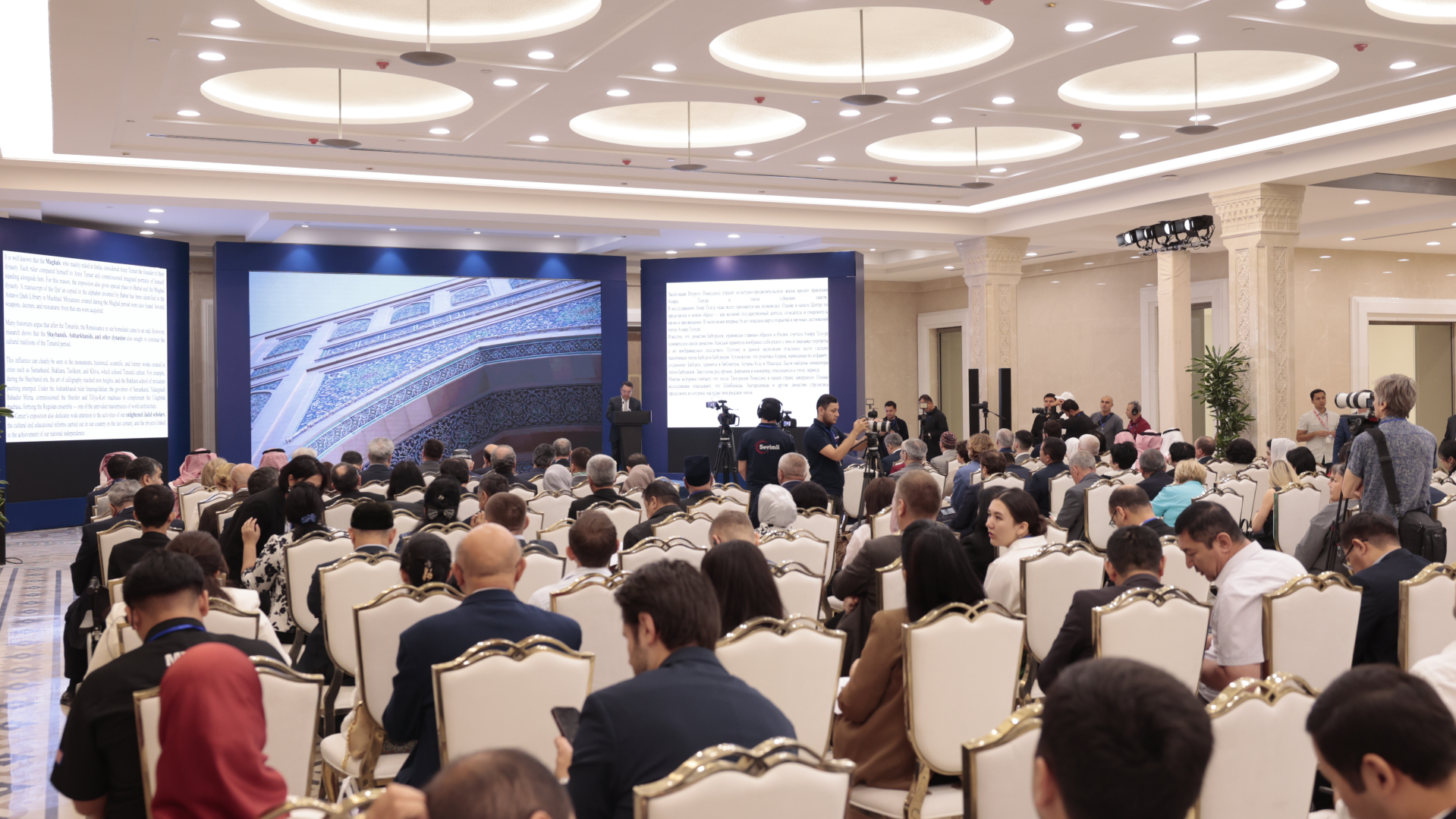
Over 100 experts from more than 20 countries of the world are in Tashkent!
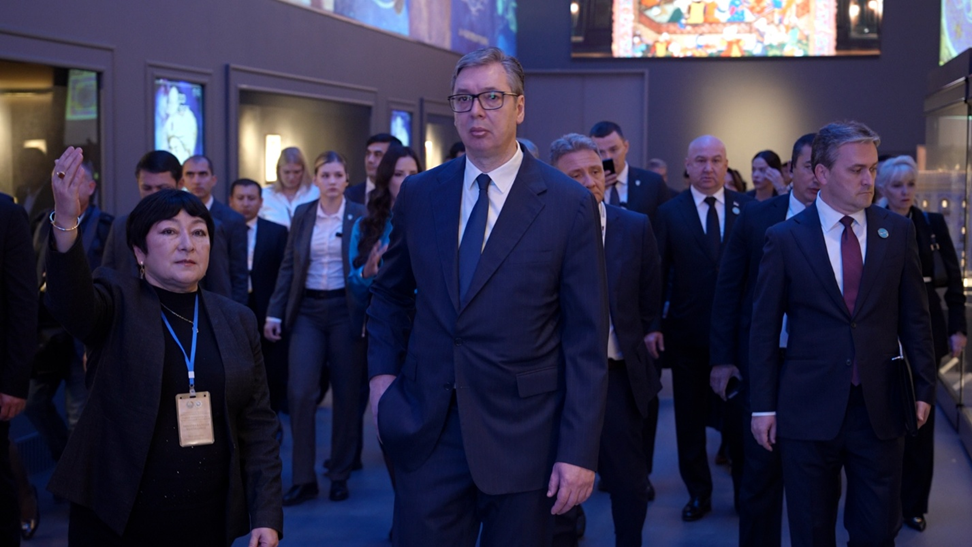
President of Serbia Aleksandar Vučić visited the Islamic Civilization Center in Uzbekistan
The Center for Islamic Civilization – a global platform leading towards enlightenment
