


Travel through history with the great hadith scholar’s map of scholarly journeys
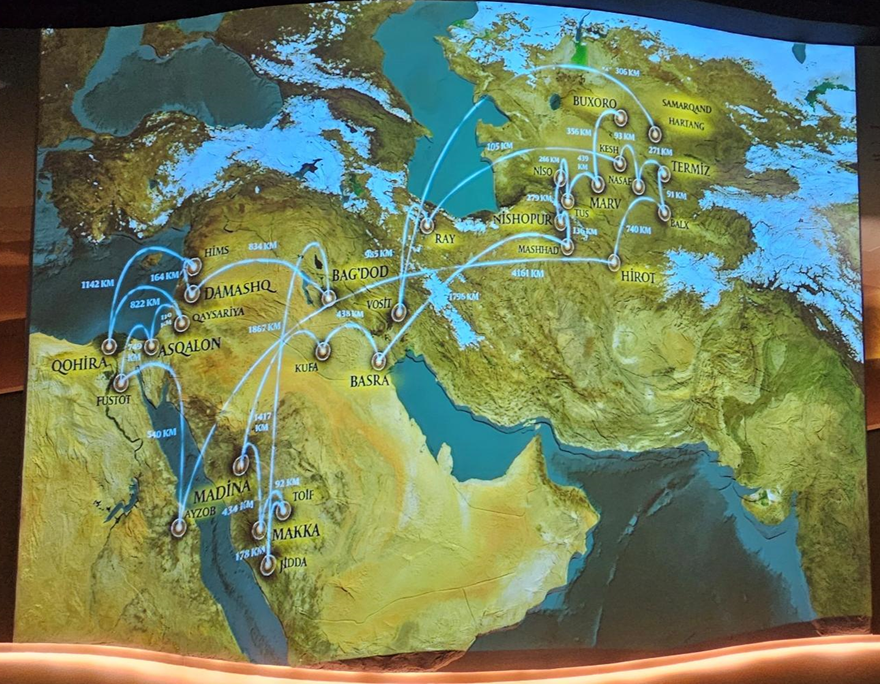
In the history of Islamic sciences, undertaking journeys in search of knowledge has been regarded as a noble tradition among hadith scholars. Before setting out for other lands, scholars considered it their duty first to listen to and record hadiths from all reliable narrators in their own city. One of the great hadith scholars who faithfully upheld this honorable scholarly tradition was Imam Muhammad ibn Ismail al-Bukhari.
According to historical sources, Imam al-Bukhari lived in Bukhara until the age of sixteen, listening to hadiths from the scholars of his homeland and recording them. Within this short period, he attained scholarly maturity and reached the rank of a trustworthy narrator. Later, he became a great scholar who traveled across the entire Muslim world in pursuit of compiling and perfecting the science of hadith.
In 825, Imam al-Bukhari traveled to Mecca with his mother and his brother Ahmad to perform the Hajj. After the pilgrimage, his mother and brother returned to Bukhara, while Imam al-Bukhari chose to remain in Mecca due to his boundless thirst for knowledge. This decision marked the beginning of the lifelong scholarly journeys that defined his legacy.
According to the testimony of Imam al-Bukhari’s close disciple and scribe, Abu Ja‘far Muhammad ibn Abu Hatim al-Warraq al-Bukhari, Imam al-Bukhari had already memorized the works of Imam Abdullah ibn al-Mubarak and Waki‘ ibn al-Jarrah by the age of sixteen. These facts indicate that his first scholarly journey took place in the year 210 AH (826 CE).
At that time, Mecca and Medina were among the most important centers of Islamic learning. In Mecca, Imam al-Bukhari attended the scholarly gatherings of all the prominent hadith scholars and listened to their narrations. In 212 AH (828 CE), at the age of eighteen, he traveled to Medina, where he studied under renowned scholars such as Ibrahim ibn al-Mundhir, Mutrif ibn Abdullah, Ibrahim ibn Hamza, and others.
It was precisely in Medina, during the illuminated nights near the Mosque of the Prophet, that Imam al-Bukhari began writing the initial drafts of his famous work At-Tarikh al-Kabir.
According to the consensus of historians, although not continuously, Imam al-Bukhari spent nearly six years in the Hijaz region, including Mecca, Medina, Ta’if, and Jeddah.
After the Hijaz, Imam al-Bukhari continued his scholarly journey toward Iraq. Basra, Kufa, and Baghdad were major centers of learning at the time. In Basra, he studied under well-known scholars such as Imam Abu ‘Asim al-Nabil and Safwan ibn ‘Isa. Imam al-Bukhari himself recalled, “I traveled to Basra four times.”
He traveled several times to Kufa and Baghdad as well. Baghdad, the capital of the Abbasid Caliphate, had become a major center of knowledge. There, Imam al-Bukhari met Imam Ahmad ibn Hanbal and was deeply influenced by him.
According to historical sources, Imam al-Bukhari traveled to Baghdad eight times. During their final farewell, Imam Ahmad ibn Hanbal’s words, “Are you leaving knowledge and its people to go to Khurasan?” were later remembered by Imam al-Bukhari with deep sorrow.
Imam al-Bukhari also traveled to the Levant, where he studied under scholars such as Muhammad ibn Yusuf al-Firyabi. In Egypt, he recorded hadiths from scholars like ‘Uthman ibn Salih and Abdullah ibn Salih.
He also visited the Jazira region Harrān, Ruhā, Raqqa, and Mosul where he studied under prominent narrators such as Ahmad ibn Abdulmalik al-Harrani.
Khurasan and its surrounding cities Marv, Balkh, Herat, Nishapur, Rayy, Jibal, and Wasit were among the places where Imam al-Bukhari spent the most time and actively disseminated knowledge. Al-Khatib al-Baghdadi emphasized, “Imam al-Bukhari recorded hadiths in all the cities of Khurasan, Iraq, the Hijaz, the Levant, and Egypt.”
Imam al-Bukhari devoted his entire life to the thorough study, verification, and compilation of the science of hadith.
Today, these great scholarly journeys are presented through a special map in the “First Renaissance Period” section of the Islamic Civilization Center in Uzbekistan, allowing visitors to become acquainted with Imam al-Bukhari’s remarkable travels in pursuit of knowledge.
Shahnoza Rahmonova
P.S.: The article may be republished with a link to the Center’s official website.
Most read
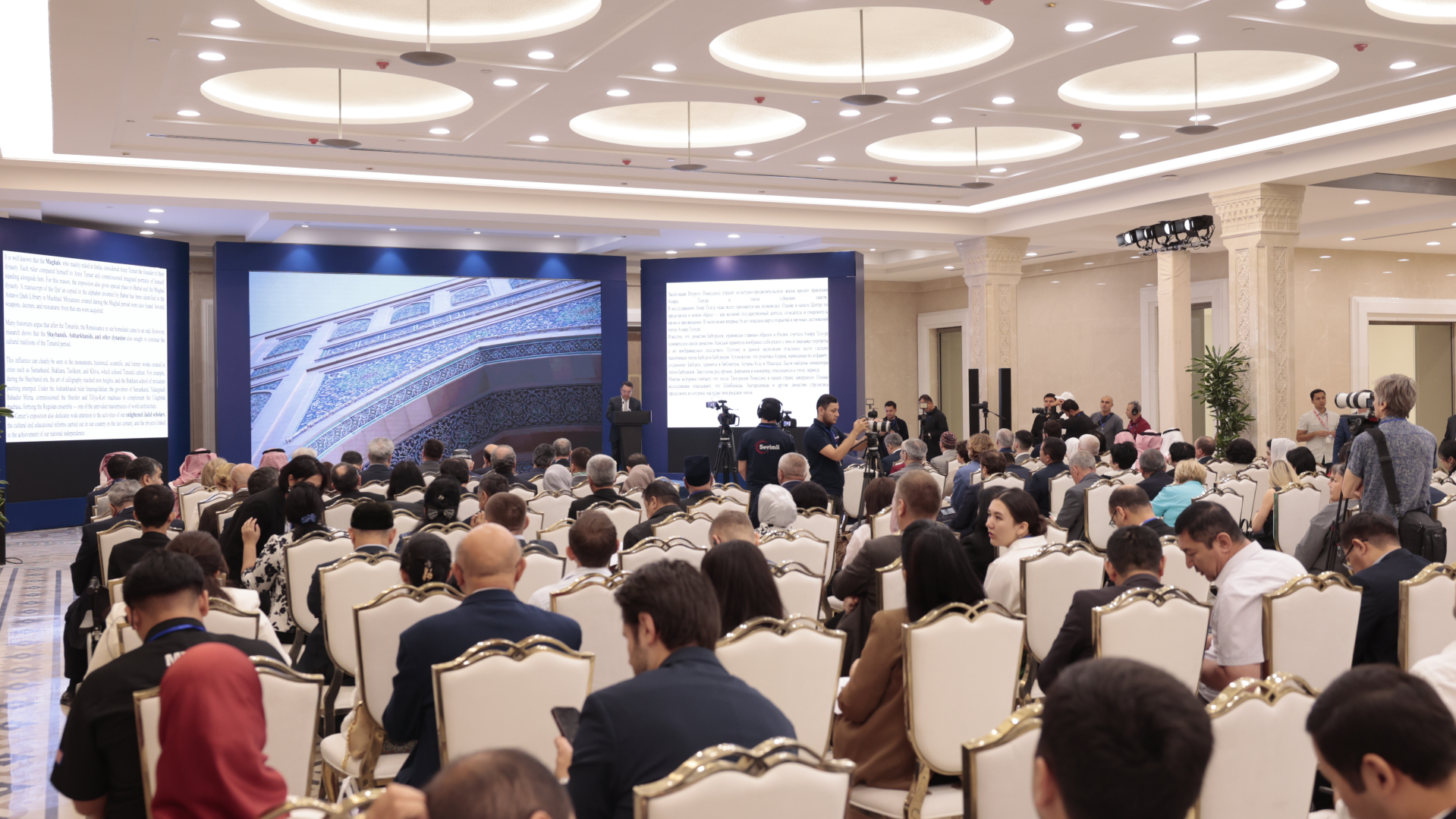
Over 100 experts from more than 20 countries of the world are in Tashkent!

President of Serbia Aleksandar Vučić visited the Islamic Civilization Center in Uzbekistan
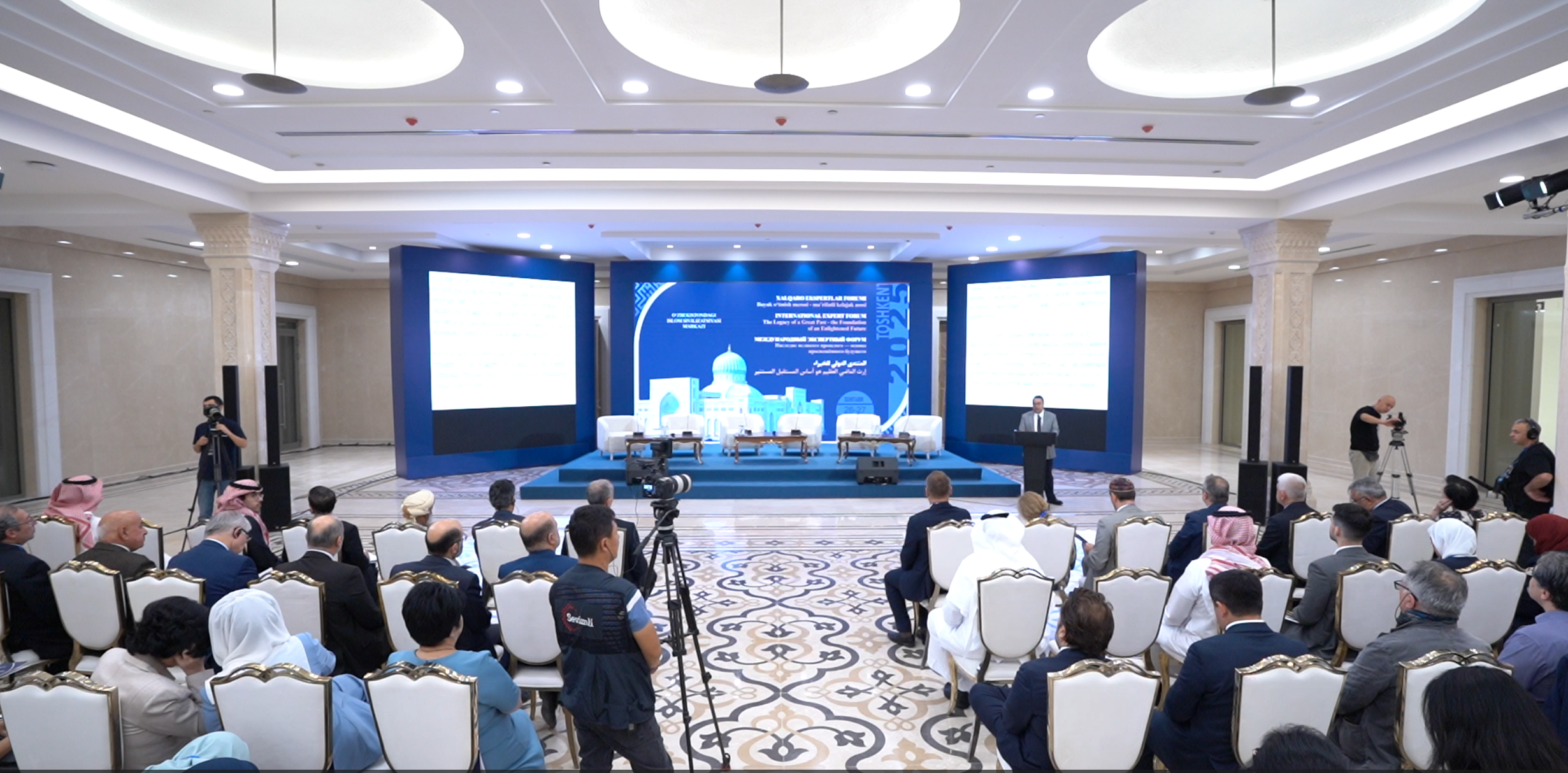
The Center for Islamic Civilization – a global platform leading towards enlightenment
