


Ways to “save” ancient manuscripts were discussed

How are ancient manuscripts preserved, and what consequences can incorrect restoration lead to? At a training seminar held at the Islamic Civilization Center in Uzbekistan, dedicated to the conservation and restoration of ancient written sources, specialists in the field exchanged views on advanced practices and pressing challenges in this area.
The training seminar titled “Conservation and Restoration of Ancient Written Sources,” held in the conference hall of the Calligraphy School at the Islamic Civilization Center in Uzbekistan, focused on the scientific preservation of the country’s rich manuscript heritage formed over centuries, the protection of their physical condition, and the application of modern approaches in restoration and conservation work.
During the seminar, Gulnora Ganieva, Deputy Director of the Islamic Civilization Center in Uzbekistan, emphasized that decisions adopted by the country’s leadership to develop this field serve as an important legal foundation for safeguarding scientific heritage, studying it in depth, and presenting it to the global scholarly community.
A number of presentations on topical issues were delivered during the event. In particular, Habibulloh Solih, a research fellow and calligrapher at the Islamic Civilization Center in Uzbekistan, spoke about the importance of scribal traditions in the preservation of manuscripts. Shukhrat Polatov, a restorer at the Alisher Navoi National Library, provided concrete examples showing that improperly carried out restoration work can cause damage to ancient sources.
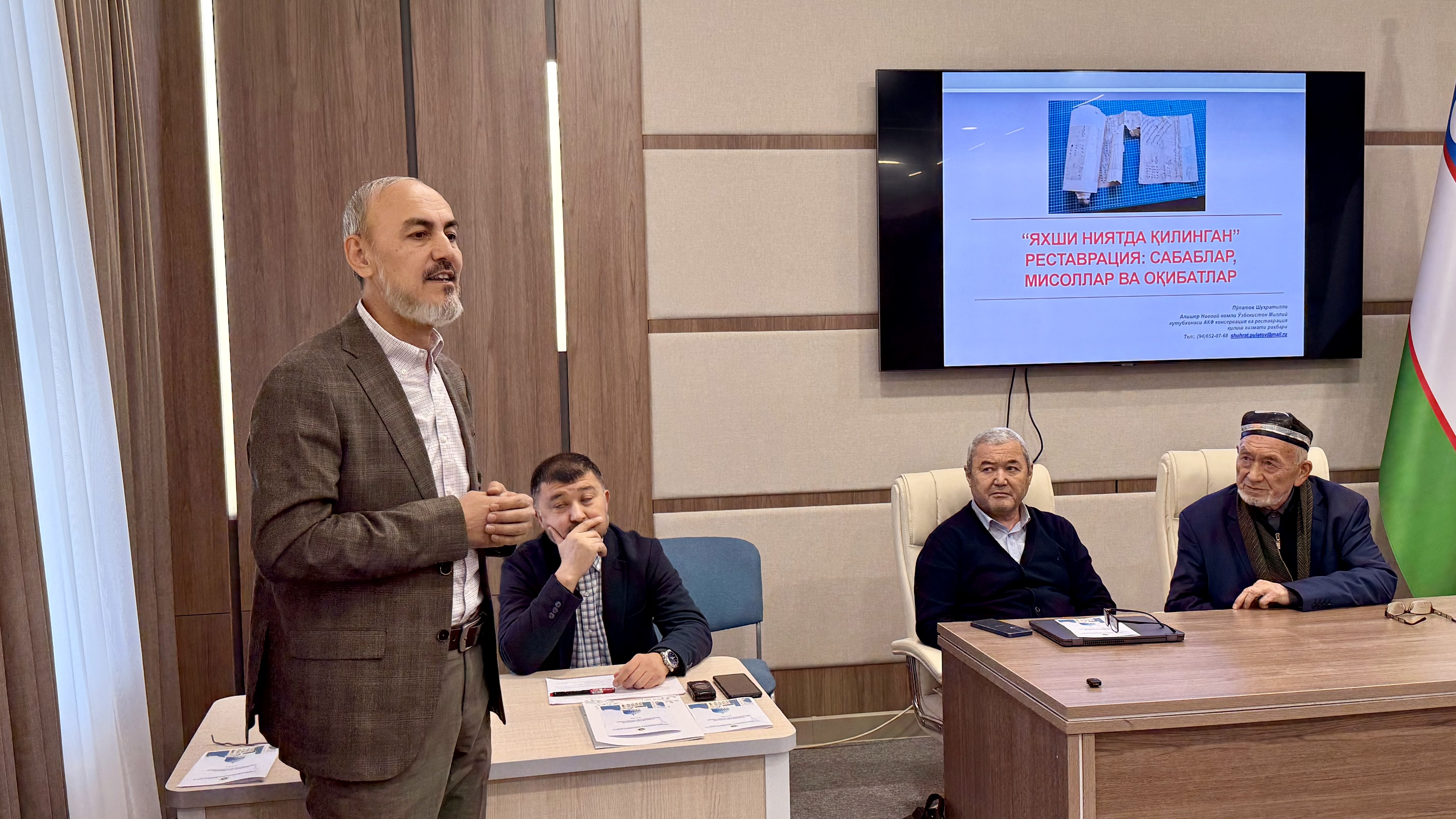
“There are a number of unique manuscripts collected at the Islamic Civilization Center in Uzbekistan, and their number continues to grow. I believe there is a strong possibility that in the future this will become a fund containing sources that will serve as a basis for scholarly research in Central Asia. It is important to establish these tasks step by step,” said Shukhrat Polatov.
Professor Bekzod Hojimetov of the Kamoliddin Behzod National Institute of Fine Arts and Design spoke about the experience of preserving, restoring, and exhibiting manuscripts in Turkish libraries, sharing advanced methods used in international practice.

In addition, Bashorat Khojaeva, a lecturer at the same institute, addressed biological, chemical, and mechanical forms of damage and methods of combating them.
“Today, the Islamic Civilization Center in Uzbekistan is implementing major projects. The return of artifacts kept abroad to our country and the restoration of existing ones is a very large undertaking. Our dialogue is particularly important for specialists in this field, as well as for students and young researchers. Because by sharing our experience and exchanging views, growth in this field can be observed,” said Bekzod Hojimetov.
Muhammadsiddiq Usmonov, Head of the Manuscripts Department of the International Islamic Academy of Uzbekistan, spoke about the specific features of preparing manuscripts for publication, scientific editing, and the publishing process.

Saidrahmat Ikramov, a restorer of ancient sources at the Muslim Board of Uzbekistan, shared practical insights based on hands-on experience in the conservation and restoration of ancient written sources. Azimjon Gofurov, a research fellow at the Islamic Civilization Center in Uzbekistan, drew particular attention to the scholarly value of rare sources preserved in national collections. Information was also provided about the special volume of the “State Register of Qur’an Manuscripts Preserved in the Collections of the Republic of Uzbekistan,” according to which each volume includes one thousand manuscripts.
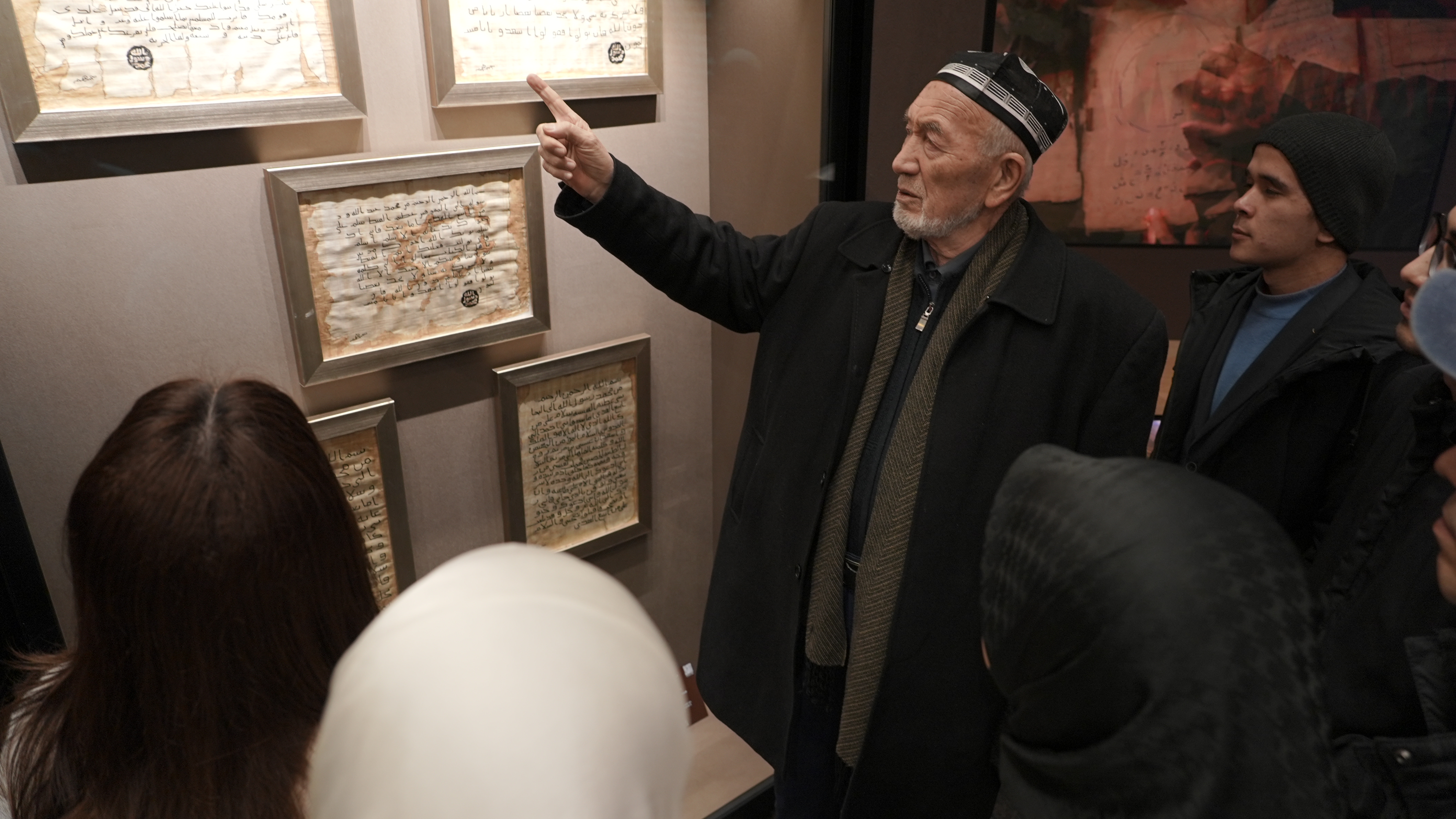
At the conclusion of the seminar, participants familiarized themselves with the exhibitions of the Islamic Civilization Center in Uzbekistan and received detailed information about the manuscripts, historical artifacts, and scientific concepts on display. Participants emphasized that the seminar would serve to further strengthen cooperation in the field of preserving and restoring ancient written sources.
Most read
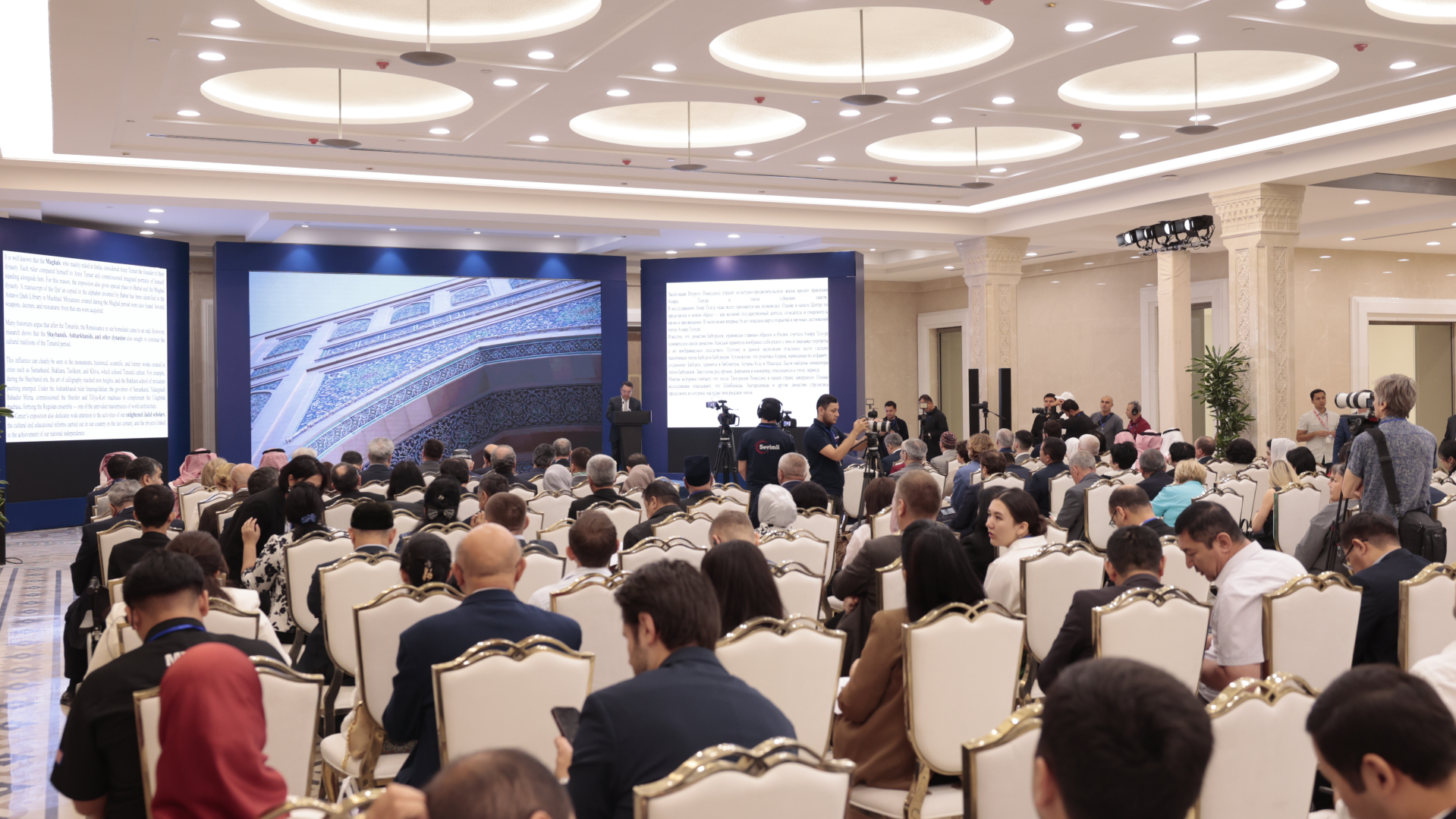
Over 100 experts from more than 20 countries of the world are in Tashkent!
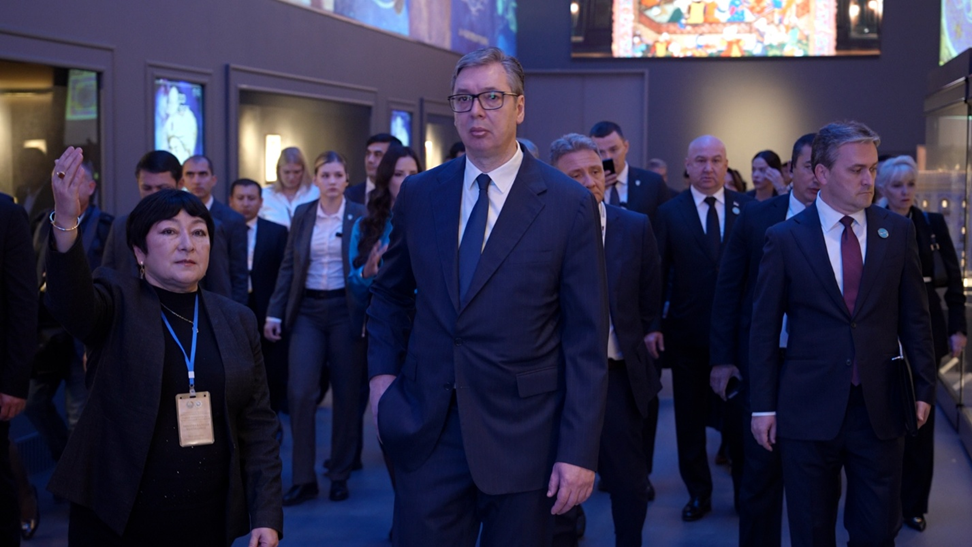
President of Serbia Aleksandar Vučić visited the Islamic Civilization Center in Uzbekistan
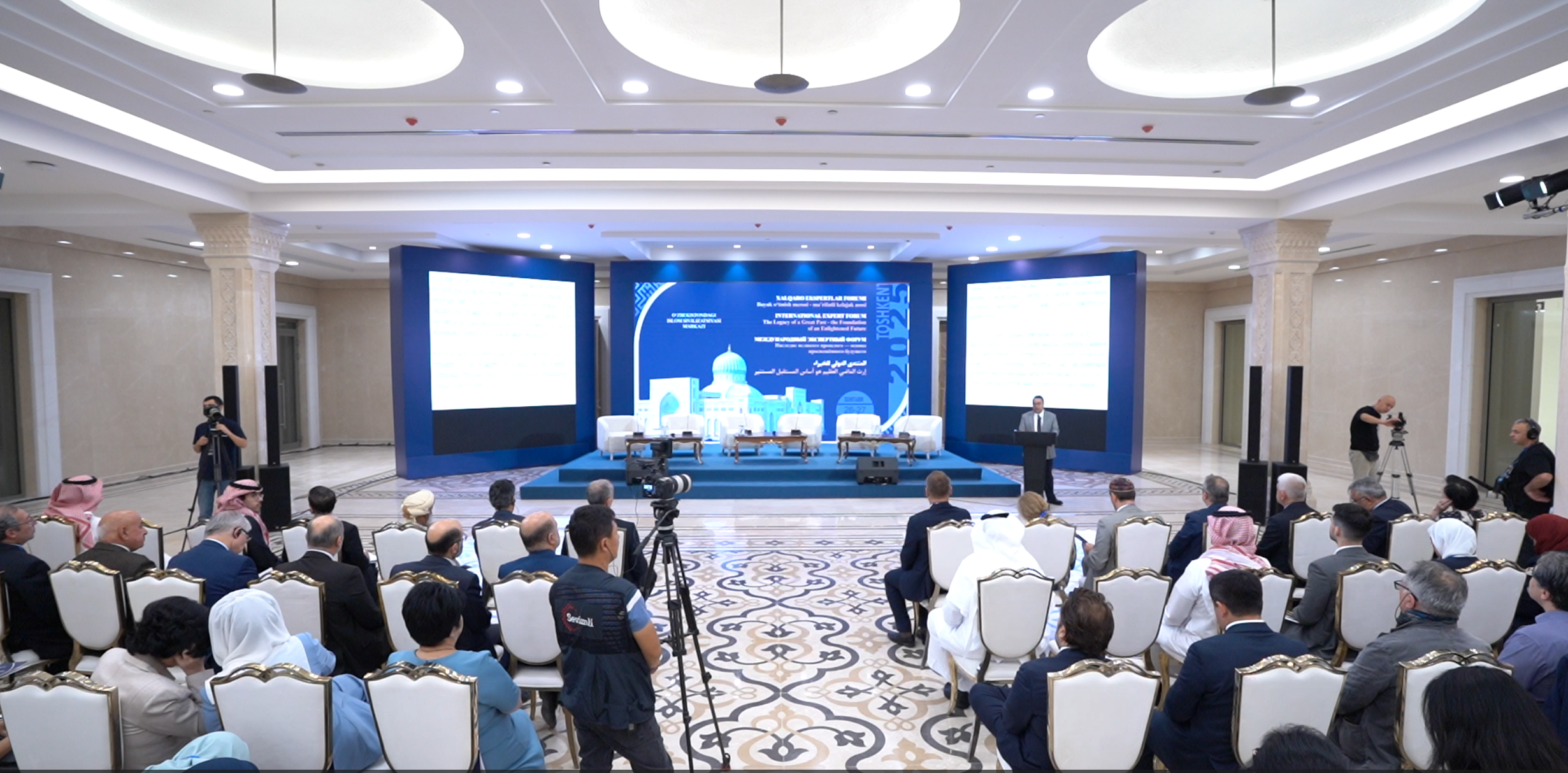
The Center for Islamic Civilization – a global platform leading towards enlightenment
