


Al-Biruni’s globe, created a thousand years ago, has been restored
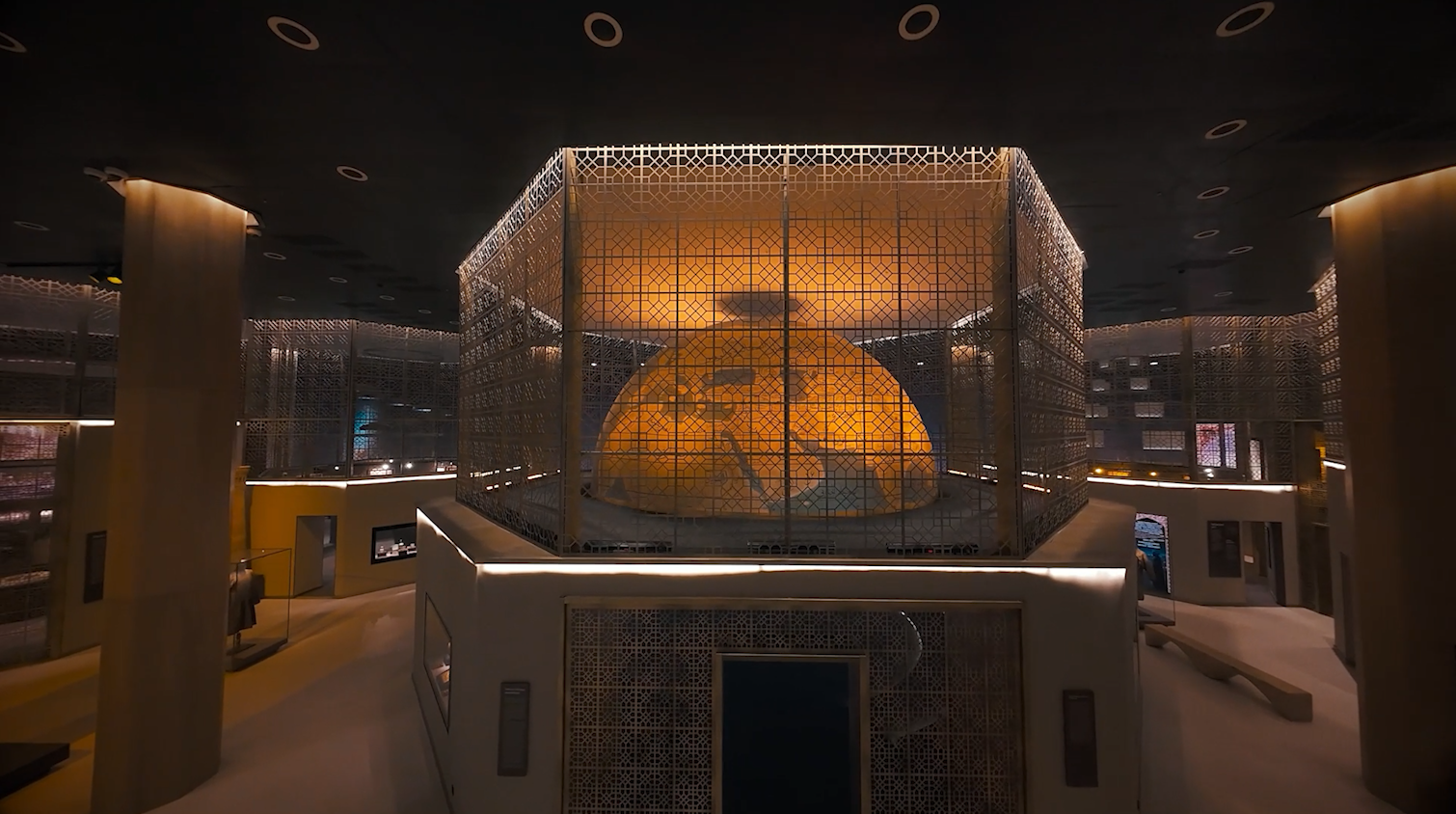
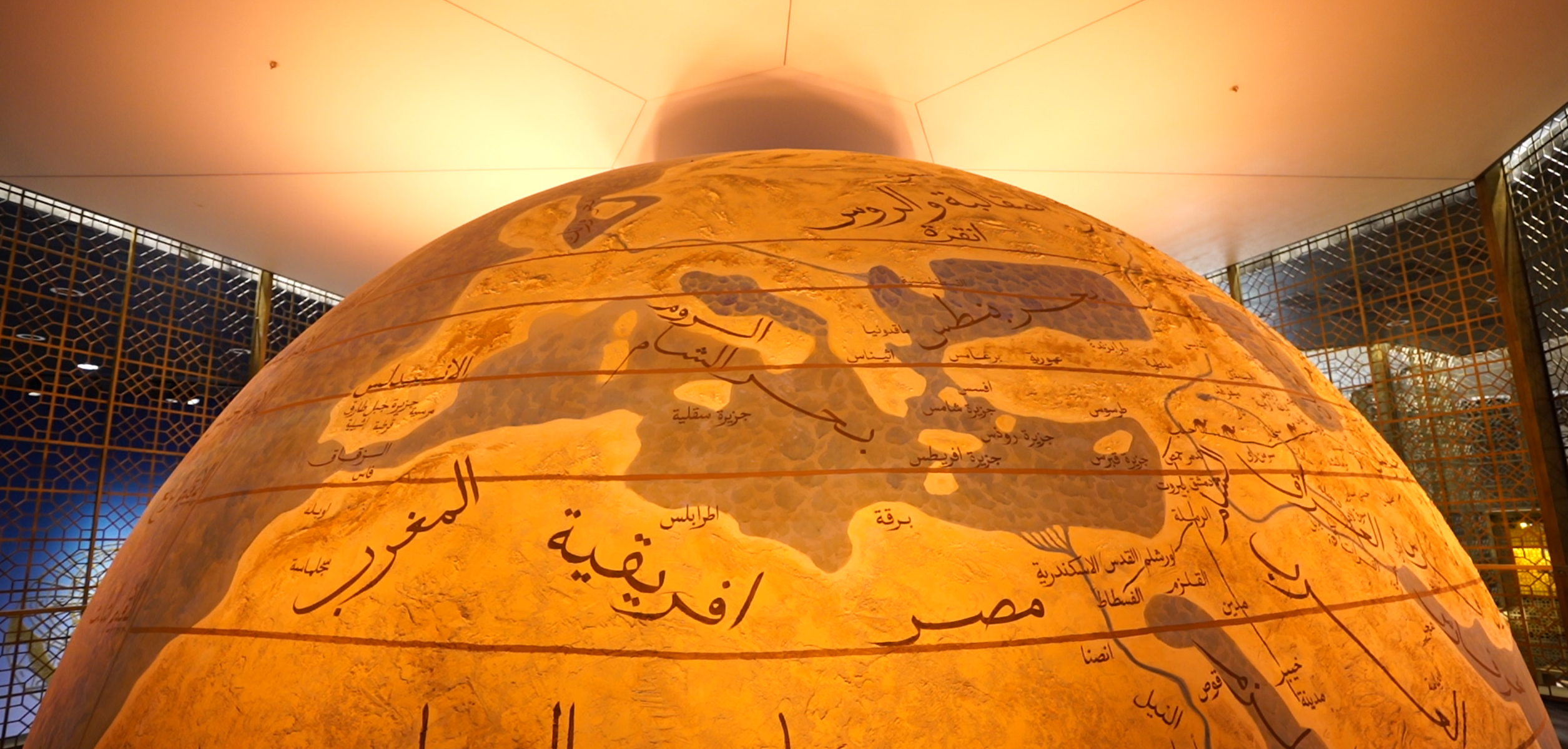
One of the core missions of the Islamic Civilization Center in Uzbekistan is to restore lost heritage. The reconstruction of al-Biruni’s globe, which has not survived to our time, became a practical embodiment of this mission. Today, al-Biruni’s lost legacy has been scientifically reconstructed at the Islamic Civilization Center.
In the development of human thought, understanding the shape of the Earth and representing it on a scientific basis is considered a crucial turning point in the history of civilization. One of the great thinkers who made an invaluable contribution to the advancement of world science in this field was Abu Rayhan al-Biruni. His scholarly legacy in geography, astronomy, and mathematics continues to serve humanity as a valuable scientific source to this day.
It is known that in 995, while living in the city of Kath one of the major scientific and educational centers of Khwarazm al-Biruni created a globe. This achievement is regarded as a major scientific breakthrough not only in Eastern but in global cartographic history. This is because al-Biruni’s globe was not a theoretical concept, but a practical scientific instrument developed on the basis of precise calculations and data from geodesy and astronomy.
In the ancient world, the earliest scientific ideas about the spherical shape of the Earth are found in the works of the Greek scholar Claudius Ptolemy. Later, in the 15th century, Martin Behaim created a globe in Europe.
However, al-Biruni’s superiority lies in the fact that, after deeply analyzing these scientific traditions, he succeeded in creating a globe with a diameter of nearly five meters based on entirely new principles of mathematical geography for his time. Unfortunately, this unique scientific instrument has not survived to the present day.
Abu Rayhan al-Biruni repeatedly and clearly stated in his works that the Earth is spherical and proved this with scientific evidence. In particular, in his work India, he writes:
“The reason the sun is not visible at night is not because it moves far away from the Earth. It becomes invisible to us due to the Earth’s roundness… The reason for this is that the Earth is spherical.”
In Al-Qanun al-Mas‘udi, the scholar explains through comparative examples that the overall shape of the Earth resembles a sphere, while mountains and depressions are very small in relation to the whole Earth. According to him, if the Earth were completely flat, natural balance would be disrupted and all land would be submerged by water.
Al-Biruni had a clear scientific purpose in creating the globe. He planned to place geographic objects on it and calculate longitude and latitude based on distances between settlements. He writes about this in his work Geodesy as follows:
“I compared Ptolemy’s Geography with the works of Eastern scholars… I determined distances based on travelers’ reports and verified the data through comparison. For this purpose, I spared neither effort nor resources.”
This historical legacy is now being given practical form at the Islamic Civilization Center in Uzbekistan. Based on al-Biruni’s scientific heritage, his globe has been reconstructed at the Center.
Regarding this, Vice President of the Academy of Sciences of Uzbekistan, Professor Bahrom Abduhalimov, states:
“The Islamic Civilization Center is a unique complex that presents Uzbekistan’s many-thousand-year-old rich history within a unified concept. Al-Biruni’s works include the coordinates of nearly 600 cities that existed in his time. Today, together with international partners, based on this data, al-Biruni’s globe has been reconstructed and 150 cities have been placed on it. This is the revival of a great scientific legacy that had not survived to our time.”
In conclusion, the Islamic Civilization Center in Uzbekistan is taking shape as a scientific and educational space with no equivalent in the world. The al-Biruni globe displayed at the Center vividly demonstrates not only the great scholar’s scientific legacy, but also the role of thinkers who emerged from Uzbek soil in the development of world civilization. This, in turn, serves to instill pride in the younger generation for their people’s great history and to inspire them to be worthy of these noble scientific traditions.
Durdona Rasulova
P.S. The article may be republished with a link to the Center’s official website.
Most read
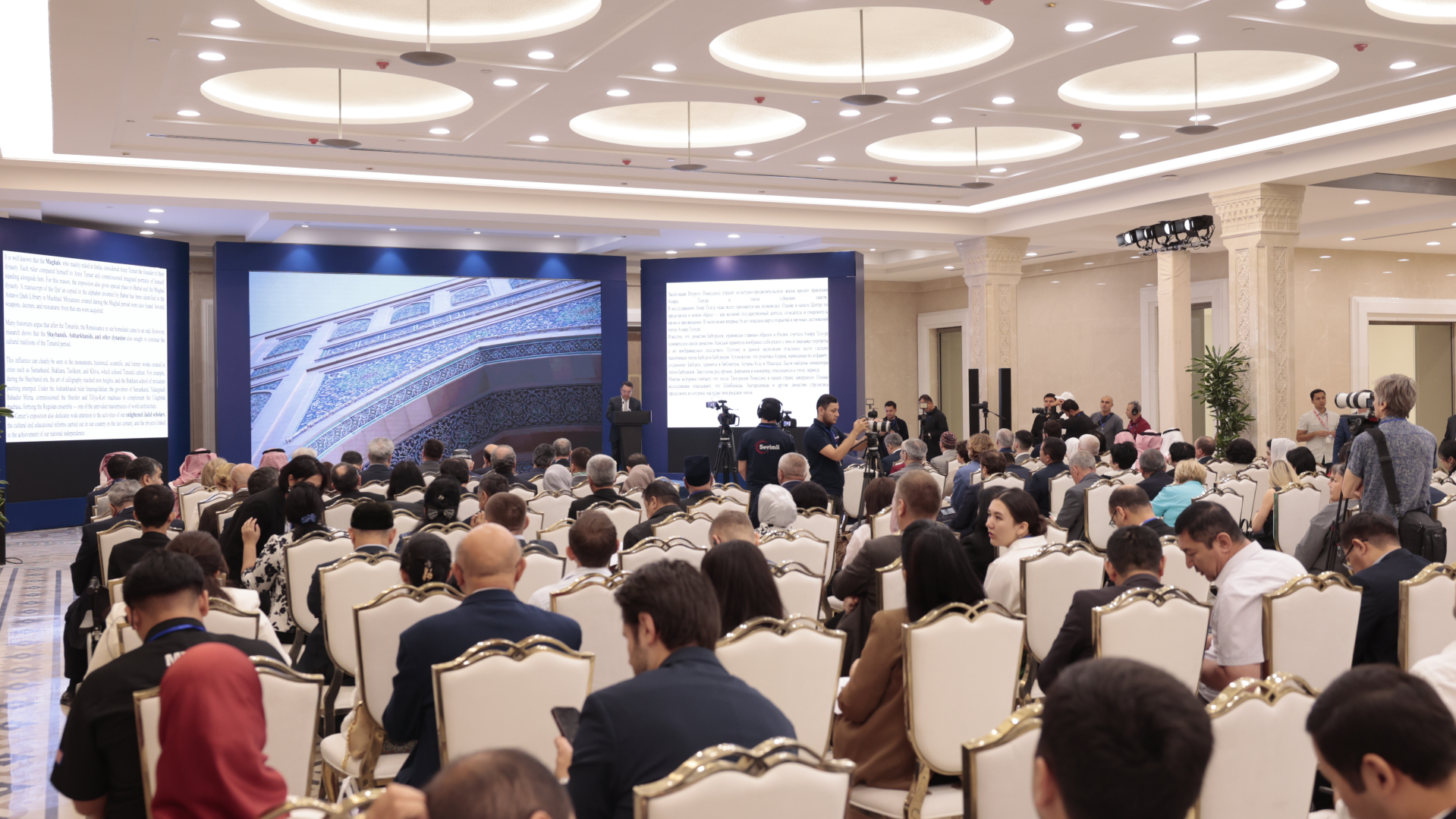
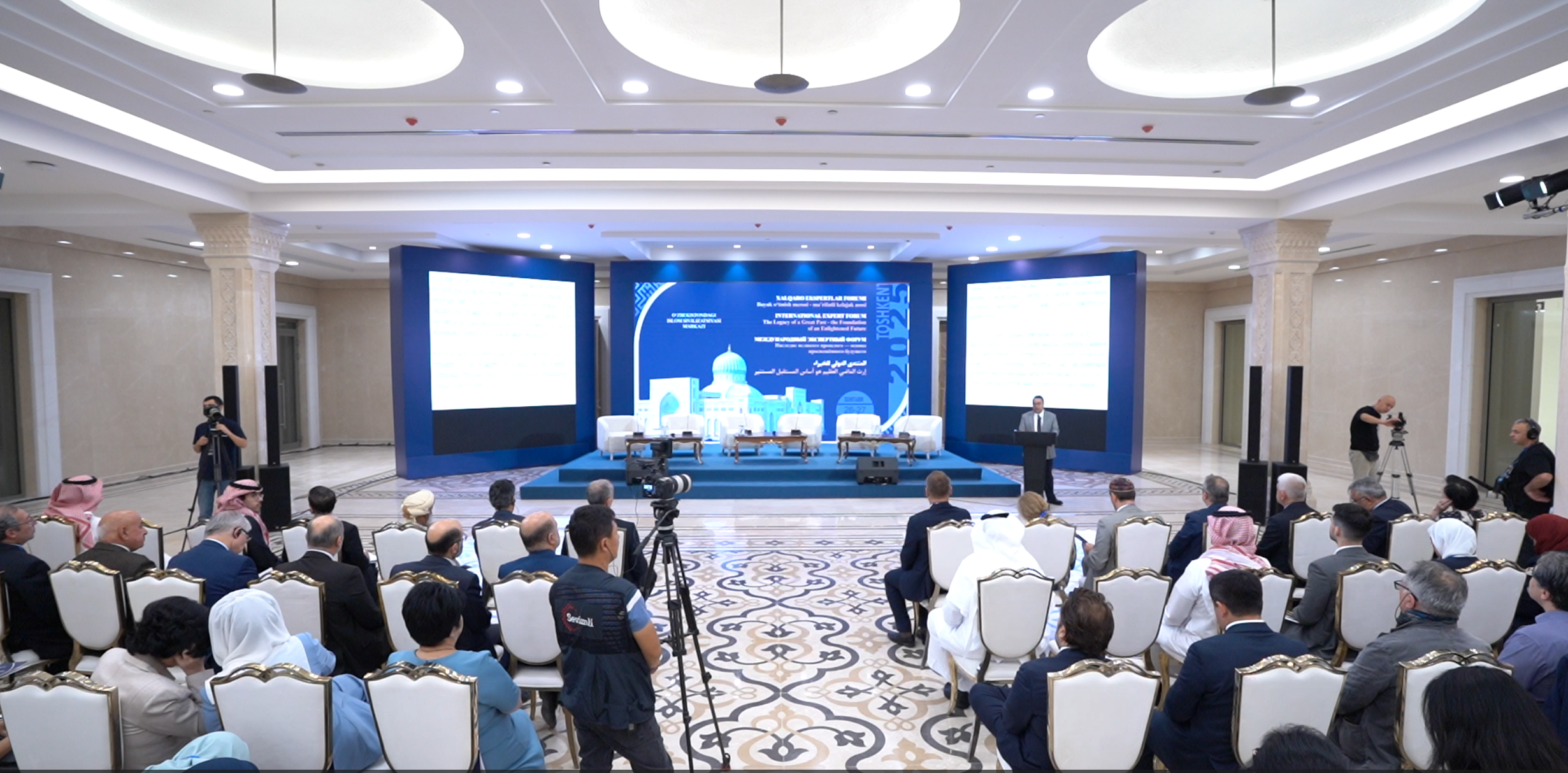
Over 100 experts from more than 20 countries of the world are in Tashkent!
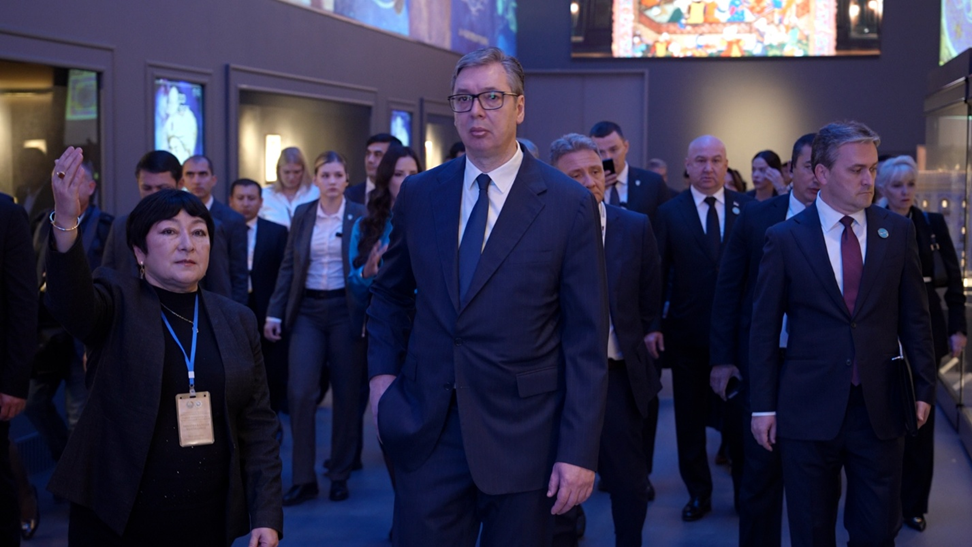
President of Serbia Aleksandar Vučić visited the Islamic Civilization Center in Uzbekistan
The Center for Islamic Civilization – a global platform leading towards enlightenment
