


CNN World: The Islamic Civilization Center in Uzbekistan is a space of enlightenment and inspiration
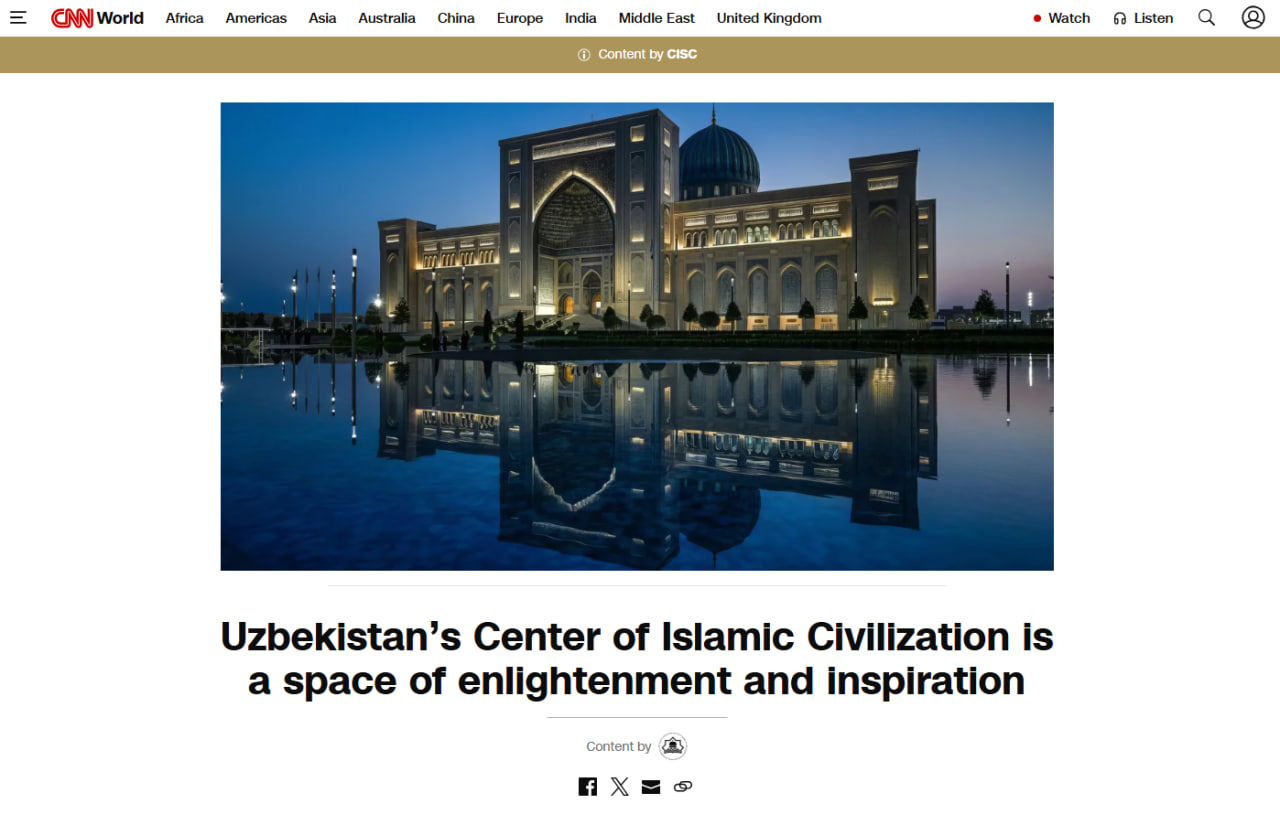
CNN World highlighted the Islamic Civilization Center in Tashkent, which is about to open, as one of the largest spiritual and educational projects being implemented in New Uzbekistan. The report extensively covers the Center’s concept aimed at presenting Islamic heritage in a modern interpretation, its architectural design, its role in preserving rare manuscripts and artifacts, and its significance as an international intellectual hub that unites science, education, and culture.
At the crossroads of ancient history and modernity, a project has been completed in Tashkent that is being described by some as the most ambitious cultural initiative of New Uzbekistan: the opening of the Center for Islamic Civilization.
A foundation of wisdom
The Islamic Civilization Center is not merely a museum complex; it is a large-scale cultural and educational megaproject designed to reinterpret the role of Islamic heritage in world history. Its aim is to study Uzbekistan’s own cultural and historical legacy and to preserve it for future generations.
The idea for the Center was first put forward by Uzbekistan’s President, Shavkat Mirziyoyev, in 2017 from the podium of the United Nations, where he articulated the ethos behind the project.
“Our most important task is to convey to the global community the truly humanistic essence of Islam. Islam calls us to goodness and peace, to safeguarding the genuine human core”.

The Islamic Civilization Center is a product of President Shavkat Mirziyoyev’s vision
Architecture of meaning
Eight years after the President presented this historic vision, it has acquired a visible architectural embodiment. The complex has been erected in the Hast-Imam district – the spiritual heart of Uzbekistan’s capital, Tashkent.
The 65-meter dome and four portals symbolize the unity of the country’s regions. At the core of the complex stands the Hall of the Holy Qur’an, where the famous 7th-century Mushaf of Uthman (Quranic manuscript), inscribed by UNESCO in the international Memory of the World register, is preserved.
The concept of the exhibitions, enriched with modern digital installations, is built along a chronological axis from the pre-Islamic era, through the First and Second Renaissances, to the New Age and New Uzbekistan.

The famous 7th-century Mushaf of Uthman is exhibited in a dedicated hall
An intellectual ecosystem
The Center unites science, art, and education. It features an extensive library housing 200,000 books, a School of Calligraphy, craft workshops, and a restoration laboratory. The Center also hosts the King’s Foundation School of Traditional Arts and includes Uzbekistan’s first dedicated children’s museum, where science is revealed through play, experiments, and multimedia installations.
Within the Center are the offices of international organizations, including the Islamic World Educational, Scientific, and Cultural Organization (ICESCO), Research Centre for Islamic History, Art, and Culture (IRCICA), the Oxford Centre for Islamic Studies, and other scientific and cultural institutions.
Within the complex is a 460-seat conference hall, a space originally designed for international dialogue and cooperation. All discoveries, research, and cultural initiatives produced in this intellectual environment will be presented in the exhibitions on the first floor of the Center. The museum’s content will be continuously updated, transforming the space into a living, evolving system where the past and present remain in constant dialogue.
Khaled El-Anany, Director-General of UNESCO:
I wish this shining Center to become a light for the whole world. It stands as a true testament to cultural diversity, tolerance, openness, and Uzbekistan’s role in the development of humanity.

The 460-seat conference hall is a space designed for international dialogue and cooperation
A memory pool
One of the key missions of the Center is the repatriation of lost artifacts that, for many years, remained abroad. Delegations of Uzbek scholars and art historians visited leading auction houses, as well as renowned private collectors and galleries around the world. As a result of this extensive work, more than a thousand rare objects were brought back to Uzbekistan.
Meanwhile, the World Society for the Study, Preservation, and Popularization of the Cultural Legacy of Uzbekistan (WOSCU) donated around one thousand manuscripts and artifacts directly connected to the historical and cultural heritage of Uzbekistan.
The Center also partners with philanthropists and private collectors to ensure it maintains its historical integrity and fully meets international standards for the highest level of organization, content, and cultural significance.

The Center symbolizes a reinterpretation of Uzbek knowledge, culture, and enlightenment
A future beginning today
“Every day, the Islamic Civilization Center in Uzbekistan receives countless messages of gratitude addressed to President Shavkat Mirziyoyev for creating in Tashkent one of the world’s major hubs shaping a modern understanding of Islamic civilization as one of peace, goodness, science, enlightenment, and spiritual culture,” said Dr. Firdavs Abdukhalikov, Director of the Islamic Civilization Center and Chairman of WOSCU.
“Today, everything that for centuries was scattered across the pages of history is being brought together once more,” Abdukhalikov continued. “In the Islamic Civilization Center, these spiritual heights of the past acquire new unity, transforming into a space of memory, enlightenment, and a future that is beginning now.”
“It is our duty to advance this great project and turn it into a cultural and educational force capable of transforming the fruits of this great heritage into the powerful energy of an enlightened future.”
Most read
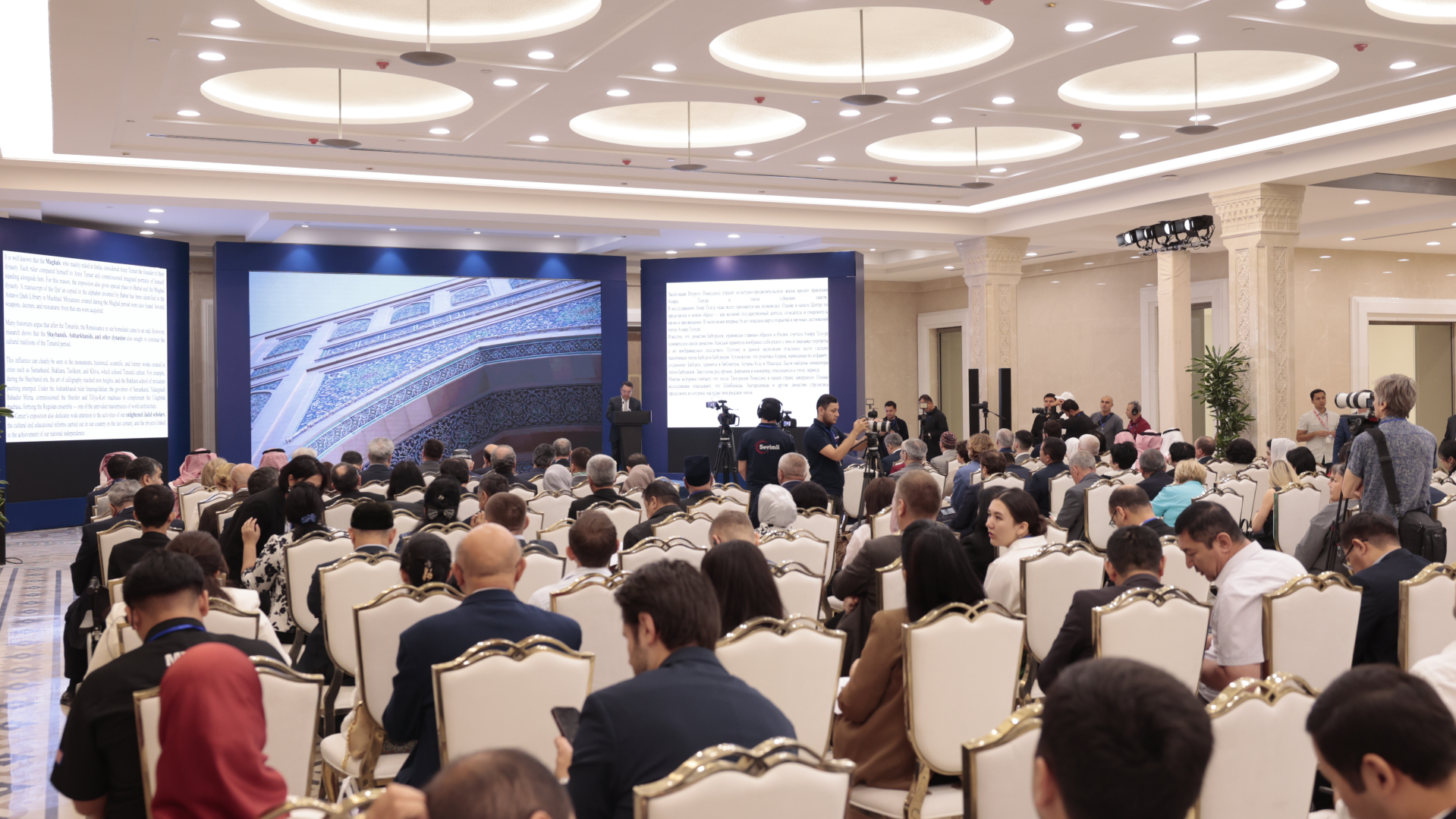
Over 100 experts from more than 20 countries of the world are in Tashkent!
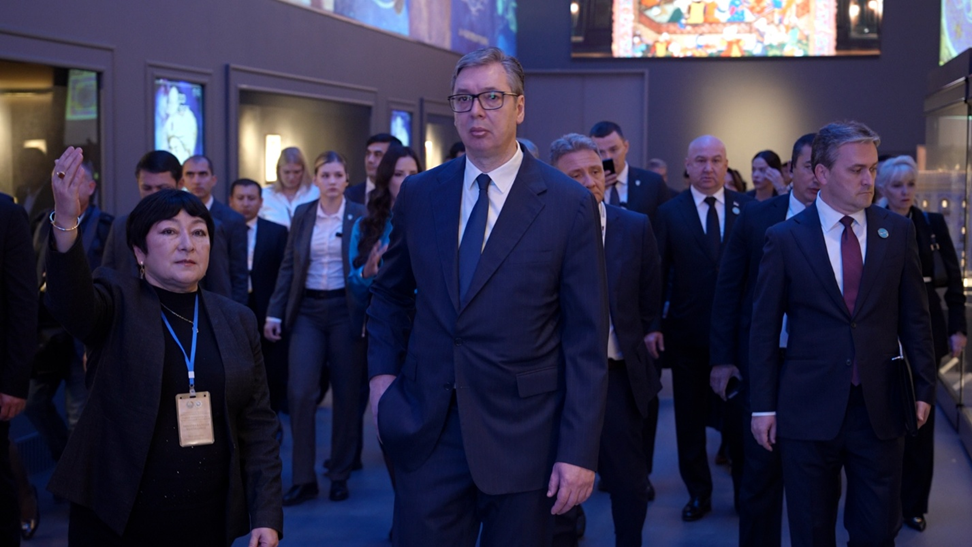
President of Serbia Aleksandar Vučić visited the Islamic Civilization Center in Uzbekistan
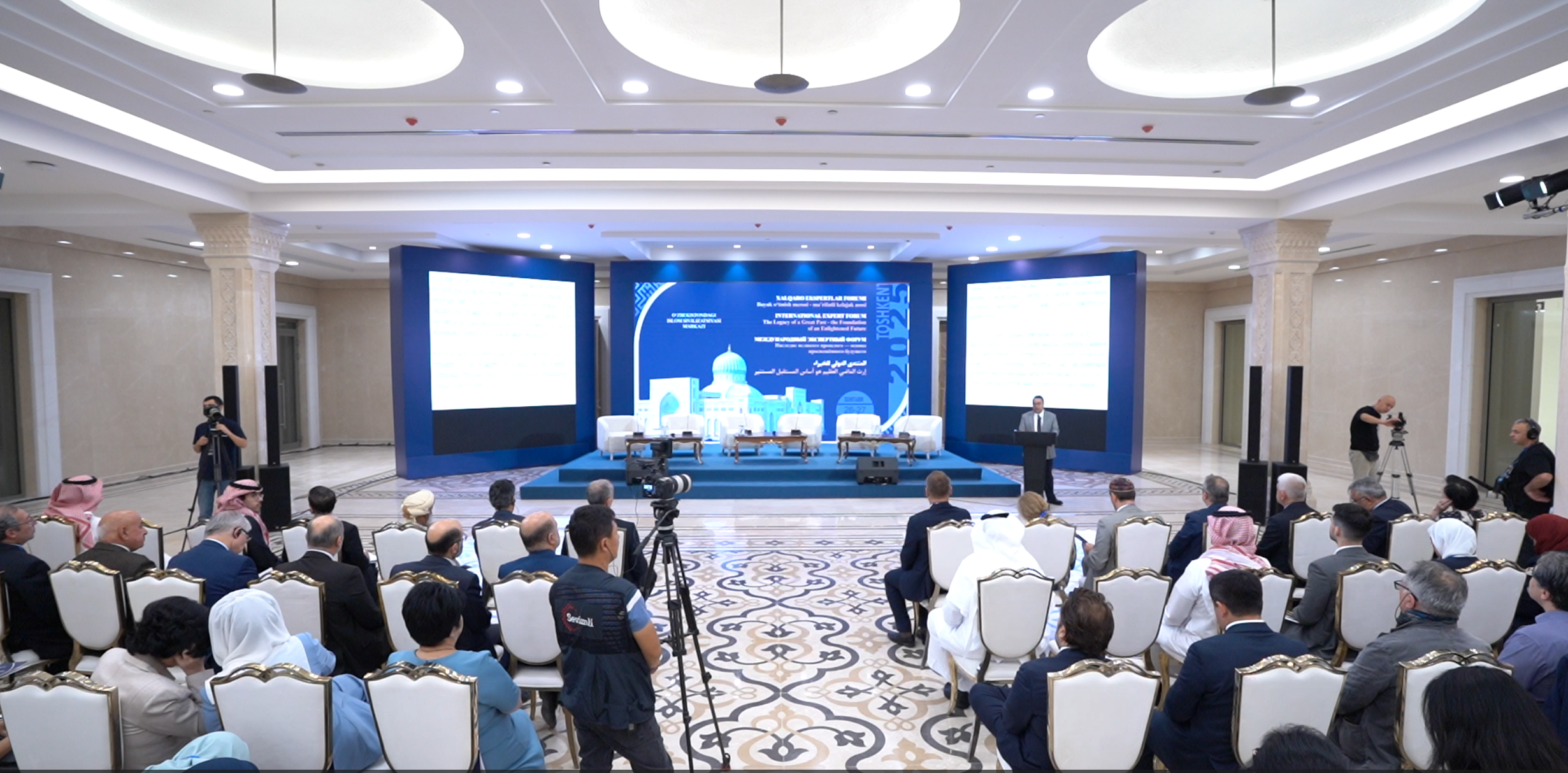
The Center for Islamic Civilization – a global platform leading towards enlightenment
