


Khaleej Times: "The Islamic Civilization Center in Uzbekistan: A new cultural and educational code for the world"
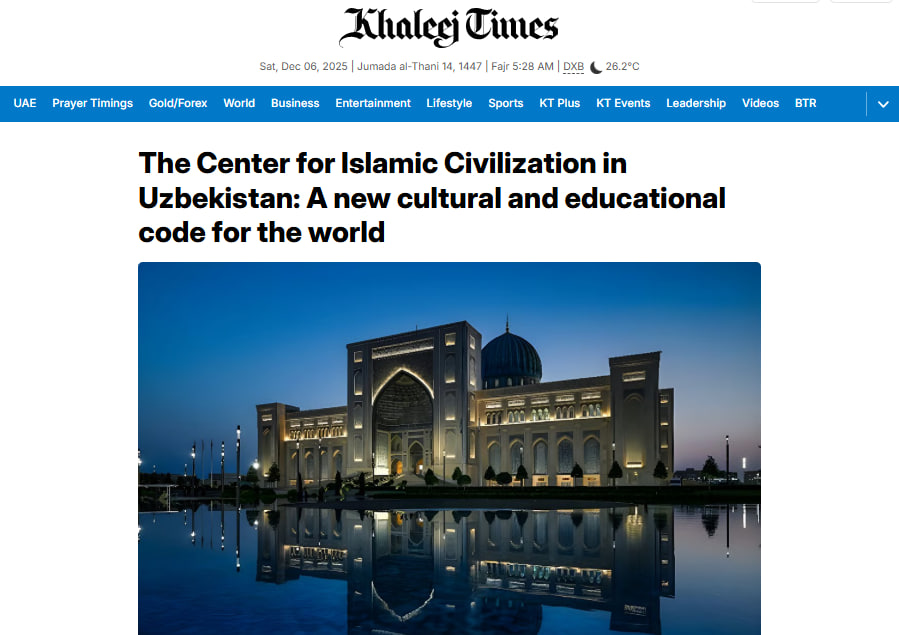
The leading publication of the United Arab Emirates Khaleej Times has published an article about the Islamic Civilization Center being established in Uzbekistan and its role in the region’s spiritual and educational processes. The material highlights the Center’s significance in restoring the heritage of the Muslim world, Uzbekistan’s efforts in preserving historical artifacts and strengthening cooperation with the international academic community, as well as the country’s growing reputation in the global cultural arena.
At the intersection of ancient history and modernity, a project has been completed in Tashkent that is already being described as the most ambitious cultural initiative of New Uzbekistan.
The idea of establishing the center was first presented by Shavkat Mirziyoyev, president of Uzbekistan, from the rostrum of the United Nations. At that time, he formulated a position that became the core ideological foundation of the project: “Our most important task is to convey to the global community the true humanistic essence of Islam. Islam calls us to goodness and peace, to preserving the true human spirit.”

This idea became the starting point: Islam is not only a religion but also a civilisation of knowledge, culture, and creation. It was from this very logic that the decision grew to create a center where Islamic heritage would be presented not merely as a museum display, but as a living part of the global intellectual process.
During his visit to the center in November, Khaled El-Anany, UNESCO director-general noted: “I wish this shining center to become a light for the entire world. It is a true testament to cultural diversity, tolerance, openness, and Uzbekistan’s role in the development of humanity, a genuine crossroads of civilisations!”
Not a museum, but an Intellectual Ecosystem

Eight years later, the historic thesis of the president of Uzbekistan has taken architectural form. The complex was built in the Hast-Imam district - the spiritual center of the capital of Uzbekistan, Tashkent.
The 65-metre dome and four portals symbolise the unity of the country’s regions. At the center lies the Hall of the Holy Qur’an, where the famous 7th-century Mushaf of Uthman is preserved, inscribed by UNESCO in the Memory of the World register.
The concept of the exhibitions, enriched not only with modern digital installations but also with original museum artifacts, is built along a chronological axis: the pre-Islamic era, the First Renaissance, the Second Renaissance, the modern era - and the era of New Uzbekistan.
The center is conceived as a living organism: it houses a vast library of 200,000 books, a school of calligraphy, craft workshops, and a restoration laboratory, for children, the region’s first “1001 Inventions” museum has been created. The King’s Foundation School of Traditional Arts also operates on the premises of the center.
The building hosts offices of international organisations: UNESCO, ICESCO, IRCICA and other research institutions, as well as a 460-seat conference hall. The center was originally designed as a space for international dialogue.
The return of memory: Heritage diplomacy
One of the key missions of the center is the repatriation of artifacts that had long been preserved abroad. Delegations of scholars and art historians visited the auction houses Sotheby’s and Christie’s, renowned collectors, and galleries, as a result of which more than 1,000 rare objects were returned to Uzbekistan.
The World Society (WOSCU) gifted around one thousand manuscripts and artifacts created across the Islamic world - objects intrinsically connected to the cultural heritage of Uzbekistan. Private collectors and philanthropists also made significant contributions, donating rare works of art to the center. In total, more than 800 research and museum projects are being implemented in preparation for the center’s opening, with the participation of 1,500 specialists from 40 countries.

“Every day, the Islamic Civilisation Center in Uzbekistan receives countless messages of gratitude addressed to President Shavkat Mirziyoyev for creating in Tashkent one of the world’s major centers shaping a modern understanding of Islamic civilisation as a civilisation of peace, goodness, science, enlightenment, and spiritual culture. Today, everything that for centuries was scattered across the pages of history is once again being gathered into a single whole. In the Center for Islamic Civilization, these spiritual heights of the past acquire new unity, transforming into a space of memory, enlightenment, and a future that begins already now, here, among us. It is our duty to advance this great project and turn it into a cultural and educational force capable of transforming the fruits of this great heritage into the powerful energy of an enlightened future,” emphasised Dr Firdavs Abdukhalikov, director of the Islamic Civilization Center and chairman of WOSCU.
Most read
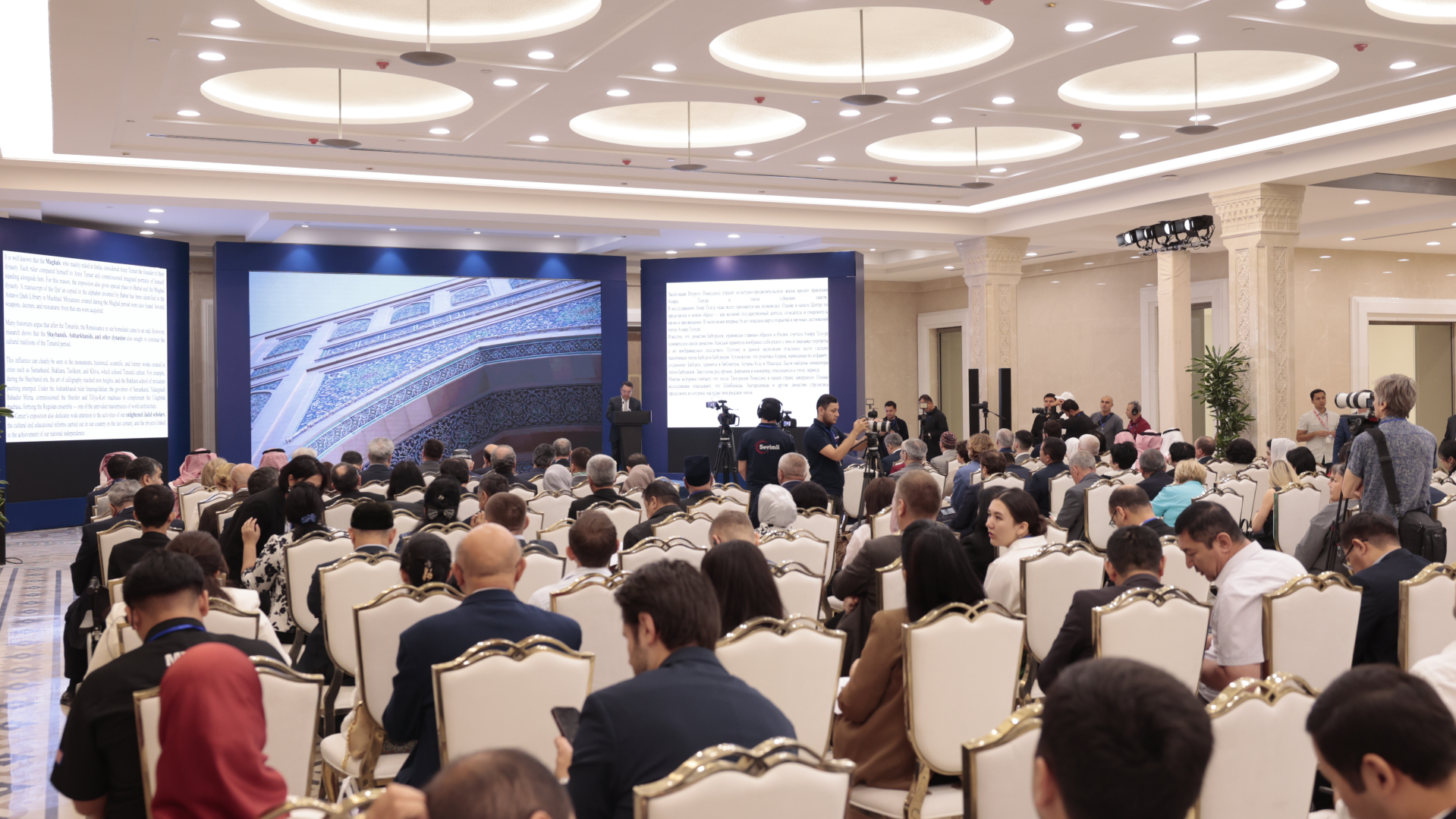
Over 100 experts from more than 20 countries of the world are in Tashkent!
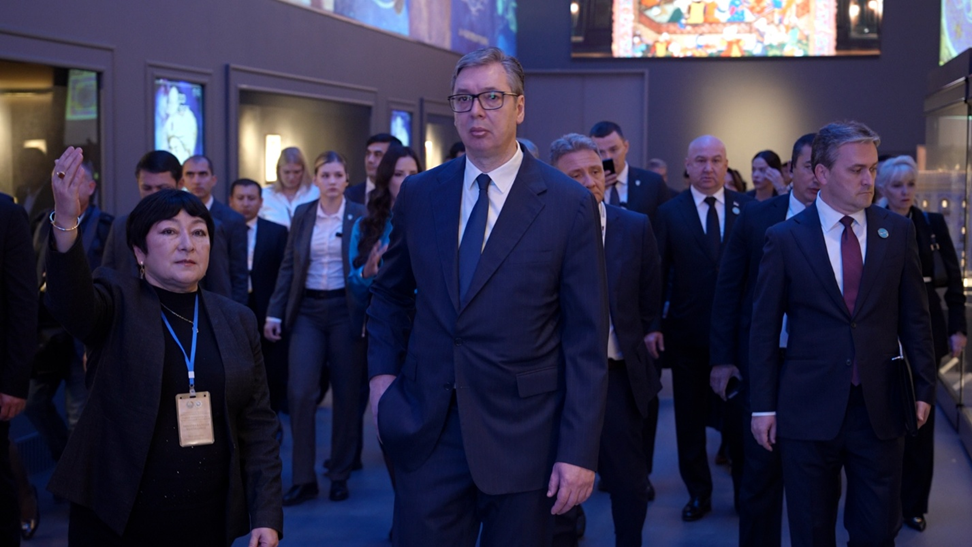
President of Serbia Aleksandar Vučić visited the Islamic Civilization Center in Uzbekistan
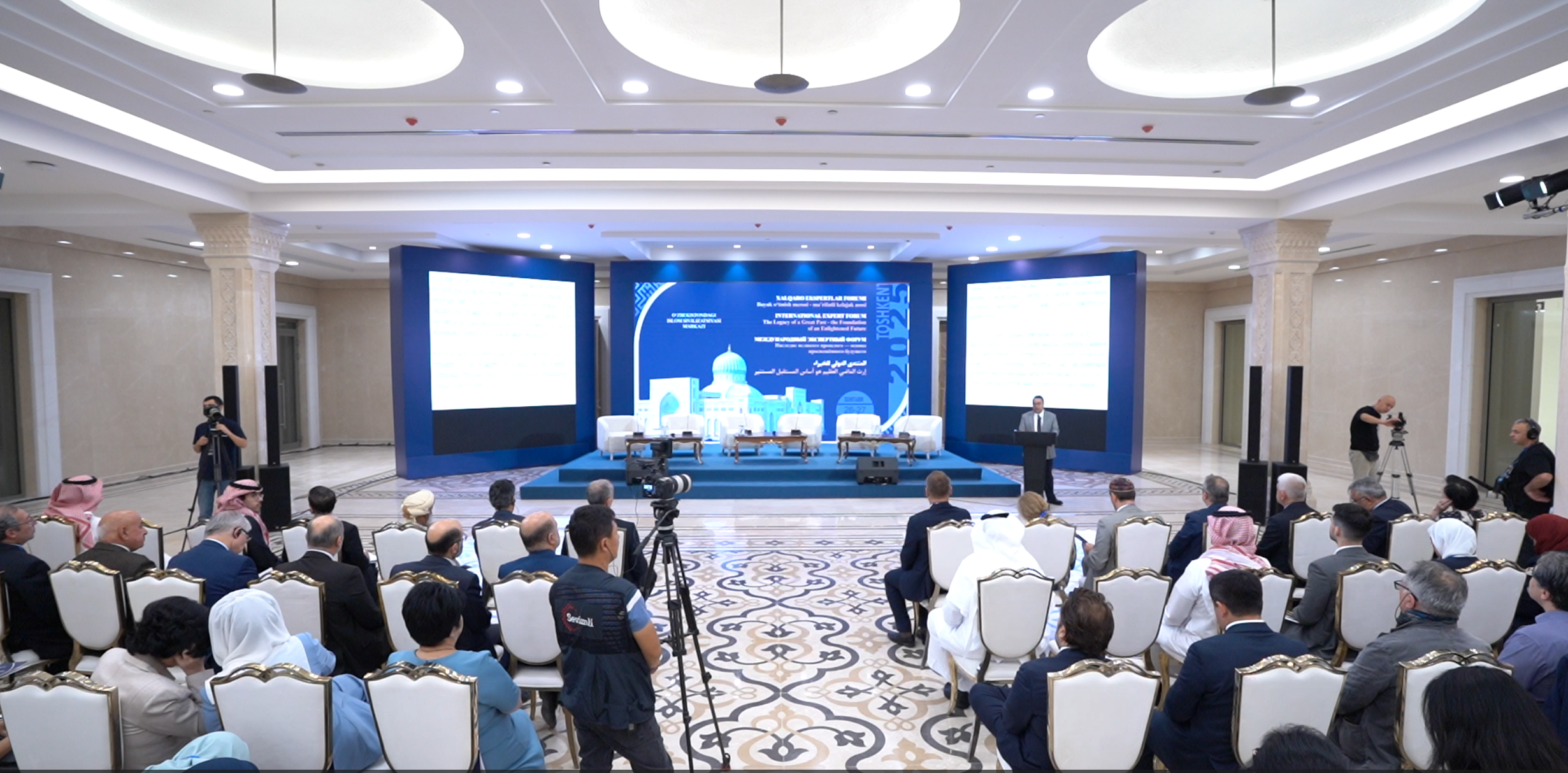
The Center for Islamic Civilization – a global platform leading towards enlightenment
