


About a house even greater than the Kaaba...

It is expected that the exhibition of the Center of Islamic Civilization in Uzbekistan will include manuscript copies of Alisher Navoi’s works dating back to the 15th–17th centuries. In particular, it is planned to display copies of the Khamsa epic poem transcribed in the 15th century by Abdulmajid Taqoni and calligrapher Sultan Ali Mashhadi for Sultan Husayn Mirza. Recognized by scholars of both the East and the West as the crown jewel of Navoi’s legacy, Khamsa is considered an invaluable treasure that refines human thought and contemplation. Today, the inclusion of the rarest and most original copies of Khamsa in the Center’s exhibition has become uplifting news for all lovers of knowledge. Indeed, the most profound expressions of the philosophy of the perfect human divine love, contentment, generosity, magnanimity, self-criticism, repentance, humility, remembrance, and spiritual listening remain eternally relevant, like the true dawn, across all times and eras.
Let us now reflect, as the Master once did, on a house even greater than the Kaaba. Chapter 17 of the Hayrat al-Abrar poem is dedicated to the description of the heart:
“Like the Kaaba, the qibla of the world,
It holds no worth compared to the Kaaba of the heart.
For the former is a place of worship for people,
While the latter is the place where the Creator reveals Himself”.
(You can find the original verses in the Uzbek language version)
Through these lines, Navoi conveys that even though the Holy Kaaba is the qibla for the entire world, it does not surpass the heart in value. For the Kaaba is a site of mere physical prostration and worship, while the heart is the manifestation of the Divine, the abode of the Creator. Continuing in his description of the heart, he writes:
“The mystic called it the exalted Throne,
The Sufi called it the greater world.
In its purity, this greatest realm,
Is hidden from the eyes of all the world’s people”.
(You can find the original verses in the Uzbek language version)
The seekers of truth (saliks), those who guide others on the path of divine guidance, have described the heart as “the highest heaven,” while the Sufis have called it “the greatest world.” Yet, in the material world, this immense realm the domain of the heart, broader than even the Highest Throne (‘Arsh al-A‘lā) remains hidden from the eyes of ordinary people. Only those with awakened spiritual vision can perceive it, and such perception is a rare blessing not granted to everyone. As the Navoi scholar Dilnavoz Yusupova observes, “In Navoi’s view, the very purpose and intent behind the creation of the human being is the creation of the noblest part of the human body the heart”.
Similarly, in the 125th counsel (tanbih) of Mahbub al-qulub, Hazrat Navoi discusses the concept of the “house of the heart.” He speaks of five types of houses and the need to protect each from a specific opposing force: a house built from soil and clay must be guarded from water; one of wood and reeds must be protected from fire; a tent of cloth must be shielded from the wind; the house of the eye from dust and the house of the heart must be safeguarded from everything other than the Truth (Haqq).
“Just as the first four houses each have their natural opposites,
The fifth house, too, is destroyed by the presence of otherness”.
(You can find the original verses in the Uzbek language version)
Just as each of the four houses is vulnerable to an opposing force, the fifth the house of the heart must be protected from the “enemy”, meaning attachment to the world. Navoi connects this enemy to love for the material world. He warns that engaging the heart with worldly distractions diverts a person from the path of the Truth and causes spiritual harm as clearly as the sun shines.
In the 59th counsel of Mahbub al-qulub, Navoi reflects on the key to the treasure of the heart. In his interpretation, the lock of the heart’s treasure is the tongue, and thus, the key to that treasure is also the tongue.
“When one speaks of the state of the heart, know this well:
It is either a pearl in a treasure chest or a shell cast aside”.
(You can find the original verses in the Uzbek language version)
When he writes these lines, he implies that the true state of the heart whether it holds a pearl or a shattered shell becomes evident when a person speaks.
If Allah has filled the human heart with the treasure of knowledge, then empowered it with a tongue that translates the inner into the outer, thus elevating humans above all other creatures why are we not using this immense blessing for the sake of goodness and eternal reward? Why are we, knowingly or unknowingly, causing the sinking of hearts those more sacred than even the most blessed house on earth, the Kaaba?
Every day we wake up and set out on the journey of life. Whether it’s a beggar we pass, a misbehaving child, or someone whose actions we disapprove of how quickly we pass judgment with our tongue. Sometimes, just to protect our comfort, we don’t hesitate to wound even our blessed Mother’s sacred heart with harsh words.
In Hazrat Navoi’s Nasāyim al-muhabbat, there is a story that has moved me deeply for many years. I would like to share it with you:
Shaykh Abu Abdullah once traveled for Hajj with his mother. During the last ten nights of Ramadan, he longed to witness the sacred Laylat al-Qadr (The Night of Power). Each night he would ascend the roof to pray in solitude. His mother, Umm Muhammad, would sit inside the house, earnestly supplicating to the Almighty. Then, suddenly, the lights of Laylat al-Qadr began to manifest upon her. She raised her voice and called out:
“O Muhammad, my beloved son, come—what you are seeking is here”!
The Shaykh descended from the roof and threw himself at the feet of his mother, now bathed in divine light…
Perhaps this is why it is said: Paradise lies beneath the feet of mothers.
And if Paradise lies beneath our mothers’ feet, then how much greater is the bliss of circumambulating the Kaaba of their hearts? If I may entrust the core of this truth to the strength of your contemplation, I trust you will be content with me.
Let me conclude with one more golden verse from the Master an illumination upon illumination:
“If you bring joy to the heart of just one wounded soul,
That is better than restoring the ruins of a thousand Kaabas”.
(You can find the original verses in the Uzbek language version)
How truly the great thinker spoke such words of Truth!
Laylo Orziyeva
P.S. The article may be used with reference to the official website of the Center.
Most read
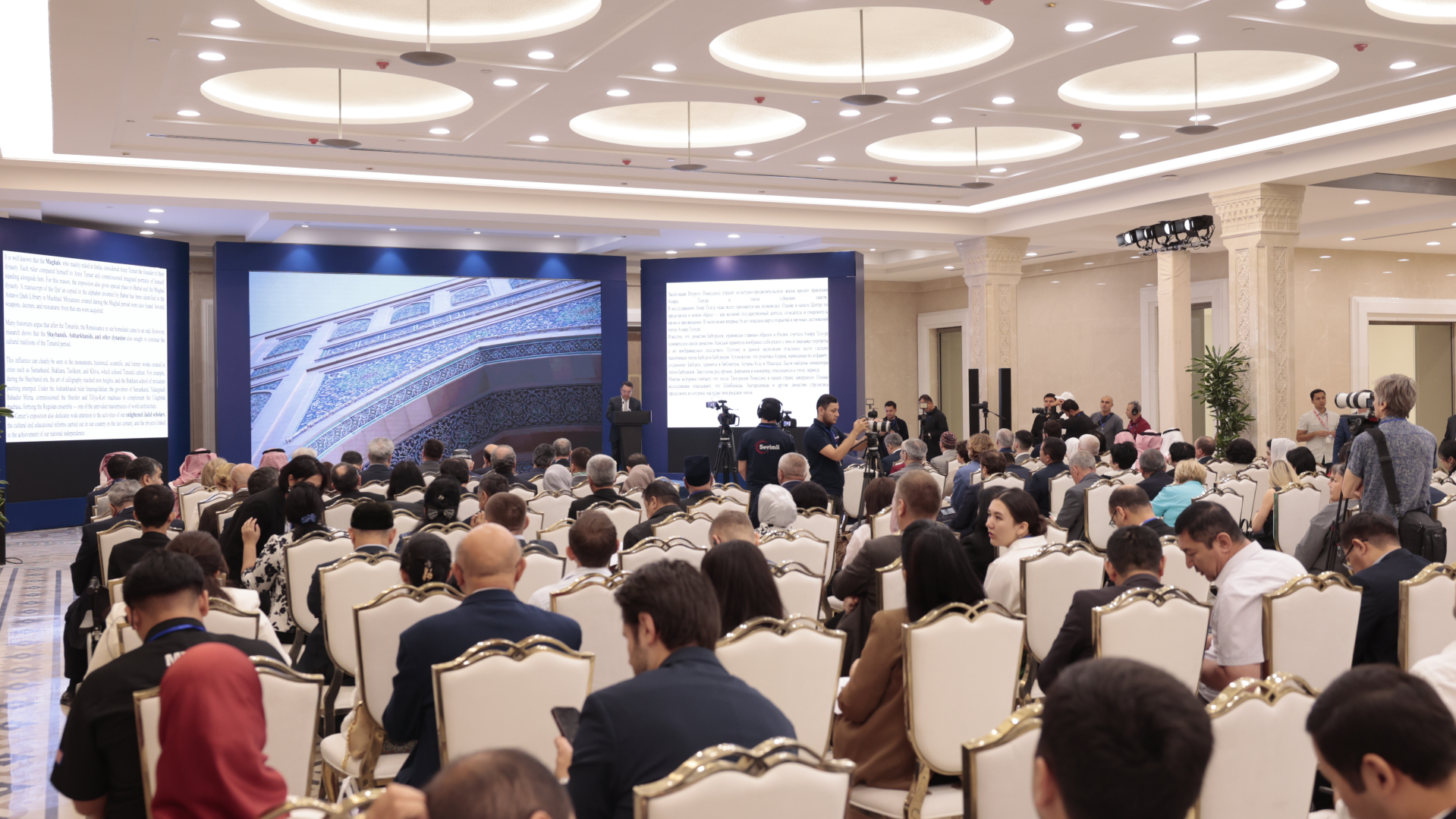
Over 100 experts from more than 20 countries of the world are in Tashkent!
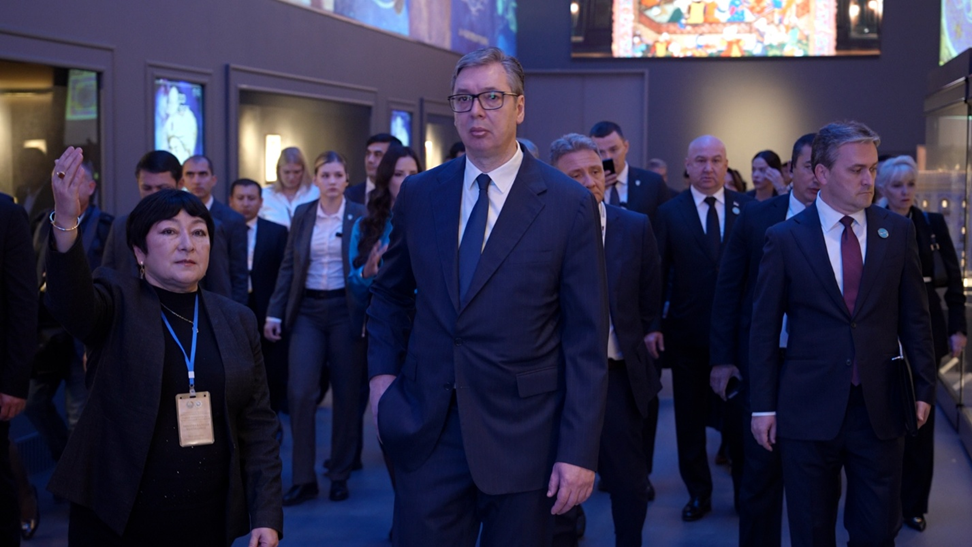
President of Serbia Aleksandar Vučić visited the Islamic Civilization Center in Uzbekistan
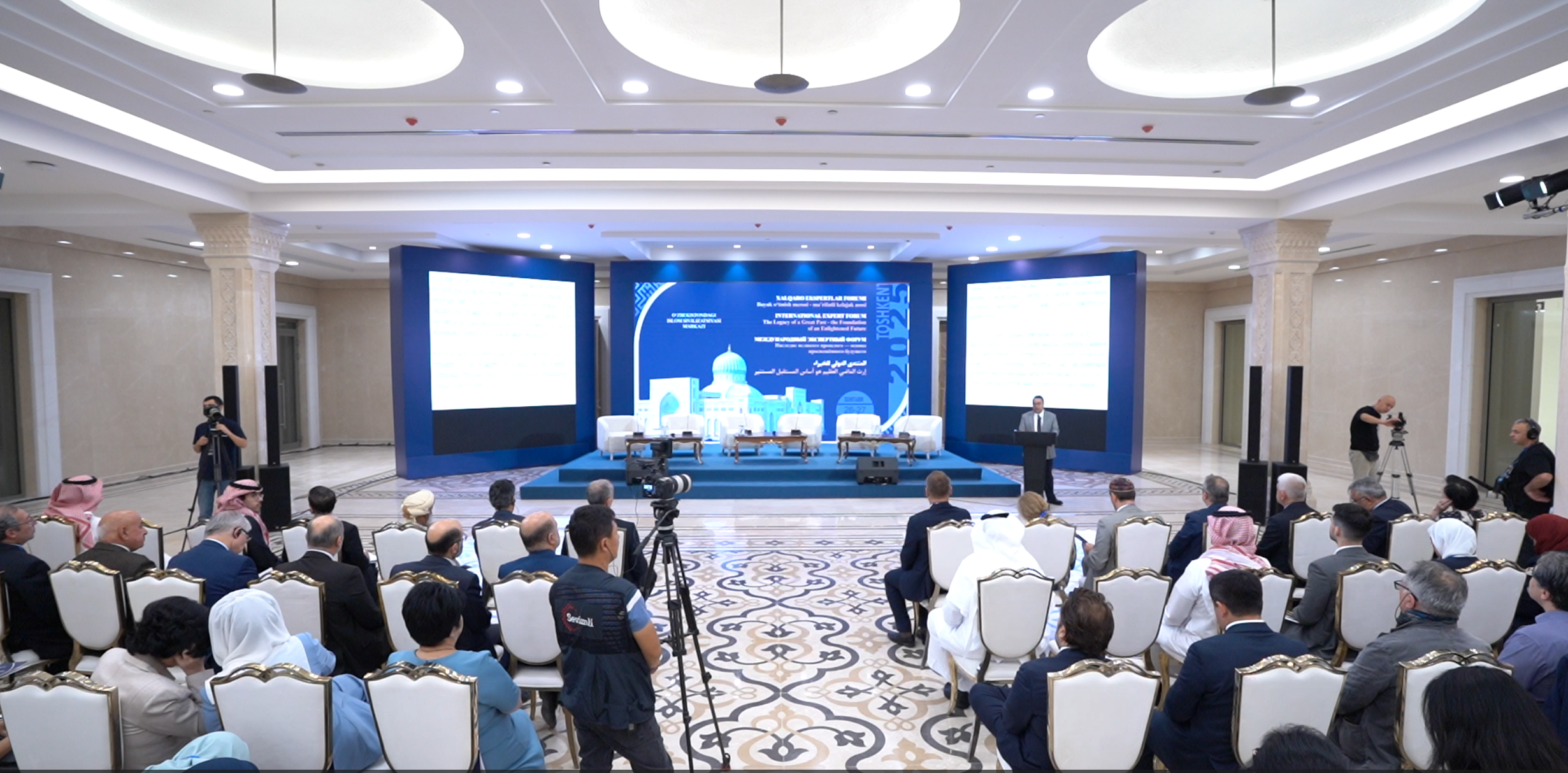
The Center for Islamic Civilization – a global platform leading towards enlightenment
