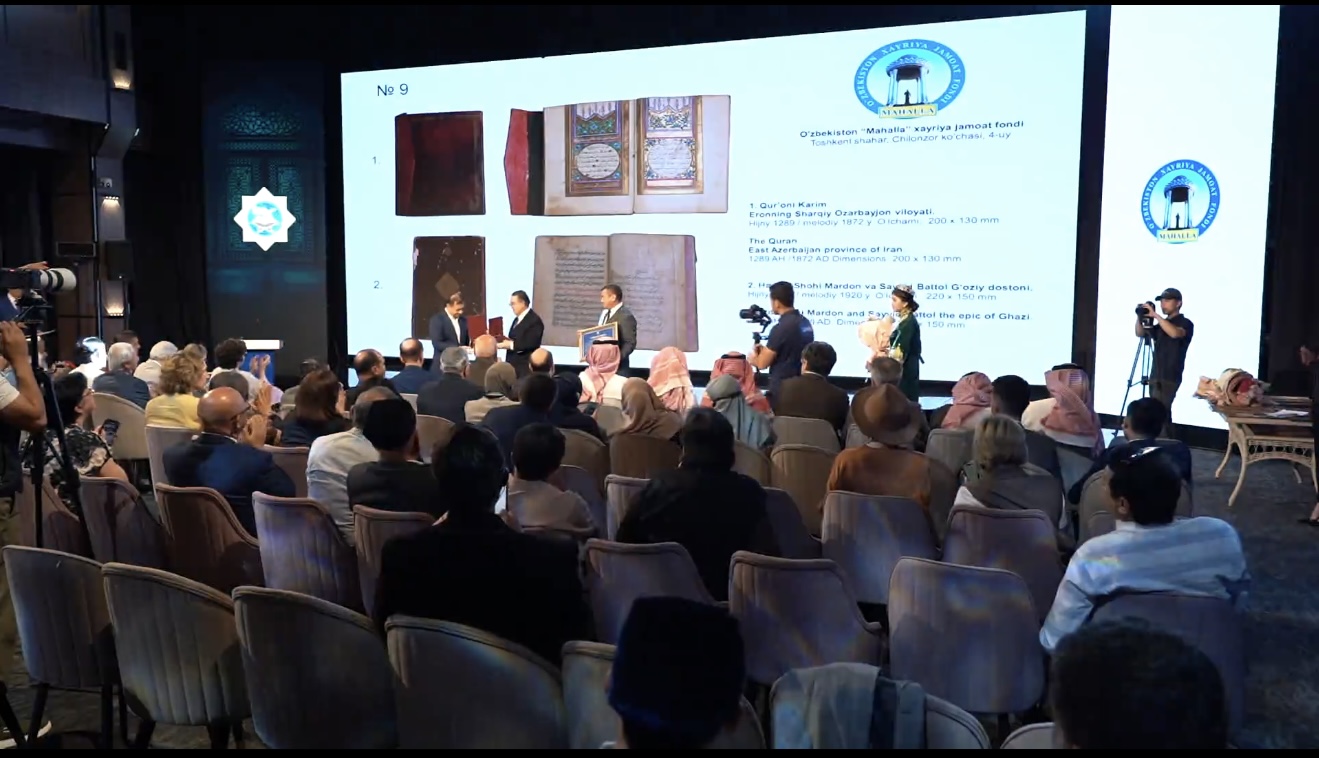
A Contribution to Spiritual Heritage: The Mahalla Foundation Donates Historical Works to the Center
The 1872 Gold-Framed Qur’an and a 1920 Epic Poem to Be Displayed at the Museum of the Center for Islamic Civilization in Uzbekistan.
More detailsA Contribution to Spiritual Heritage: The Mahalla Foundation Donates Historical Works to the Center
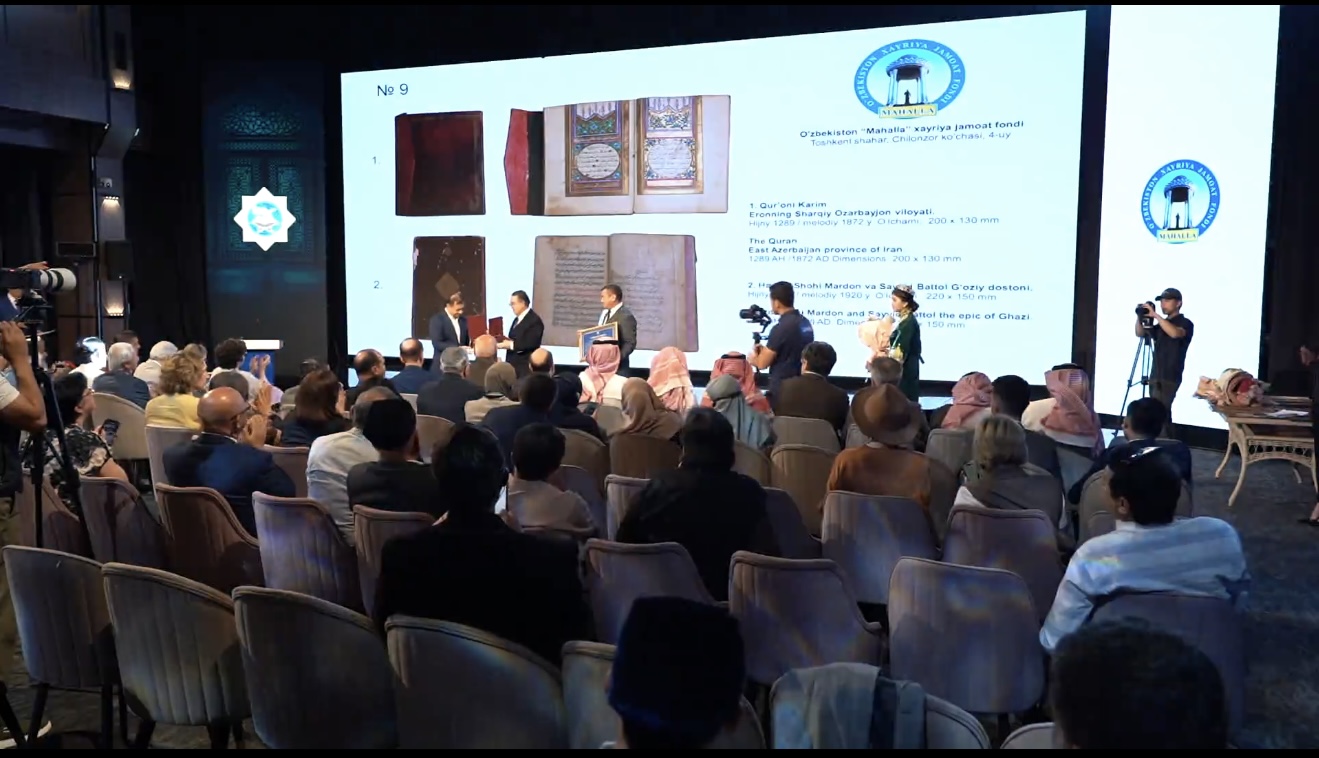
The 1872 Gold-Framed Qur’an and a 1920 Epic Poem to Be Displayed at the Museum of the Center for Islamic Civilization in Uzbekistan.
Within the framework of the international forum “The Great Heritage of the Past — the Foundation of an Enlightened Future” held in Tashkent, Uzbekistan’s Mahalla Charitable Public Foundation presented historically significant manuscripts to the Center for Islamic Civilization.
During the ceremony, Chairman of the Foundation’s Republican Board, Dilshodbek Usmonov, addressed the participants, stating:
“This Center was established on the initiative of our country’s President. By presenting these historical manuscripts, we seek to make a modest yet meaningful contribution to this noble endeavor. We believe that these works will serve as a source of spiritual nourishment and enlightenment for our people, our youth, and visitors”.
The Center’s collection has been enriched with two invaluable works:
The Holy Qur’an, copied in 1872 CE (Hijri 1289) in Iran’s East Azerbaijan province by the renowned calligrapher Mir Muhammad Nuri (a disciple of Umar Rushadi). This manuscript, measuring 200 × 130 mm, is adorned with elegant gold borders.
“The Epic of Hazrat Shomardon and Sayyid Battol Ghozi”, a literary work written in 1920 CE (Hijri 1340). Measuring 220 × 150 mm, this manuscript has been added to the exhibition as a rare example of historical and literary heritage.
It is worth noting that the international expert forum, held on September 26–27 of this year, brought together over 100 specialists from more than 20 countries. Among the participants were representatives of esteemed organizations such as IRCICA, ICESCO, TURKSOY, the World Muslim League, Oxford University, the Russian Academy of Sciences, and Christie’s.

Have you ever seen the world map created by our ancestors six centuries ago?
Imagine standing before a world map drawn in the 15th century. This is no ordinary map, but a vivid reflection of the intellectual and scientific potential of the Timurid era. This unique work belongs to the famous historian and geographer Hafizi Abru and is preserved within the pages of his book Geography.
More detailsHave you ever seen the world map created by our ancestors six centuries ago?
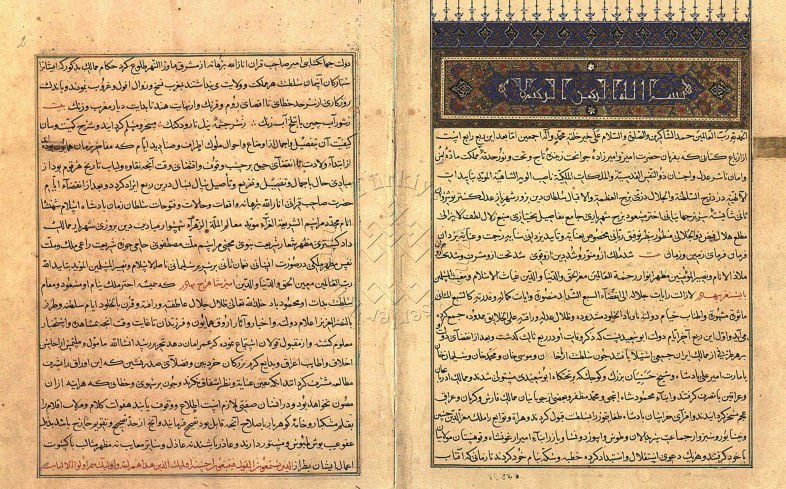
Imagine standing before a world map drawn in the 15th century. This is no ordinary map, but a vivid reflection of the intellectual and scientific potential of the Timurid era. This unique work belongs to the famous historian and geographer Hafizi Abru and is preserved within the pages of his book Geography.
Today, in the “Second Renaissance” section of the Museum of the Center of Islamic Civilization in Uzbekistan, alongside this masterpiece, another monumental work of the scholar Tarikh-i Hafizi Abru is also displayed.
The “golden pen” from Behadod
Hafizi Abru was born in 1361 in Behadod, in the Khawaf region of Khorasan. His full name was Mawlana Shihab al-Din Abdullah ibn Lutfullah ibn Abdurashid al-Bihdodi al-Khawafi, though he entered history under the name “Hafizi Abru”.
From an early age, he studied in Hamadan, mastering the Qur’an, hadith, tafsir, history, geography, literature, calligraphy, and engineering. These areas of knowledge later shone brightly in his historical and geographical works. Sources record that Hafizi Abru died on June 24, 1430.
Encounter with Amir Temur
It is known that during his campaigns, Amir Temur kept historians and narrators in his retinue to record history. Hafizi Abru caught the attention of the great commander during this process.
It is assumed that during Temur’s campaign in Khorasan and Iran in 1384, Hafizi Abru met him and entered his service. In his Zubdat al-Tawarikh, the scholar provides valuable information about Temur’s interest in history and the opportunities he created for historians.
Scientific legacy in the era of Shahrukh Mirza
After Temur’s death, Hafizi Abru continued his work in Herat under the rule of Shahrukh Mirza. There, he gained great recognition as a historian and geographer and led the circle of historians at the court.
Throughout his life, Hafizi Abru authored more than 10 works and treatises, leaving an indelible mark in historiography and geography, especially through Tarikh-i Hafizi Abru and Geography.
In Tarikh-i Hafizi Abru, events from ancient times up to his own day are covered, including dynasties, their founders, genealogies, and political affairs.
In the “Shahrukh Mirza Sector” of the “Second Renaissance” section, his Geography preserved at the Institute of Oriental Studies of the Academy of Sciences of Uzbekistan is also exhibited. This was the second major geographical work written in Persian, following Hudud al-‘Alam. This renowned historical-geographical text contains a circular world map as well as several regional maps. One of the most significant aspects of this world map is the inclusion of a degree grid, which geographers regard as Hafizi Abru’s magnum opus. The book details rivers, mountains, countries, and cities, as well as the geography and history of Fars, Kerman, Khorasan, and Transoxiana. It describes Samarkand, Bukhara, Kesh, Nakhshab, and Termez, as well as the Jayhun, Sayhun, and Murghab rivers, and provides measurements of distances and areas.
Notable works by Hafizi Abru
◾️Tarikh-i Hazrat Sahibqiran
◾️Tarikh-i Shahrukh Mirza
◾️Tarikh-i Amirayan-i Sarbadariya
◾️Majmu‘a-yi Hafizi Abru
◾️Majma‘ al-Tawarikh al-Sultaniyya
◾️The Zayl series
These works serve as essential sources for studying 15th-century Eastern historiography.
Modern significance of his scholarly legacy
Hafizi Abru did more than just record history he analyzed it and vividly conveyed the spirit of his time. His works are still preserved in libraries in St. Petersburg, Oxford, and Tashkent.
Today, the exhibition at the Center of Islamic Civilization in Uzbekistan presents the great scholar’s works to the public, offering a deeper understanding of the intellectual wealth of medieval Eastern civilization.
Hafizi Abru remains remembered as the “sultan” of Timurid historiography and an eternal symbol of knowledge and enlightenment.
Gavhar Eshonqulova
This article was prepared based on materials from the media project “Hafizi Abru and His Scholarly Legacy”, carried out within the framework of projects at the Center of Islamic Civilization in Uzbekistan.

WOSCU collection and gifts: historical collections being curated for Uzbekistan’s mega project
The development of the museum exposition at the Center of Islamic Civilization in Uzbekistan is nearing its final phase. Intensive work is underway to ensure each section is presented accurately and scientifically, following a clear historical chronology and with properly curated placements of exhibits.
More detailsWOSCU collection and gifts: historical collections being curated for Uzbekistan’s mega project

The development of the museum exposition at the Center of Islamic Civilization in Uzbekistan is nearing its final phase. Intensive work is underway to ensure each section is presented accurately and scientifically, following a clear historical chronology and with properly curated placements of exhibits.
Various artifacts, antiquities, and historical objects reflecting the rich history of Uzbekistan are being carefully selected. These items are being organized thematically and chronologically to be featured in specific sections of the exposition.
At the latest coordination meeting, chaired by the Center’s Director Firdavs Abdukhalikov and attended by section coordinators and international partner organizations, significant materials were reviewed. Among them were the renowned “Scotland Collection” and a range of historical gifts presented by WOSCU — the World Society for the Study, Preservation and Promotion of the Cultural Legacy of Uzbekistan.
The unique artifacts provided by WOSCU have been allocated as follows:
For the “Pre-Islamic Era” section — items from Sopollitepa
For the “First Renaissance” section — pottery from Afrasiab adorned with Arabic inscriptions
For the “Timurid Era – Second Renaissance” section — period-specific miniatures
For the “Khanate Period” section — suzani textiles, carpets, and jewelry pieces
In addition, artifacts donated to the Center are being selectively assigned to their corresponding historical sections, ensuring that each item aligns with the thematic and chronological context. These objects are intended to be displayed with high aesthetic and scholarly value.
These efforts aim to elevate the museum stature of the Center of Islamic Civilization, delivering an authentic and powerful portrayal of Uzbekistan’s rich history to both domestic and global audiences.

New Uzbekistan is coming to life not merely through statistical reports, but through innovative approaches
A discussion session dedicated to the “New Uzbekistan – New Renaissance” section was recently held at the Center of Islamic Civilization in Uzbekistan. The meeting gathered the Center’s leadership, representatives from the Republican Center for Spirituality and Enlightenment, relevant ministries and agencies, historians, independent researchers, as well as specialists from Russia’s leading design companies “Sila Sveta” and “Planet 9”. The session focused on enhancing the section’s concept, visual solutions, and exhibition content.
More detailsNew Uzbekistan is coming to life not merely through statistical reports, but through innovative approaches

A discussion session dedicated to the “New Uzbekistan – New Renaissance” section was recently held at the Center of Islamic Civilization in Uzbekistan. The meeting gathered the Center’s leadership, representatives from the Republican Center for Spirituality and Enlightenment, relevant ministries and agencies, historians, independent researchers, as well as specialists from Russia’s leading design companies “Sila Sveta” and “Planet 9”. The session focused on enhancing the section’s concept, visual solutions, and exhibition content.
This section aims to reflect the profound reforms and remarkable achievements in various spheres of New Uzbekistan — including governance, social and political renewal, infrastructure and construction, education, healthcare, sports, defense, and foreign policy — through cutting-edge visual formats.
Otabek Hasanov, Head of the Republican Center for Spirituality and Enlightenment, noted:
“Initially, ministries and agencies were tasked with independently developing content for their respective pavilions within this section. However, early presentations revealed a lack of clear conceptual direction, with many limited to showcasing statistics and outcomes alone. This prompted renewed discussions guided by scientific analysis and a deeper conceptual approach. Only then did the true essence of the reforms begin to emerge”.
It is important to note that this section is envisioned as a space of reforms, ideas, and renewal for future generations, serving as a reflection of the modern face of the scientific-research center. During the meeting, designers from Russia’s prestigious design firms — Sila Sveta and Planet 9 — contributed with their proposals and innovative concepts. Notably, the following ideas were presented:
- 3D-format exhibits,
- Visually immersive city models generated through artificial intelligence,
- Compositional solutions aligned with historical periods,
- Attractive designs based on the psychology of color.
These proposals aim to ensure the section offers an engaging and intellectually stimulating experience for visitors, seamlessly blending historical depth with cutting-edge technology.
It was also emphasized that the role of the mahalla (neighborhood) institution in society, along with projects showcasing national and contemporary architectural achievements, should become an integral part of the section. One of the central themes of the discussion was the importance of conveying clear ideas and historical-spiritual messages through each exhibit, ensuring a cohesive blend of content and technology.
Firdavs Abdukhalikov, Head of the Center and Chair of the Academic Council, noted that this is still just the beginning stage of the work:
“First and foremost, I would like to express deep gratitude to all the heads of ministries and agencies who are actively contributing to the development of this section and the successful implementation of the directives set forth by our esteemed President. However, this is merely the starting point — the most crucial phase lies ahead: enriching the content. From now on, we must approach every detail, every exhibit, with focused attention. Through this section, we must not only convey the history of reforms but also vividly and authentically present the pace of Uzbekistan’s modern development to the people. We are open to any scientifically grounded idea, innovative approach, or suggestion that enhances the exposition, and we are ready to implement them in practice. This approach will form the foundation of a significant intellectual and spiritual legacy for future generations”,
said F. Abdukhalikov.
At the conclusion of the meeting, specific tasks were assigned to the responsible organizations and agencies, and timelines for the next practical stages were established.

The greatest encyclopedia of medieval Muslim astronomy
The land of Uzbekistan has, since ancient times, been a cradle of talent and scholarship. Among our great ancestors is a scholar who, through measurements at the Nandana Fort in India, determined the Earth’s geographic dimensions and achieved results remarkably close to those of modern science.
More detailsThe greatest encyclopedia of medieval Muslim astronomy

The land of Uzbekistan has, since ancient times, been a cradle of talent and scholarship. Among our great ancestors is a scholar who, through measurements at the Nandana Fort in India, determined the Earth’s geographic dimensions and achieved results remarkably close to those of modern science. He was the first to apply the method of linear triangulation to measure distances using three points. His analytical techniques for determining azimuth and his methods for working with a circle whose radius is equal to unity introduced new approaches to science. His work in inventing astronomical instruments and applying them in calculations was of great significance.
A manuscript featured in the media project
This versatile scholar was Abu Rayhan al-Biruni. One of his oldest manuscripts is al-Qanun al-Mas‘udi, preserved at the National Library of France. This manuscript is also included in the Center of Islamic Civilization in Uzbekistan’s media project “100 Ancient Manuscripts of Uzbekistan”.
Al-Biruni composed al-Qanun al-Mas‘udi after 1030, dedicating it to Sultan Mas’ud of Ghazna. The work details the fundamental principles of mathematical astronomy, the coordinates of celestial bodies, and methods for calculating their motions. In it, al-Biruni compares many of his scientific conclusions with verses from the Qur’an, showing his deep knowledge of the holy text.
The book also contains al-Biruni’s star catalog the Zij which lists the coordinates and magnitudes of 1,029 stars, based on the tables of Ptolemy and the Arab astronomer al-Sufi.
Recognition from a swiss orientalist and historian
Swiss orientalist and historian Adam Mez, in analyzing the scientific and cultural development of the Muslim world from the late 9th to the early 13th century, referred to this period as the “Muslim Renaissance”. During this golden age, scholars like Abu Rayhan al-Biruni worked across nearly all fields of knowledge, leaving a profound mark on human progress. Al-Biruni is recognized as one of the brightest and most incomparable figures of this Renaissance. The American historian of science George Sarton also highly praised his vast scholarly output, calling the 11th century “The Age of al-Biruni” and describing him as “the greatest scholar of his time, and one of the greatest of all time”.
What is written in the Fihrist?
In his work Fihrist, al-Biruni listed 113 of his writings: 70 on astronomy, 20 on mathematics, and 12 on geography and geodesy. In the 13 years following the compilation of the Fihrist, he wrote more than 50 additional works, including important studies on history, pharmacology, and theology.
Fields of greatest activity
Astronomy was one of al-Biruni’s most active fields of study. His al-Qanun al-Mas‘udi is regarded as the greatest encyclopedia of medieval Muslim astronomy. It contains a star catalog of 1,029 stars, astronomical calculations, analyses of apogee motions, and discussions of problems in spherical astronomy. This work was not only a core textbook at observatories such as those of Nasir al-Din al-Tusi and Mirzo Ulugh Beg but also retained its importance for centuries thereafter. Furthermore, al-Biruni wrote three commentaries on Muhammad ibn Musa al-Khwarizmi’s astronomical work, reflecting his deep expertise in the field.
A monumental step at the age of 22
At the age of 22, al-Biruni created a globe representing projections of the Sun, Moon, and stars. This achievement was a significant advance not only in astronomy but also in geography and education.
His knowledge of ancient languages and study of numerous sources made him a true polymath. He was not merely a compiler of information but also an analyst and critic, contributing substantially to the progress of science. His contributions especially in chronology, astronomy, mathematics, geodesy, and geography fully justify his recognition as one of the greatest scholars of his era.
Durdona Rasulova
P.S.: The article may be used provided that the official website of the Center is cited.

Is Ibn Sina the only pioneer of medicine who came from Bukhara?
Every innovation and discovery is rooted deeply in history. Today’s achievements in medical science are founded on millennia of experience, intellectual legacy, and scholarly research. Especially during the Eastern Renaissance, the scientific heritage of physicians, scholars, and scientists remains relevant even today. Among them, the name of Abu Mansur Hasan ibn Nuh al-Qumri deserves special recognition.
More detailsIs Ibn Sina the only pioneer of medicine who came from Bukhara?

Every innovation and discovery is rooted deeply in history. Today’s achievements in medical science are founded on millennia of experience, intellectual legacy, and scholarly research. Especially during the Eastern Renaissance, the scientific heritage of physicians, scholars, and scientists remains relevant even today. Among them, the name of Abu Mansur Hasan ibn Nuh al-Qumri deserves special recognition.
Al-Qumri, with his scientific brilliance, practical experience, and extensive medical knowledge, was a renowned figure not only in his own time but also in the centuries that followed. His works particularly Kitab al-Ghina wa-l-Muna and Kitab at-Tanwir fi al-Istilahat at-Tibbiyya remain invaluable sources for modern medical science. He made significant contributions not only to treatment methods but also to the development of medical terminology, dietary science, and professional ethics.
Al-Qumri is remembered in history as a practicing physician, a theoretical scholar, a pioneer of medical terminology, and most importantly, one of the great teachers of Ibn Sina. His contributions went beyond patient care he worked diligently to systematize medical knowledge, transmit it to future generations, and establish a scientific school.
Today, when studying the development of healthcare, nutrition, diagnostics, and treatment methods, we often turn to Western scholars. But let us not forget: by the time Europeans began their journey toward scientific discovery, al-Qumri in Bukhara had already laid down the foundations of modern medicine.
Life and Scientific Activity
Abu Mansur al-Qumri was born in the early 10th century in the city of Bukhara. His life and career were closely tied to this city, where he gained recognition as one of the court physicians of the Emirs of Bukhara. One of the most historically significant aspects of al-Qumri’s biography is that he served as the first teacher of the young Abu Ali Ibn Sina who would later become renowned as the “Prince of Physicians” in world medicine. Historical sources confirm that Ibn Sina received his initial theoretical and practical training in medicine from al-Qumri. This highlights the exceptional scholarly potential and pedagogical skill of al-Qumri.
Scientific Legacy and Works
According to historical sources, Abu Mansur al-Qumri authored eight works on medicine. Unfortunately, only two of these have survived to the present day. Nevertheless, these two surviving works alone clearly demonstrate the significance of al-Qumri’s scientific legacy for his contemporaries and for future generations.

“Kitab al-Ghina wa-l-Muna” (“The Comprehensive and Desired Book”)
This work is dedicated to the treatment of all parts of the human body and was widely circulated and highly regarded in its time. More than 40 manuscript copies of the book are preserved in libraries across Asia, Africa, and Europe, which attests to the international recognition of al-Qumri’s scientific contributions. In this book, he also provides information about more than 30 physicians who preceded or were contemporaneous with him. This makes the book not only a practical medical guide but also a valuable historical source.
“The Book Explaining Medical Terminology”
His second work is an annotated medical lexicon that contains over 350 terms with in-depth analyses. In this book, al-Qumri provides information about the dietary foods, drinks, and even specialized medical instruments used at that time. Interestingly, many of these concepts do not appear in other renowned medical texts, including Ibn Sina’s Canon of Medicine. Therefore, this work by al-Qumri is considered a rare and unique scientific source.
This lexicon was translated into Persian in the 16th century during the reign of Babur and his son Humayun in India by the physician Ismail ibn Muhammad Yusuf. In 1991, the book was translated into Russian and published in Tashkent. Even today, it continues to be used in traditional medicine.
Contribution to the Development of Science
Abu Mansur al-Qumri made an immeasurable contribution to the advancement of science not only through his works but also by educating future great scholars. His role in shaping the intellectual development of Ibn Sina, in particular, is worthy of praise. He was not only one of Ibn Sina’s teachers but also the mentor who laid the foundation for his early medical education. For this reason, al-Qumri’s name is remembered with deep respect not only on the pages of history, but also in the hearts of all who cherish knowledge.
Abu Mansur al-Qumri was not merely an ordinary physician, but a scholar who devoted his life to the path of science. Through his writings, students, and scientific approach, he left a lasting mark on the entire Islamic world and beyond.
Today, one of the pressing tasks is to widely publicize the rich scientific legacy of great scholars like Abu Mansur al-Qumri, especially to inspire young people in the field of medicine. For this purpose, a special exhibition dedicated to this scholar is planned at the Center of Islamic Civilization in Uzbekistan.
Through this exhibition, visitors will have the opportunity to closely explore al-Qumri’s unique manuscripts, scientific perspectives, healing methods, and dietary recommendations. It will also shed light on the historical roots of healthcare culture that developed during his era.
This initiative is an important step toward preserving the rich scholarly heritage of our ancestors, integrating it with modern medicine, and presenting it as a source of inspiration for the younger generation. After all, only a nation that shows due respect for its scholars can confidently move toward a healthy society and a stable future.
Husan TURSUNOV
P/S: The article may be used with reference to the official website of the Center.

“Al-Āthār al-Bāqiyah” – A Memorial Left by Al-Biruni
This work, authored by the great encyclopedic scholar Abu Rayhan al-Biruni (973–1047), recounts the history, languages, cultures, and calendars of ancient Khwarazmian, Persian, Arab, Turkic, Jewish, Indian, Syriac, and other peoples.
More details“Al-Āthār al-Bāqiyah” – A Memorial Left by Al-Biruni

This work, authored by the great encyclopedic scholar Abu Rayhan al-Biruni (973–1047), recounts the history, languages, cultures, and calendars of ancient Khwarazmian, Persian, Arab, Turkic, Jewish, Indian, Syriac, and other peoples. It also provides valuable information about ancient religions, dynasties, and rulers from various historical periods. The book was written around the year 1000 CE, and several manuscript copies have survived to this day the oldest known one was transcribed in 1220 during the Khwarazmshah era.
Abu Rayhan al-Biruni composed his first major work, Al-Āthār al-Bāqiyah ‘an al-Qurūn al-Khāliyah (“Vestiges of the Past Centuries”), which is regarded as a priceless source in the history of world science. He dedicated it to the ruler known by the honorific title Shams al-Maʿālī, Qabus ibn Vushmgir. Qabus ibn Vushmgir was known among rulers for his knowledge and sense of justice. As governor of Jurjan, Shams al-Maʿālī Qabus ibn Vushmgir provided al-Biruni with shelter and the opportunity to pursue scholarly work, to whom the book was dedicated.

Abu Rayhan al-Biruni wrote the following about the purpose behind composing this work: “One of the scholars asked me to write a book that would clearly explain the histories of different peoples, their origins and branches, that is, their months and years, the disputes among historians of these nations and the reasons behind such disagreements, their famous festivals, the days designated for various occasions and duties, and other customs practiced by some nations but not others. He invited me to present this information as clearly as possible, in a way that the reader would understand without needing to search for various books or inquire about their authors.”
According to al-Biruni, the work was written under the rule of a sovereign who “acted justly toward his people, supported the religion of God and His servants, protected the sacred places of the Muslims, and safeguarded their possessions from looters,” thus earning their gratitude. In Al-Āthār al-Bāqiyah, al-Biruni advocates for an attitude of tolerance toward all religious schools. The book is a historical-ethnographic work that covers the lives of kings and prominent figures and reflects the cultural atmosphere of that era. Its unique value lies in the vivid portrayals it offers of pre-Islamic civilizations.
This work became widely known in Europe under the title Chronology. Al-Biruni completed it in Arabic at the age of 27 in the city of Jurjan, around the year 1000. In this masterpiece, he also includes crucial historical and ethnographic information about the peoples of Khwarazm, Transoxiana, and other regions of Central Asia.
The book discusses the Greeks, Romans, Iranians, Sogdians, Khwarazmians, Harranians, Copts, Christians, Jews, pre-Islamic Arabs, their calendar systems, holidays, and notable dates. It also describes Turkic peoples, including the Oghuz Turks and those living as far as the borders of China, outlining their beliefs, traditions, and festivals. The text contains rich insights into the spiritual lives and histories of many nations.
Al-Biruni’s accounts regarding Sogdiana and Khwarazm are of great significance, as they offer insights into the history, religion, customs, ethics, and traditions of various peoples. Through his scholarly analysis, he demonstrated the unique contributions of each nation to the progress of human civilization.
According to the scholar, the Sogdians celebrated Nowruz on the first day of the month of Mowsat. He also specifically noted that among the Khwarazmians, the New Year (Nowruz) was marked at the beginning of the month of Nawsarji.
In this work, al-Biruni provides detailed information on Zoroastrian festival calendars, various public celebrations, and traditional customs material that undoubtedly warrants dedicated scholarly research.
In his time, this rare work received high praise from scholars such as S.P. Tolstov, who wrote: “One of the earliest works by al-Biruni that has survived to our time is Al-Āthār al-Bāqiyah, which recounts the calendar systems of the world’s peoples. This book, which attests to the Khwarazmian scholar’s extraordinary breadth of knowledge, is a true treasure containing information on the cultures, philosophies, astronomy, and religions of various nations”.

Thus, the rich ethnographic data found in Abu Rayhan al-Biruni’s work Vestiges of the Past Centuries a monumental scholar and a leading figure of the first Renaissance era in Central Asia who made significant contributions to the advancement of world civilization through his groundbreaking scientific discoveries stands as one of the most valuable and rare sources for conducting deeper, more comprehensive academic research into the history, origins (ethnogenesis), ethnic development, and ethnoculture of the Uzbek people.
Durdona Rasulova
P.S. The article may be used provided that a link to the official website of the Center is included.

Life and scientific activity of Imam Termizi in the world's view
On the initiative of President Shavkat Mirziyoyev, the 1200th anniversary of Imam Termizii's birth was celebrated at a high level in October this year. Work is underway to reveal the essence and contemporary significance of Imam Termizi's scientific legacy and to convey it to the general public, as well as to prepare translations and publications of his works.
More detailsLife and scientific activity of Imam Termizi in the world's view
On the initiative of President Shavkat Mirziyoyev, the 1200th anniversary of Imam Termizii's birth was celebrated at a high level in October this year. Work is underway to reveal the essence and contemporary significance of Imam Termizi's scientific legacy and to convey it to the general public, as well as to prepare translations and publications of his works.
The international scientific-practical conference on "The role of Imam Termizi's scientific heritage in Islamic civilization," dedicated to studying the legacy of Imam Termizi and held in Termez, left a warm impression on foreign guests from about 10 countries. The participants emphasized that the Head of State's initiative to hold this conference, announced from the high podium of the UN, was timely and is more relevant today than ever before.
Scientists and researchers from the Center for Islamic Civilization in Uzbekistan, including Mirzo Kenjabek, Najmiddin Fayozi, and others, who participated in the conference, also presented their reports and projects and discussed several works planned for future implementation.
Imam al-Termizi dedicated his life, entire being, and talent to the development of Islam and the science of hadith. The main part of his life was spent collecting and narrating hadiths. Imam al-Termizi, as a true scholar and ascetic, devoted himself day and night to knowledge and worship. Sources indicate that he became blind in the last two years of his life.

A rare manuscript about Amir Timur’s life written in Uzbek discovered in Tajikistan
During the international cultural heritage week in Uzbekistan, titled “Phenomenon of Eastern Renaissances: Dynasties, Religions, Figures, Discoveries” new details were revealed about an ancient Uzbek manuscript on Amir Timur’s life. This information was shared by Dr. Badriddin Maqsudov, a philologist and professor at Tajik National University, who is also a member of the Worldwide Society for the Preservation, Study, and Popularization of Uzbekistan's Cultural Heritage.
More detailsA rare manuscript about Amir Timur’s life written in Uzbek discovered in Tajikistan
During the international cultural heritage week in Uzbekistan, titled “Phenomenon of Eastern Renaissances: Dynasties, Religions, Figures, Discoveries” new details were revealed about an ancient Uzbek manuscript on Amir Timur’s life. This information was shared by Dr. Badriddin Maqsudov, a philologist and professor at Tajik National University, who is also a member of the Worldwide Society for the Preservation, Study, and Popularization of Uzbekistan's Cultural Heritage.
According to Maqsudov, the book, titled “Manaqib Amir Timur Sohibqiron,” may be the oldest extant Turkic manuscript on Amir Timur. While numerous historical, scientific, and literary works about Amir Timur exist, including the “Temur Tuzuklari” attributed to Timur himself, “Zafarnoma” by Nizamiddin Shami, and other works by historians Mirkhond and Khwandamir, this book could predate most known Turkic manuscripts.
The closing section of the Dushanbe manuscript includes the date Rajab 1027 AH, corresponding to June-July 1618. Since the book's colophon implies that it was transcribed by a scribe, it may have been originally composed earlier. The manuscript’s introduction has helped scholars identify the author and ruler of that era.
Other copies of this manuscript are held in Tashkent, including one titled “Agozi Dastoni Amir Timur Kuragon,” preserved at the Institute of Oriental Studies of the Academy of Sciences of Uzbekistan. This 112-page manuscript may be a later copy of Muhammadkhoja ibn Ja’farkhoja's work.
"Manaqib Amir Timur Sohibqiron”* combines folklore with historical narrative, often depicting legendary events and figures as Amir Timur’s contemporaries, making it more a collection of popular myths than a strictly historical account. The manuscript recounts Timur’s birth, battles, and miracles attributed to spiritual figures, resembling folk literature.
Islamic Civilization Center in Uzbekistan plans to analyze this valuable manuscript in collaboration with renowned historians, with plans to publish a facsimile and a current Uzbek script version in the future.

What will the innovation museum of Imam Bukhari look like?
At the initiative of our President Shavkat Mirziyoyev, great work is being carried out in our country to study and research the legacy of the great scholar of hadith, Imam Bukhari, and to improve the place where he found eternal rest. During each visit to Samarkand, the Head of State gives instructions on the restoration of these sacred shrines and the correct interpretation of their history and content.
More detailsWhat will the innovation museum of Imam Bukhari look like?
At the initiative of President Shavkat Mirziyoyev, significant work is being carried out in Uzbekistan to study and research the legacy of the great hadith scholar Imam Bukhari, as well as to restore and improve his burial site. Every time the President visits Samarkand, he gives instructions for the restoration of these sacred places and the proper interpretation of their history and significance. Based on his instructions, an innovative museum dedicated to Imam Bukhari is being built within the Center of Islamic Civilization of Uzbekistan, located in the complex named after the scholar. Turkish company "Outdoor Factory" is actively collaborating on this project.
Presentations of the concept and design of the innovative Imam Bukhari Museum took place at the Center of Islamic Civilization in Uzbekistan. The event was led by the Director of the Center, Firdavs Abdukhalikov.
The presentation of the innovative museum was held as part of the International Week of Cultural Heritage under the title "The Phenomenon of the Eastern Renaissance: Dynasties, Religions, Personalities, and Civilizations," which took place from October 18 to 26, 2023. Local and international experts, as well as representatives of the company "Outdoor Factory," participated in the presentation. They presented the concept and design of the museum pavilions and offered recommendations for further improvements to the project.
Also present at the meeting were the Director of the International Research Center of Imam Bukhari, Shovosil Ziyodov, the First Deputy Chairman of the Committee for Religious Affairs, Davron Mahsudov, and the Director of the International Research Center of Imam Moturidi, Jamoliddin Karimov. They emphasized that each piece of content in the innovative museum should be scientifically substantiated. The innovative museum will consist of 9 pavilions and will begin with a presentation on the Prophet Muhammad (peace be upon him) and other prophets, followed by a detailed exploration of Imam Bukhari's life, his path to knowledge, his phenomenal legacy, virtues, and his descendants through chronological videos. Ancient artifacts, manuscripts, and sources related to the sacred religion will be displayed using modern information technologies. The museum will also feature ancient copies of the second sacred source of Islam, "Al-Jami as-Sahih." A 5D excursion will be organized for children, allowing them to "travel" back in time. Visitors will also learn about the modern significance of Imam Bukhari's legacy and the ongoing religious and educational reforms in New Uzbekistan.
The presentation at the Center of Islamic Civilization was valuable for enriching the content of the museum's exhibition. During discussions, ideas were proposed to recreate the spirit of the era not only using innovative methods but also through exhibits such as models of schools and madrasahs where Imam Bukhari studied, as well as images of the cities of that time. It was also suggested to include information about Imam Bukhari's mentors, scholars who were his contemporaries, and the great students of Imam Bukhari.
Imam Bukhari's legacy is highly respected and of great interest throughout the Islamic world. Therefore, when developing the exhibition, it is important to consider global experience, as Imam Bukhari's spiritual heritage belongs not only to the Uzbek people but to the entire Islamic world.
As a result of the meeting, the following decisions were made:
-
Organizing a photo exhibition for international and local representatives, awarded the Imam Bukhari Order;
-
Finalizing the preparation of all explanatory materials for the exhibition of the innovative museum.;
-
Obtaining information on buildings and objects to be displayed on the walls of the innovative museum from the Tashkent Architectural and Construction Institute.
-
Creating a photo gallery of the work done to study and promote Imam Bukhari's legacy in New Uzbekistan;
-
Including information about Imam Bukhari's followers and showcasing it in the museum's exhibition;
-
Organizing a special exhibition titled "Imam Bukhari and the World," considering existing libraries, museums, universities, films, programs, and scientific centers named after Imam Bukhari worldwide.

TURKISH ART SCHOLARS AT THE CENTER OF ISLAMIC CIVILIZATION IN UZBEKISTAN
Global civilizations, large empires, enviable cities and priceless architectural monuments were created in different periods of our country's history. Especially, the unique examples of cultural heritage created by our great ancestors have left an indelible mark in the history of mankind. The scientific, historical and artistic works that have come down to us from them are kept today in different parts of the world, in foreign collections, foundations, libraries and museums.
More detailsTURKISH ART SCHOLARS AT THE CENTER OF ISLAMIC CIVILIZATION IN UZBEKISTAN
In different periods of our country's history, world-class civilizations, large empires, cities worthy of admiration, and priceless architectural monuments have emerged. In particular, the unique cultural heritage created by our great ancestors has left an indelible mark on the history of mankind. The scientific, historical, and artistic works that have come down to us from them are today stored in various parts of the world, in foreign collections, funds, libraries, and museums. Many ministries and departments, including the Center of Islamic Civilization in Uzbekistan under the Cabinet of Ministers, are carrying out extensive work to study this rich and priceless cultural heritage.
Photographs of the history, culture, people, and historical monuments of our country since the 19th century are stored in the funds of the Kunstkamera Museum, located in St. Petersburg, Russia. This was emphasized by the organizers of the exhibition "Uzbekistan in the 19th century (Photographs by V. Orden from the Kunstkamera collection)", held in the Tashkent House of Photography in our capital, during a visit to the Center of Islamic Civilization of Uzbekistan by famous Turkish scientists - Professor of the Technical University Yildiz Ayse Melek Ozetgin and Professor of the University of Ankara Ayse Ersay Yuksel.
“We came to this country, the heart of Turkestan culture, for a very important reason. We organized a very large exhibition at the Tashkent House of Photography with the support of our ambassador to Uzbekistan. We published a book-album called “Uzbekistan in the 19th century (Photographs of the Order of the Order of V. from the Kunstkamera Museum)”. For this book, we selected Uzbek photographs from the collection of the Kunstkamera, one of the oldest imperial museums in Russia. For the first time, we published 114 photographs taken in Uzbekistan in the 19th century in this book,” said Professor Ayşe Melek Özetgin of Yildiz Technical University.
They can provide valuable information about the social, cultural, economic, and historical life of Uzbekistan.
The French photographer V. Orden carried out his activities in Central Asia in the 19th century. He traveled to Turkestan, Iran, and the Caucasus. It is interesting that Orden visited the palaces of the Uzbek khans and had the honor of taking several photographs there. He visited such cities of Uzbekistan as Samarkand, Bukhara, Khiva, Kokand, Tashkent, Margilan, Andijan, Fergana, and precisely captured the life of our people, their way of life, household items, clothing, historical monuments, mosques, and madrassas.
V. Orden was in Istanbul before arriving in Uzbekistan and presented Sultan Abdulhamid with photographs taken in the Turkestan region. Because the pictures serve as a bridge in the Sultan's worldview and knowledge of the world. In his palace, he collected about 38,000 photographs from more than 50 countries.
These photographs can open the door to discoveries and information that are inaccessible to the general public in many areas.
Turkish scientists visited the Center of Islamic Civilization in Uzbekistan and got acquainted with the employees of the center and the projects they are implementing. Deputy Director of the Center of Islamic Civilization F. Khalimov said that this center is a mega-project implemented directly on the initiative of the President of the Republic of Uzbekistan, and that it is planned to create all the conditions for the study and promotion of civilizations that arose on the land of Uzbekistan and the legacy of great scientists who came from this land.
"Our esteemed President emphasized that the doors of this center are open to all foreign scientists and researchers studying the history, culture, and rich cultural heritage of Uzbekistan. Therefore, all foreign colleagues who want to cooperate with us, including you, are ready to work together and implement joint projects," said F. Khalimov.
The Turkish guests got acquainted with the building of the Center of Islamic Civilization in Uzbekistan, which is being built in Tashkent. Noting that such a large project is also a big event for the Turkic world, they spoke in favor of presenting projects that will show the place of Uzbekistan in Islamic civilization.
The guests expressed their readiness for close cooperation with the Islamic Civilization in Uzbekistan in the future. It was decided to create the Center of Islamic Civilization Foundation and jointly implement projects related to photography, using their experience.

Civilizations, Personalities, Discoveries
An extended meeting of the Scientific Council of the Center of Islamic Civilization was held in Uzbekistan. As is well known, under the initiative of the President of the Republic of Uzbekistan, Shavkat Mirziyoyev, the Center of Islamic Civilization is being established with the goal of developing and implementing a scientific and historical concept that reflects that our country is an integral part of world civilization and one of the Centers of Islamic Culture throughout the centuries.
More detailsCivilizations, Personalities, Discoveries
An extended meeting of the Scientific Council of the Center of Islamic Civilization was held in Uzbekistan. As is well known, under the initiative of the President of the Republic of Uzbekistan Shavkat Mirziyoyev, the Center of Islamic Civilization is being established with the goal of developing and implementing a scientific and historical concept that reflects Uzbekistan's historical significance as an integral part of world civilization and one of the centers of Islamic culture.
To achieve this, the Center is conducting a wide range of activities to enrich its content, with the participation of both local and international scholars. The main goal of the International Week of Cultural Heritage, held from October 18 to 26 in Tashkent in collaboration with the Ministry of Culture and the Ministry of Foreign Affairs of Uzbekistan, was to continue the implementation of scientific projects involving domestic and foreign scholars to enrich the concept of the Center of Islamic Civilization and to promote Uzbekistan's cultural heritage on the international stage.
At the extended meeting of the Scientific Council of the Center of Islamic Civilization, the final report on the results of this week was discussed. It was revealed that forums, conferences, and symposia were held as part of the event, with almost 100 international participants from more than 20 countries, including the United Kingdom, Russia, France, Japan, India, the UAE, Turkey, and others. Over 200 scholars, researchers, and specialists from Uzbekistan participated in these events. More than 30 practical meetings with the heads of foreign scientific institutions, centers, and organizations were held to establish cooperation and implement joint scientific projects. Over 400 scientific and innovative projects, which form the foundation of the Center's exhibitions, were discussed at symposia and conferences.
A new 70th volume of the "Cultural Heritage of Uzbekistan in World Collections" series, dedicated to the cultural heritage of Uzbekistan, was presented at the event. Additionally, an exhibition of books on five themes was organized, including "Scientific Publications of New Uzbekistan" and "East and West: Dialogue of Civilizations," with over 100 books on display. International media companies such as CNN and Euronews were the main media partners of the week. The events were also covered by TV channels "CNN," Euronews, "Russia-Kultura," and more than 30 other respected foreign media outlets. Over 200 media representatives and bloggers covered the events, and information about the symposium was disseminated in 10 foreign languages. More than 20 memoranda of cooperation with foreign scientific institutions, centers, and organizations were signed to further develop collaboration.
The issues of approving scientific projects and the updated concept for enriching the exhibitions at the Center of Islamic Civilization in Uzbekistan were discussed, as well as the approval of the editorial board for presenting the developed scientific concept and scientific projects to the Board of Trustees.
In his welcome speech at the opening of the VIII International Congress "The Great Legacy of Ancestors – The Foundation of the Third Renaissance," the President of our country emphasized the importance of creating a modern space for scientific discussions, debates, the promotion of relevant ideas and discoveries, and the development of new scientific content. This will contribute to showcasing the glorious past, present life, and the great future of our Motherland.
As noted by the Director of the Center of Islamic Civilization in Uzbekistan, Firdavs Abdukhalikov, the work on creating the Center and enriching its exhibitions with new content is under the constant attention of the President.
— The esteemed President characterized the Center of Islamic Civilization as a megaproject in the cultural and humanitarian sphere. In this context, it is essential to bring together our history, cultural heritage, civilizations, and outstanding personalities and discoveries on a single platform. Currently, scientists are working on approximately 200 projects to study and research our cultural heritage. More than 100 new projects were submitted during the Cultural Heritage Week. To implement these projects, we also plan to involve scholars from specialized scientific institutions in our country. As the President pointed out, the Center of Islamic Civilization is not just a museum but a genuine place for ongoing scientific research and education. We will create conditions for the work of international organizations and foreign scientists on the second floor of the Center. After establishing international scientific cooperation, discoveries will emerge, he said.
An extended meeting of the Scientific Council of the Center of Islamic Civilization was held in Uzbekistan. As is well known, the Center of Islamic Civilization in Uzbekistan was established under the initiative of President Shavkat Mirziyoyev and represents a scientific and historical concept that reflects Uzbekistan's contribution to world civilization and has been one of the centers of Islamic culture for centuries.
In this regard, the Center is actively working on enriching its exhibitions and content, including through cooperation with local and international scholars. From October 18 to 26, the International Week of Cultural Heritage took place in Tashkent, organized in collaboration with the Ministry of Culture, the Ministry of Foreign Affairs, and the Center of Islamic Civilization. The goal was to promote the Center's concept and implement scientific projects in cooperation with scholars from different countries.
At the extended meeting of the Scientific Council of the Center, the final reports on the results of the Cultural Heritage Week were reviewed. It was revealed that nearly 100 foreign participants from more than 20 countries, including the United Kingdom, Russia, France, Japan, India, the UAE, and Turkey, took part in the forums, conferences, and symposia. More than 200 scholars and researchers from Uzbekistan also participated in the discussions. During the week, more than 30 practical meetings were held with heads of foreign scientific institutions and organizations, and over 400 scientific and innovative projects were discussed.
During the event, a new volume of the "Cultural Heritage of Uzbekistan in World Collections" series was presented, and exhibitions were organized on five themes, including "New Publications of Uzbekistan" and "East and West: Dialogue of Civilizations." These events received coverage in international media, including CNN and Euronews, as well as more than 30 other major international and national media outlets.
After the meeting, the Scientific Council confirmed the scientific projects and updated concept for enriching the exhibitions of the Center of Islamic Civilization, as well as approved future prospective projects.

The International Week of Cultural Heritage provided all of us with valuable and vibrant moments
Firdavs Abdukhalikov: "The International Week of Cultural Heritage provided all of us with valuable and vibrant moments." The International Week of Cultural Heritage in Tashkent was held under the theme "The Phenomenon of the Eastern Renaissance: States, Religions, Personalities, and Civilizations." What are the results of this unique project?
More detailsThe International Week of Cultural Heritage provided all of us with valuable and vibrant moments
Firdavs Abdukhalikov: "The International Week of Cultural Heritage provided all of us with valuable and vibrant moments."
The International Week of Cultural Heritage in Tashkent was held under the theme "The Phenomenon of the Eastern Renaissance: States, Religions, Personalities, and Civilizations." What are the results of this unique project?
The Director of the Center of Islamic Civilization, Chairman of the World Society for the Study, Preservation, and Promotion of Uzbekistan's Cultural Heritage (WOSCU), and Honored Journalist of the Republic of Uzbekistan, Firdavs Abdukhalikov, shared insights on this mega project:
-
As you are aware, under the initiative of our esteemed President Shavkat Mirziyoyev, significant attention is being given to science, education, and culture in Uzbekistan, as well as to the study and popularization of our cultural heritage.
Seven years ago, from the podium of the United Nations, the head of state emphasized that one of the most important tasks was to convey the true humanistic essence of Islam to the world community. On June 23, 2017, the President's decree "On Measures to Organize the Center of Islamic Civilization in Uzbekistan under the Cabinet of Ministers of the Republic of Uzbekistan" was adopted.
A large-scale effort began to create the Center of Islamic Civilization.
In June 2018, the President personally laid the first symbolic stone in the foundation of the Center and noted that the goal of its construction is to study Islamic enlightenment and convey to our people and the global community the legacy of our great ancestors. The President has visited the Center several times, familiarizing himself with the project and progress of construction.
Approximately ten decrees, resolutions, and other regulatory acts have been adopted to improve the activities of the Center.
Undoubtedly, significant work has been done over the past seven years. However, today, for the implementation of this mega project, the experience and consultations of scholars, specialists, and experts from both local and international levels are crucial.
During a meeting with the President in June of this year, the importance of wide cooperation with domestic and foreign scholars, prominent experts, and international experts was emphasized, and specific instructions were given.
Therefore, on July 3-4 of this year, we organized the first national forum of Uzbek scholars. Around 500 orientalists, historians, and art historians participated. The conference discussed the goals and objectives of the Center of Islamic Civilization, plans, and projects to be implemented in cooperation with other countries. Over two days, participants presented their reports and projects, as well as expressed more than 600 proposals and comments. As a result of the forum, an expanded scientific council of leading scholars was approved. The proposal to organize a major international conference aimed at enriching the Center's activities by involving foreign experts was unanimously supported.
From August 23-26, the 8th International Congress of the World Society for the Study, Preservation, and Promotion of Uzbekistan's Cultural Heritage was held in Tashkent and Samarkand under the theme "The Great Legacy of Ancestors – The Foundation of the Third Renaissance." Over 350 scholars and experts from nearly 40 countries participated in the congress. The congress was entirely dedicated to enriching the content and determining the directions for the future activities of the Center, as well as the development of joint projects.
It is particularly noteworthy that the esteemed President sent a congratulatory message to the participants of the congress. In his message, the President called all the scholars and specialists true friends of Uzbekistan and highly praised their scientific and creative activities. In turn, the congress participants expressed their gratitude to the President for the attention given to the project and expressed their willingness to actively participate in the creation of the Center. As a result of the congress, the Samarkand Declaration was adopted.
We propose to use the project called "Time Capsule" as an immersive show, demonstrating the transitions of the Renaissance era from one block to another. In this project, we are assisted by the Russian studio "Sila Sveta" under the leadership of Alexander Usa, as well as the creative team of the Turkish company "Outdoor Factory" under the leadership of Sinan Turaman.
Of course, we plan to effectively use modern information technologies and artificial intelligence to implement this mega project. During the recent BRICS Global Summit in Kazan, President Shavkat Mirziyoyev met with Herman Gref, President of Sberbank of Russia, and expressed satisfaction with the opening of the second campus of the educational institution School 21 in Tashkent. This institution specializes in training highly qualified specialists in digital technologies.
Oleg Kapitonov, head of the international department at Sberbank, also participated in our events. We plan to collaborate with them, including in the improvement and automation of the translation of scientific texts into world languages using artificial intelligence capabilities.
As is well known, the Center pays special attention to cooperation with international organizations such as UNESCO, ISESCO, and IRCICA. The goal is to attract local and foreign experts, conduct scientific research, provide extensive information on the development of science, culture, art, and architecture during the Muslim Renaissance, and organize effective interreligious and intercivilizational dialogue. Therefore, the second floor of our Center is dedicated to offices and representations of international organizations and researchers, which expands cooperation opportunities with both local and foreign experts.
Over the past seven years, the Center has accumulated a significant collection of manuscripts and artifacts. Notably, the unique library of rare manuscripts and books donated to the Center by Alisher Usmanov, for which we express our special gratitude, is a major asset.
At the same time, we continue to acquire items and manuscripts related to our cultural heritage at global auctions. However, we also approach various national museums and institutions, requesting that they share with us their historical collections that remain unused in their storage. We need to undertake enormous work to create copies of artifacts and manuscripts housed in various collections worldwide. For this purpose, we have established cooperation with the company "Müller and Schiller," which specializes in producing high-quality facsimile editions. We are working together with Alexander Wilhelm, the Vice President of "Müller and Schiller," on the publication of 100 unique facsimiles of manuscripts related to Uzbekistan.
We are grateful to Igor Malkiel, head of the scientific laboratory at the State Hermitage Museum in Russia, who has extensive experience in creating replicas of exhibits that are virtually indistinguishable from the originals.
But the main content of our Center, of course, consists of the results of research conducted by both domestic and foreign scholars over the years. We extend our readiness to collaborate with them. All our exhibitions are focused on key themes related to great civilizations, eras, discoveries, and, of course, historical figures who have made significant contributions to the development of humanity and our country.
For example, the well-known Japanese scholar and numismatics expert Dr. Sergey Laptev is implementing a project to enrich the Center's numismatic collections. During the Week, Sergey Valeryanovich gave interesting presentations.
Professor Mahmudo Yazıcı from Pamukkale University talked about the manuscript "Sahih Bukhari" by Imam Bukhari, which is 825 years old and is kept at their institution.
The famous German Orientalist Aysima Mirsulton reported the discovery of unique albums created during the Baburid era, written in the Turkic language. These findings demonstrate their loyalty to their culture, history, and native language, despite centuries spent far from their homeland. We have decided to jointly publish a facsimile of this unique edition.
Miljana Radivojević, a researcher at the British Institute of Archaeology, and her team are implementing a research project on the history of metallurgy along the Great Silk Road and in Akhsikent.
Nihora Dvurechenskaya, a researcher at the Institute of Russian History of the Russian Academy of Sciences, presented a project on the restoration of the archaeological site of Uzundara in Surkhandarya. Irina Arzhantseva from the Institute of Ethnography and Archaeology of Russia presented research on the ancient civilization of Khwarezm.
Professor Badriddin Mahsudov from Tajik National University presented a research project on one of the first manuscripts about the life of Amir Timur in the Turkic language.
The event also featured Mahmud Erol Kılıç, Director of IRCICA, who proposed the initiative to create an encyclopedia of scholars from the land of Uzbekistan. Under the leadership of TURKSOY's Secretary General Sultan Raev, a project is being planned to create a digital platform for Turkic-speaking countries. We have reached an agreement with Joshkun Yılmaz, Head of the Manuscript Department of Turkey, on providing digital copies of manuscripts related to the history of Uzbekistan. Bakhit Rumeisi, Chairman of the "Manara" Center from the United Arab Emirates, invited 10 of our staff members for internships as guides.
Media projects are also of great importance to us. During the presentation of the "Living History" program, developed under the initiative of President Shavkat Mirziyoyev, film projects were presented, telling the stories of our great ancestors and history. This work is being carried out by the Agency for Cinematography of Uzbekistan, and we are ready to participate in this important project.
We have established cooperation with many international film studios and TV channels. In particular, we are working with "TRT-Avaz" on the media project "The Age of the Turks," with "Russia-Kultura" on a ten-part documentary dedicated to the archaeology of Uzbekistan, and with the "BBC" on a special project dedicated to the Qur'anic manuscripts related to Uzbekistan. We have also reached agreements with CNN and EURONEWS to create and broadcast content about New Uzbekistan and the history of our country.
In total, more than 30 conferences, seminars, forums, exhibitions, and presentations were organized during the International Week of Cultural Heritage. We listened to around 250 reports and original ideas from domestic and foreign scholars studying Uzbekistan's rich cultural heritage, history, and culture. About 20 memoranda of cooperation were signed, and more than 100 joint projects with foreign partners were presented.
Of course, the presented projects are still in progress. To implement them, we need to involve dozens of scholars and specialists and establish cooperation with the relevant institutions and organizations. We are open to any objective proposals and comments.
Certainly, specific projects may spark discussions and disagreements among scholars, but I assure you that the final decision will be made by the scientific council, which we all elected at the National Forum of Scholars of Uzbekistan.
We believe that the International Week of Cultural Heritage provided all of us with valuable and vibrant moments. I would like to take this opportunity to express my gratitude to all the foreign and domestic scholars, representatives of international and foreign organizations who participated in our events, as well as to those whose names I have not mentioned. I also extend my appreciation to the scientific, creative, and technical staff of our Center and everyone who helped organize this Week at such a high level, including media representatives who promptly and objectively covered all the events.
I am confident that the opinions, ideas, and projects expressed will bear fruit in the future. We will unite our forces and capabilities to jointly implement many valuable initiatives.
Prepared by N. Usmanova, UzA

A memorandum was signed
A presentation of projects and an exhibition of creative works on the theme "Projects for creating the image of great scholars and urgent issues of their popularization at the international level" were organized at the Center of Islamic Civilization in Uzbekistan. At the exhibition, 30 creative works created by members of the Union of Artists of Uzbekistan were submitted to the judgment of foreign and Uzbek scientists, art critics, members of the Extended Scientific Council, and international experts.
More detailsA memorandum was signed
An exhibition and presentation of projects on the topic "Current Issues in Creating the Images of Great Scholars and Their International Popularization" were organized at the Center for Islamic Civilization in Uzbekistan.
The exhibition featured 30 creative works created by members of the Union of Artists of Uzbekistan, which were presented to foreign and Uzbek scholars, art historians, members of the Extended Scientific Council, and international experts.
As part of the presentation, a memorandum of cooperation was signed between the Center for Islamic Civilization in Uzbekistan and the Academy of Arts of Uzbekistan.
N. Usmonova,
UzA

Reforms in the field of culture and art in New Uzbekistan
As part of the "International Cultural Heritage Week", the Ministry of Culture held an international forum on the topic "Reforms in the Field of Culture and Arts in the New Uzbekistan" at the Palace of Youth Creativity. Minister of Culture Ozodbek Nazarbekov opened the forum with an introductory speech and made a presentation on the topic.
More detailsReforms in the field of culture and art in New Uzbekistan
An international forum was held in Tashkent as part of the International Week of Cultural Heritage on the topic "Reforms in Culture and Arts in New Uzbekistan."
The Minister of Culture, Ozodbek Nazarbekov, opened the forum with an introductory speech and presented a report.
In his speech, the Minister noted that our ancestors always raised the flag of enlightenment against ignorance, and their minds and talents were dedicated to science, culture, and development. From this blessed region, great scholars such as Kharezmi, Fargani, Bеruni, Zamakhshari, and others became outstanding figures. It is no coincidence that Navoi and Babur Mirzo became great poets.
"We see how, under the leadership of our President Shavkat Mirziyoyev, Uzbekistan is placing a significant emphasis on the development of science, culture, art, and literature. In this context, he emphasized the importance of strengthening the spiritual and philosophical immune system of our youth to maintain peace and tranquility in the country," the minister noted.
The forum was attended by international organizations, including the Secretary-General of TURKSOY, Sultan Raev, the Secretary-General of the Turkmen Parliament Assembly, Mehmet Süreyya Er, the President of the Turkmen Cultural and Heritage Foundation, Aktoti Raimkulova, and others, who presented their interesting reports.
Additionally, online participants included ICOMOS expert Kristina Iamandi and Professor Eric Hubert from the University of Urban Planning, France.
"The long-term efforts of President Shavkat Mirziyoyev to renew Uzbekistan, create a new image for the country, and implement democratic reforms based on national values are undoubtedly changing not only the lives but also the consciousness of the citizens of Uzbekistan," said Sultan Raev, Secretary-General of TURKSOY, a well-known writer and publicist. He also emphasized that the constructive foreign policy being conducted helps Uzbekistan restore and strengthen its traditional position in Central Asia and the Turkic world.
During the forum, several projects were presented, including "Living History," the publication of the book "Musical Instruments of Turkic States," as well as an exhibition of national instruments from Uzbekistan and the play "Chulpon."
Nazokat Usmonova,
UzA Correspondent

Treasures of the Ages: The Manuscript Heritage of Uzbekistan
As part of the International Cultural Heritage Week, the Abu Rayhan Beruni Institute of Oriental Studies hosted an international forum of Orientalists and an exclusive exhibition titled "Treasures of the Ages: The Manuscript Heritage of Uzbekistan."
More detailsTreasures of the Ages: The Manuscript Heritage of Uzbekistan
As part of the International Cultural Heritage Week, the Abu Rayhan Beruni Institute of Oriental Studies hosted an international forum of Orientalists and an exclusive exhibition titled "Treasures of the Ages: The Manuscript Heritage of Uzbekistan."
The exclusive exhibition was organized at the Abu Rayhan Beruni Institute of Oriental Studies, home to one of the richest manuscript collections in the world. This collection is renowned for its abundance of unique manuscripts, variety of topics, languages, and historical periods, as well as its distinctive book artistry. In 2000, it was included in UNESCO's "Memory of the World" register. Today, the collection holds over 26,000 manuscripts in Arabic script, around 40,000 printed books, and more than 5,000 historical documents.

A magnificent album belonging to the Baburids has been found in the Berlin Library
A magnificent album belonging to the Baburids has been found in the Berlin Library
More detailsA magnificent album belonging to the Baburids has been found in the Berlin Library
On one side of this magnificent album of the Babur dynasty, stored in the Berlin State Library, are gazelles, and on the other side are miniatures.
This unique 120-page find, described as a muraqqa, that is, an illustrated album, of the Mughal ruler, Jahangir (1569-1627), son of the Great Akbar, was produced in India in the 1650s and later exported to Europe. It is interesting that the ghazals of Alisher Navoi and Husayn Boykaro are written in Turkic.
"If the Mughals had considered themselves Mongols, the album would have been written in Mongolian. This means that it is necessary to revise the fact that the Baburids are called Mongols by world historians," Aysima Mirsultan, a researcher of the Central Asian branch of the Berlin State Library, said.
Although the Mughal dynasty has a history of more than three hundred years, it has never forgotten its ancestors, nationality, and language. The court may have spoken Persian, Hindi, or another language, but the main, most serious issues were resolved in the Turkic language, and many Turkic manuscripts were copied. It was reported that 25 of these albums are stored in the Berlin State Library in Germany, while the remaining 100 are in the United Kingdom, the United States, the Czech Republic and Iran.